FM SYNTHESIS BASICS
1
1
2
1
2
3
1
2 3
2 3
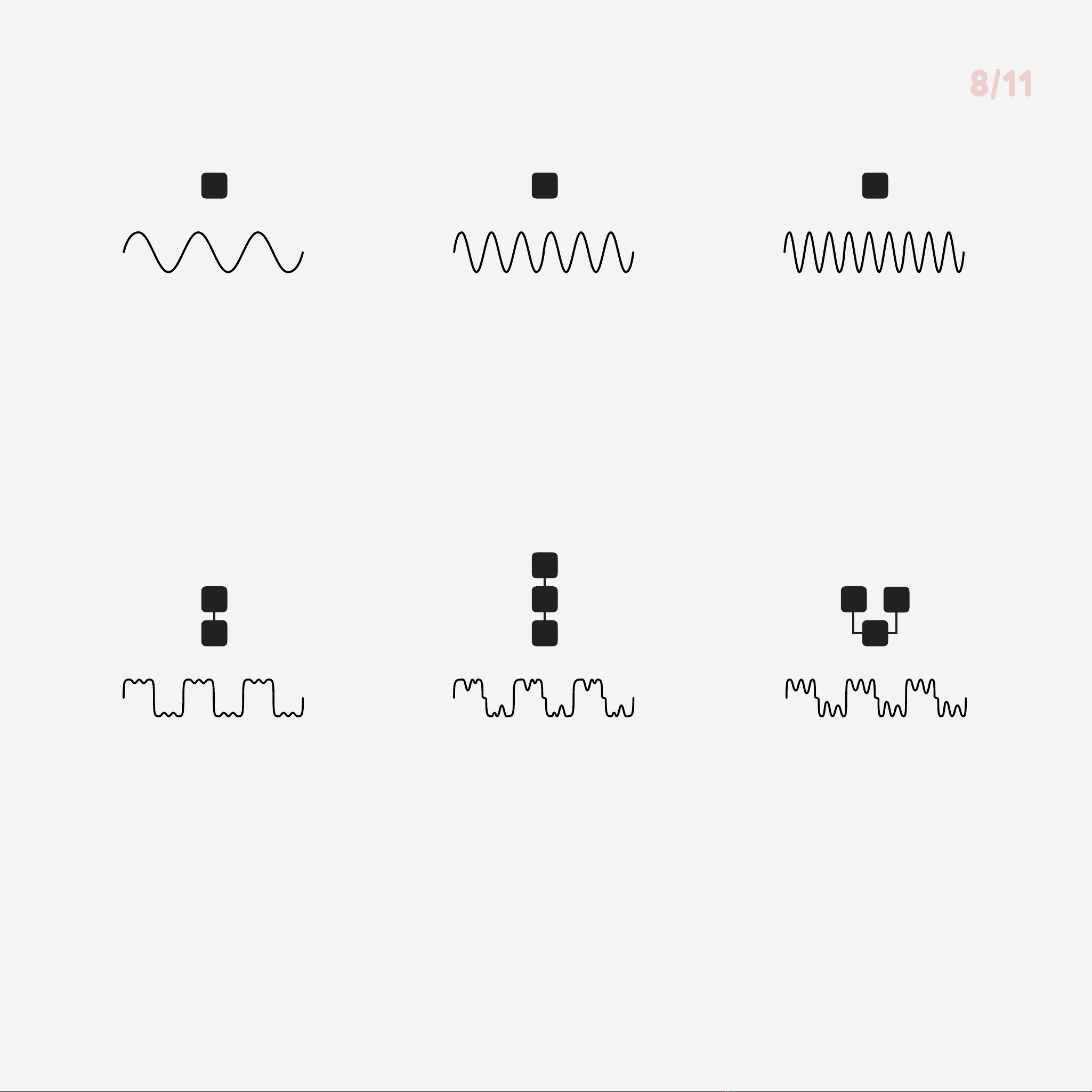
In the most basic form, FM synthesis
starts from its main building block: a
sine wave oscillator, called an operator.
The sine wave is the most basic
oscillator shape, its spectrum contains
just a single frequency partial. In Node,
operator 1 always runs at the base
frequency of the key you play.
The frequencies of operators 2, 3, and 4
are all set as a relative ratio to the
operator 1 frequency. Here, operator 2 is
running at a two times higher higher
frequency than operator 1 – which
means the operator 2:1 ratio is 2.0.
Adding yet another operator to this
example, with operator 3:1 ratio set to
3.0 - meaning that this operator runs at
three times the frequency of operator 1.
Node allows these to be set from 0.5 to
20 for operator ratio 2:1, and from 1 to 10
for operator ratios 3:1 and 4:1.
When operator 2 modulates the
frequency of operator 1, the waveform
produced by the latter changes
dramatically, and so does its
spectrum – which is now full of new
frequency partials. The intensity of
this effect grows as the modulation
depth value is increased.
As a third operator is added to the FM
algorithm, the waveform and the
output spectrum change even more.
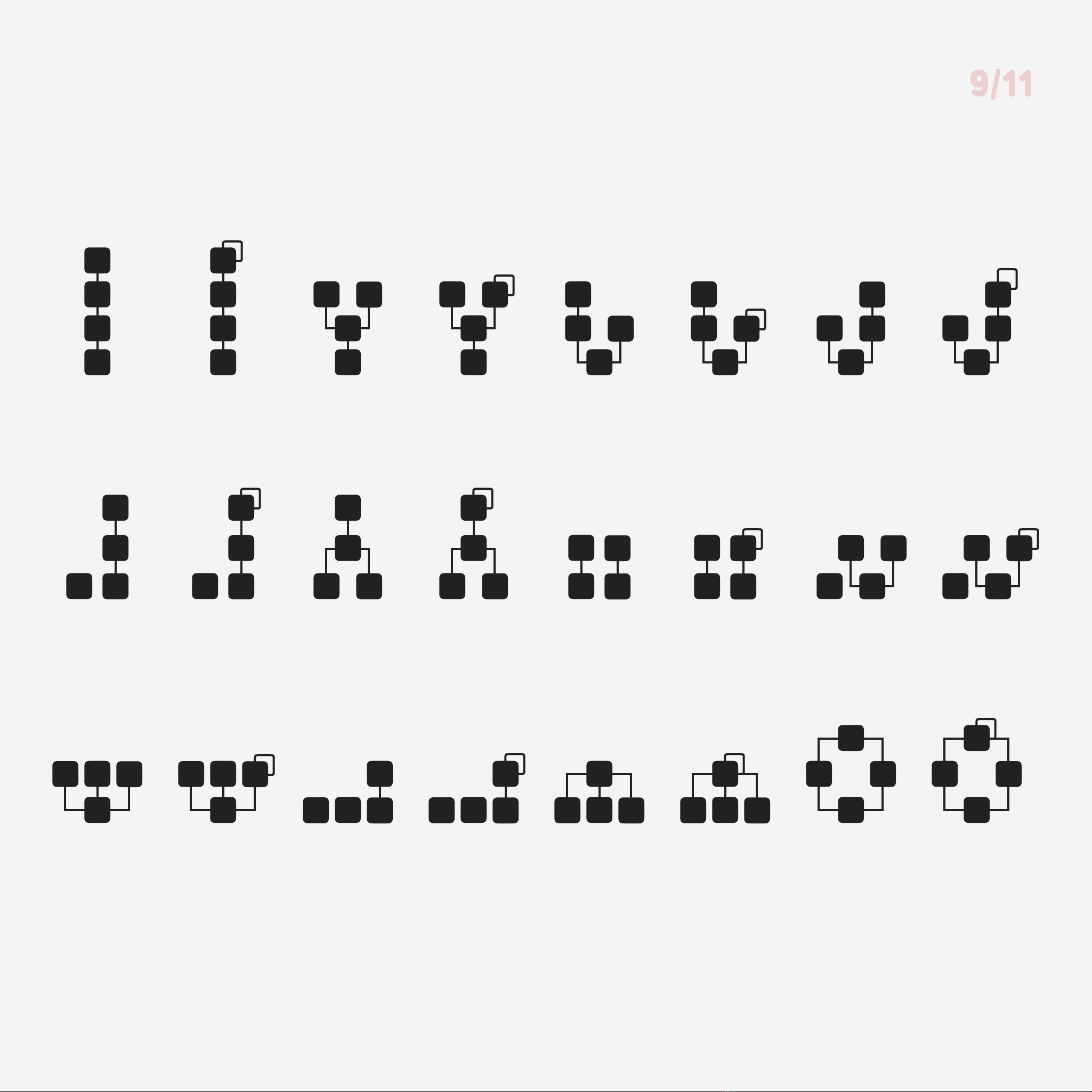
Here, operator 3 is modulating
operator 2, and operator 2 is
modulating operator 1.
With the exact same operator
settings, changing the FM algorithm
will dramatically alter the resulting
waveform. In this one, operator 2 and
operator 3 are summed and then
used to modulate operator 1.