III Before Installing
1) Safe, reliable operation of this boiler depends upon installation by a professional heating contractor in strict
accordance with this manual and the authority having jurisdiction.
• Intheabsenceofanauthorityhavingjurisdiction,installationmustbeinaccordancewiththismanual
and the National Fuel Gas Code, ANSI Z223.1. In Canada, installation must be in accordance with the
B149.1 Installation Code
• Whererequiredbytheauthorityhavingjurisdiction,thisinstallationmustconformtotheStandardfor
Controls and Safety Devices for Automatically Fired Boilers (ANSI/ASME CSD-1).
2) BWC boilers utilize aluminum heat exchangers constructed, tested, and stamped in accordance with ASME
Boiler and Pressure Vessel Code Case 2382. Some jurisdictions which require ASME boiler construction do
not recognize this Code Case and may not approve the installation of an aluminum boiler. Consult the author-
ity having jurisdiction before installing this boiler.
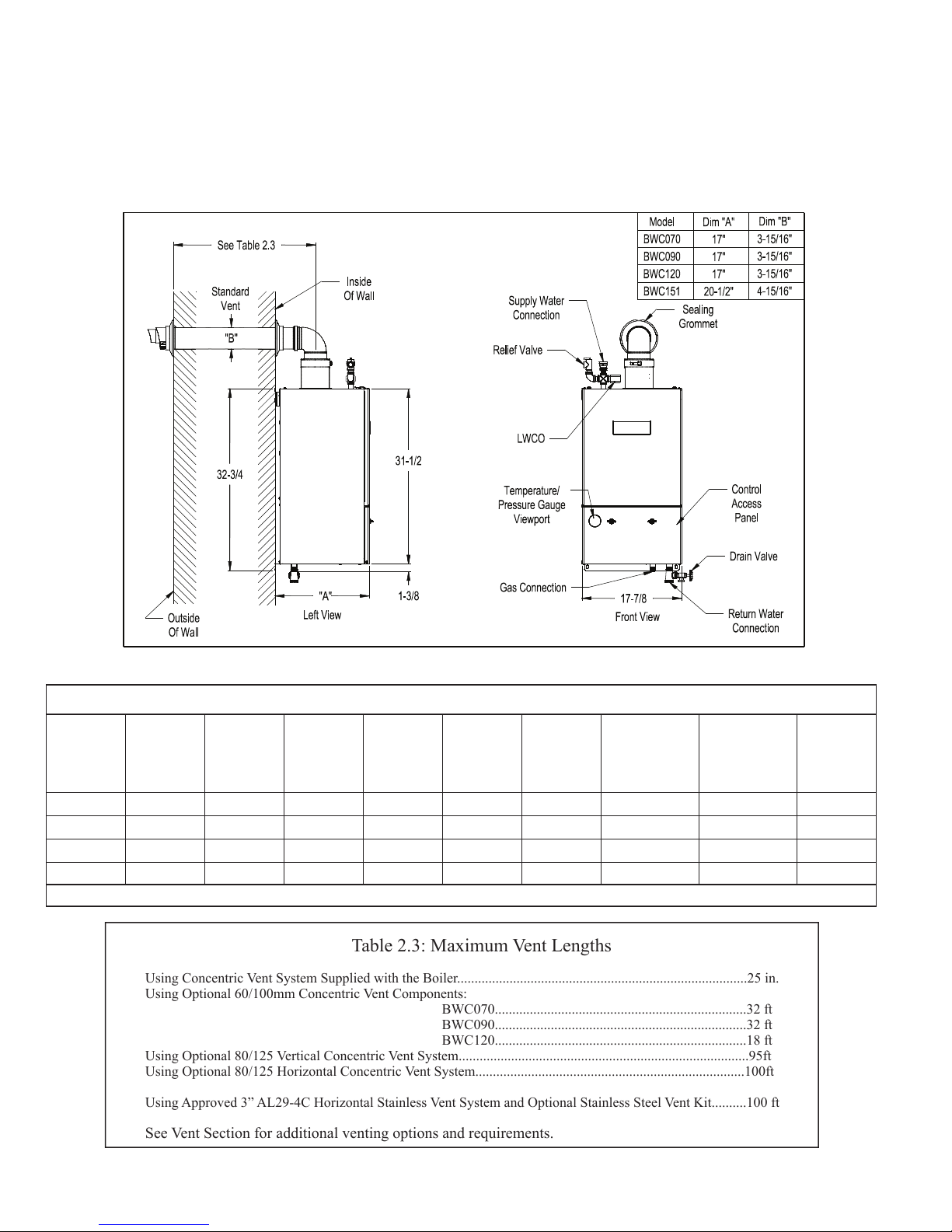
3) Read Section VII to verify that the maximum combustion air and exhaust pipe lengths will not be exceeded in
the planned installation. Also verify that the vent terminal can be located in accordance with Section VII.
4) Make sure that the boiler is correctly sized:
• Forheatingsystemsemployingconvectionradiation(baseboardorradiators),useanindustryaccepted
sizing method such as the I=B=R Heat Loss Calculation Guide (Pub. #H21 or #H22) published by the
Hydronics Institute in Berkely Heights, NJ.
• Fornewradiantheatingsystems,refertotheradianttubingmanufacturer’sboilersizingguidelines.
• ForsystemsincludingaCrownMega-Storindirectwaterheater,sizetheboilertohaveeithertheDOE
Heating Capacity required for the Mega-Stor or the net rating required for the heating system, whichever
results in the larger boiler.
• Forsystemsthatincorporateotherindirectwaterheaters,refertotheindirectwaterheatermanufacturer’s
instructions for boiler output requirements.
5) Makesurethattheboilerreceivedisconguredforthecorrectgas(naturalorLP).
6) Makesurethattheboilerisconguredforuseatthealtitudeatwhichitistobeinstalled.
IV Locating the Boiler
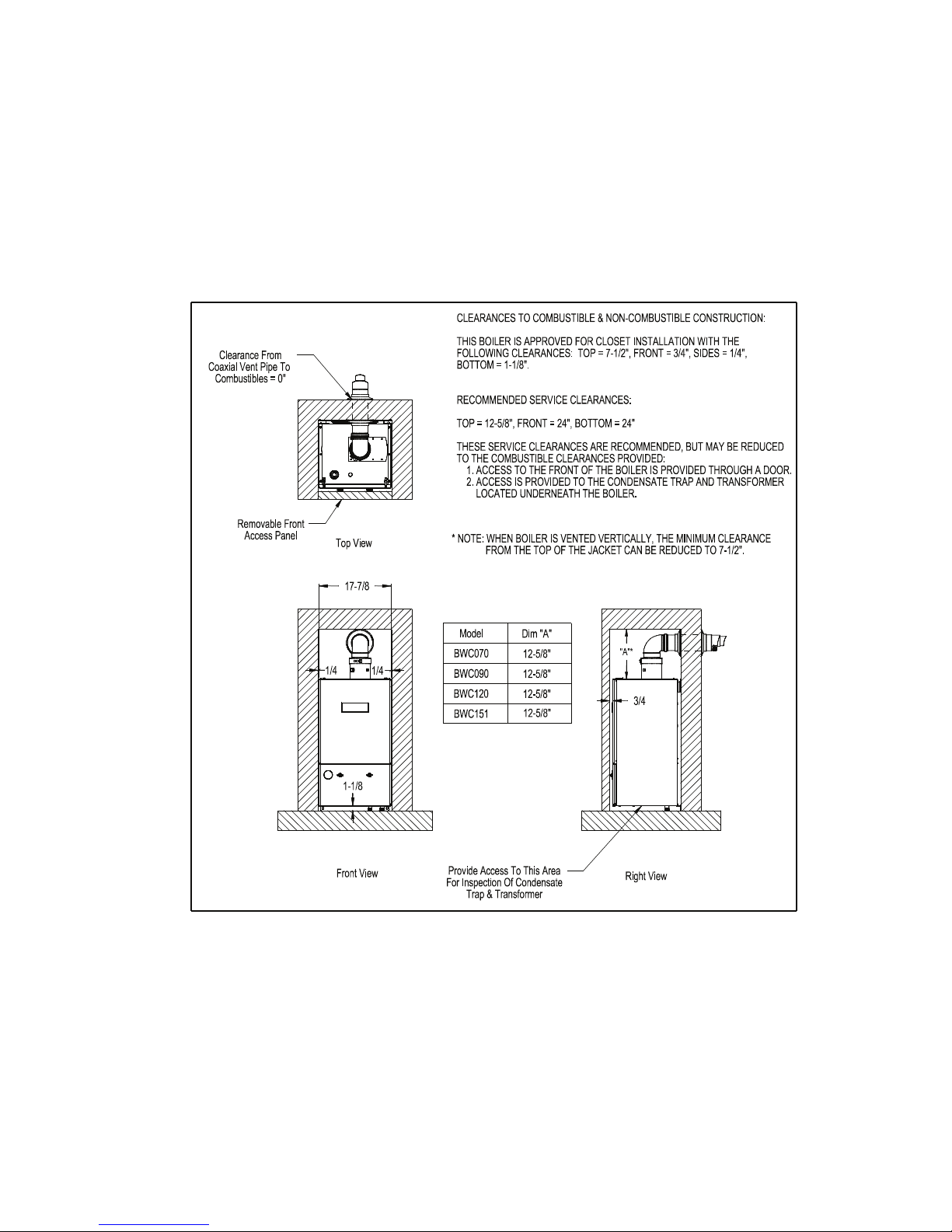
1) Observe the minimum clearances shown in Figure 4.1. These clearances apply to both combustible and non-
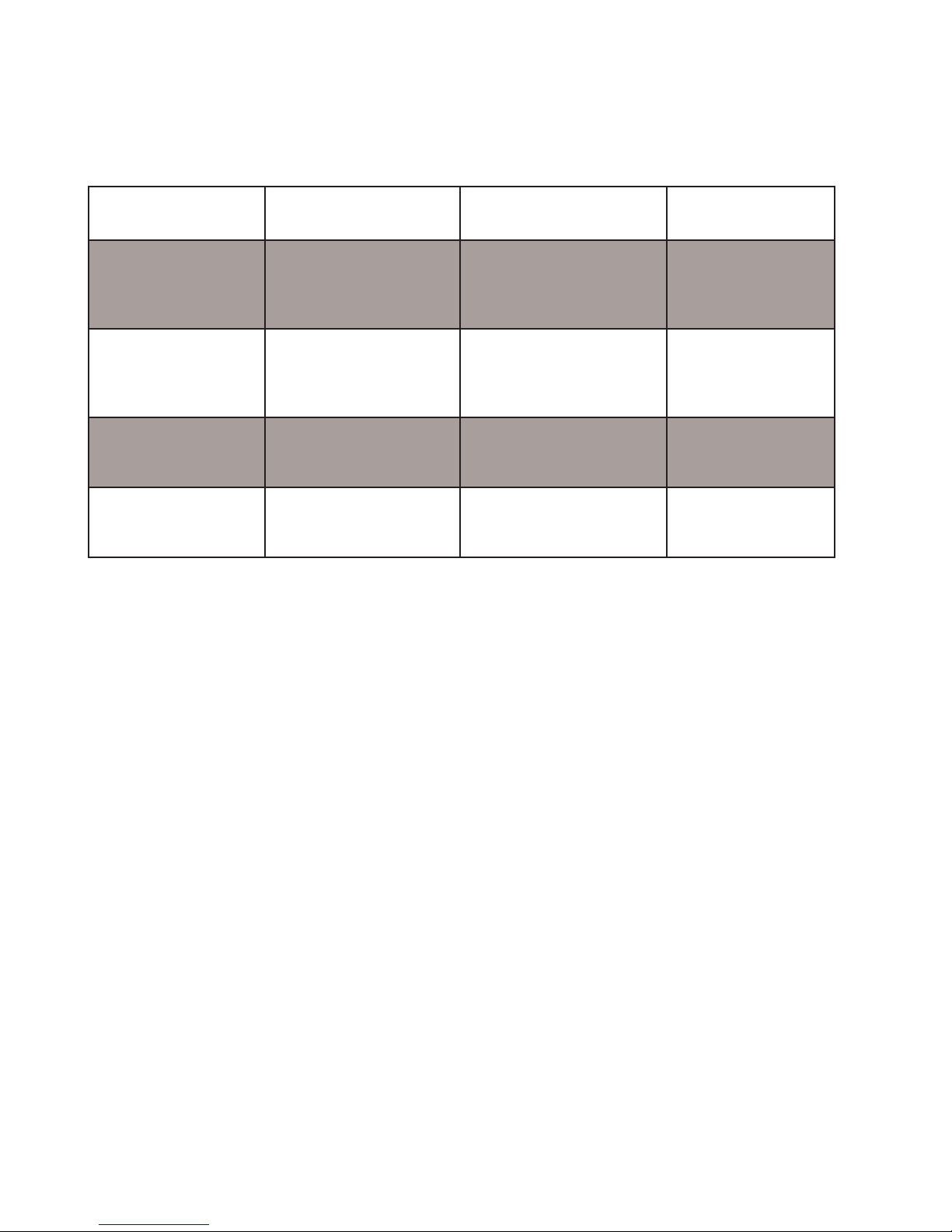
combustible materials. Observe the minimum clearances to combustibles for vent pipe shown in Table 4.2.
2) Note the recommended service clearances in Figure 4.1. These service clearances are recommended, but may
be reduced to the combustible clearances provided:
a. Access to the front of the boiler is provided through a door.
b. Access is provided to the condensate trap and transformer located underneath the boiler.
3) Whentheboilerisinstalledontheoorusingtheoptionalpedestalkit,theboilermaybeinstalledonanon-
carpeted combustible surface.
4) Thereliefvalvemustbeinstalledinthefactoryspeciedlocation.
3
NOTICE
Thisproductmustbeinstalledbyalicensedplumberorgastterwheninstalledwithinthe
Commonwealth of Massachusetts. See Appendix A for additional important information about
installing this product within the Commonwealth of Massachusetts.