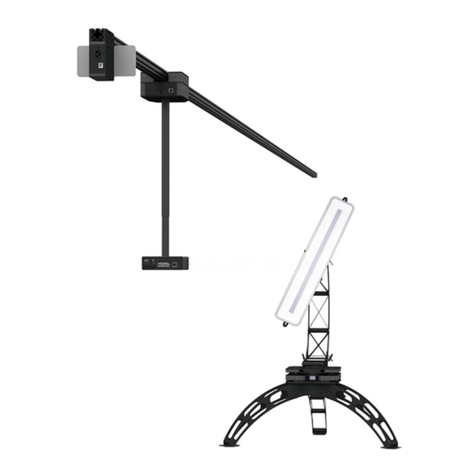
Total shipping CBM: 0,0324 m3
The shipment is done in a total of 1 package.
LabAnalyzer Introduction
The LabAnalyzer is n AC / DC Power Analyzer (10A peak 800VDC peak or 280VAC).
LabAnalyzer is dedicated to working with all Viso Light Measurement Systems
(LightSpion, LabAnalyzer, LabSpion) and Viso Light Inspector software, but may also
work as a stand-alone unit.
To comply with light measurement standards (such as IES LM-79 and CIE S 025), your
devices must be tested under rated conditions with specific tolerances.
Every Viso light measurement system includes a basic built-in power analyzer. The
LabAnalyzer bypasses the built-in analyzer and adds more accuracy and specific
features that makes the test circuit and analyzer uncertainties comply IES LM-79 and
CIE S 025 requirements.
An external integrated power analyzer provides several advantages:
Because of the optional remote sensing option, you may secure stable feed
right on the light source/driver terminals.
The combined instrument is compact and will fit right next to your Viso
gonio without the need of a rack
LabAnalyzer just needs one communication cable to your PC with the Light
Inspector software.
Real-time readout of both on Voltage and Current curves.
Optional remote voltage sensing for optimal accuracy.
Sensor Synchronization for flashing lights
Fitting LabAnalyzer into your light lab
Because of the remote sensing option, it is an advantage to keep the LabAnalyzer
close to the DUT (device under test) and not in a rack. Just place the rugged
LabAnalyzer case close to your goniometer.
Remote sense function
Requirements in standards:
Some light measurement standards require a remote sensing function applied for
correct voltage measurements:
LM 79-19: “Test Circuit Requirements. To Avoid effects of voltage drops in cables or
sockets, voltage measurements shall use separate sense leads connected at the
point where the supply leads attach to the DUT (…)”
CIE S 025/E2015: Electrical Test Conditions: “(…) The test voltage shall be measured
at the supply terminals of the DUT, not at the output terminals of power supply, to
avoid errors due to voltage drop by the cables and connectors.”