7
NOTE. The technical data of the appliance can be found on the rating label attached to the
inside wall of the appliance. For more information about the appliance, scan the QR code
on the enclosed energy label and / or visit the official website of the product database:
https://eprel.ec.europa.eu
TEMPERATURE REGULATION
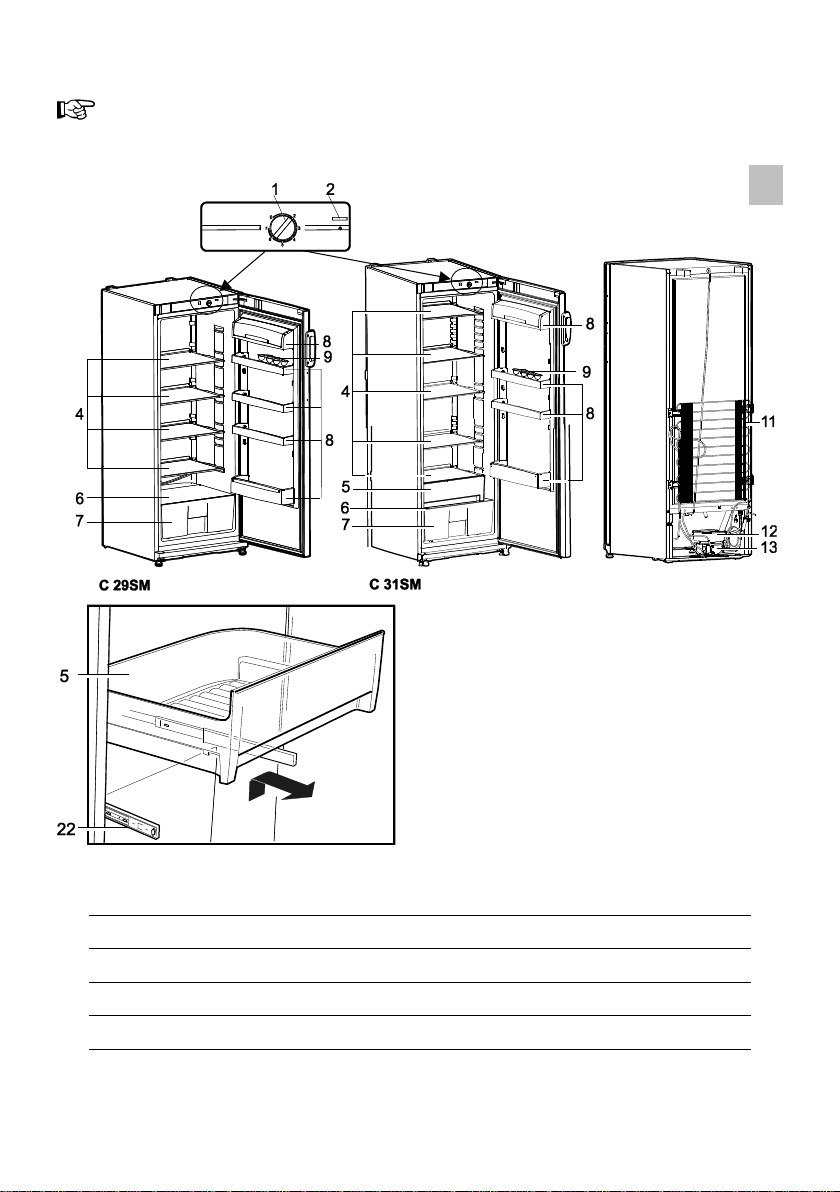
The temperature in the refrigerator compartment is controlled using the thermostat knob 1
by turning it to one side or the other. The temperature indication in digits is shown beside
the thermostat knob 1. The number “0, 2, 3, 4, 5, 6, 7”do not mean a specific
temperatures.
The temperature is regulated on a scale of seven digits.
0= Compressor is switched off. WARNING! Electric current is not switched off.
1= highest temperature (lowest cooling)
7= lowest temperature (highest cooling)
The temperature in the refrigerator compartment can vary due to the ambient
temperature, the amount of food, and the frequent opening of the refrigerator door.
If the room is cool, the appliance cools less. The temperature in the appliance may
therefore rise. Use the thermostat wheel to set a lower temperature.
STORAGE AND FREEZING OF FOODSTUFFS
Temperature zones in the refrigerator:
Due to the natural air circulation, there are different temperature zones in the refrigerator
compartment.
1) The upper part of the refrigerator compartment and the door - the warmest area: store
tropical fruits, cans, drinks, eggs, sauces, canned products, butter, jam.
2) The middle part of the refrigerator compartment - cold zone: store cheese, milk, dairy
products, delicacies, yogurt.
3) The lower part of the refrigerator compartment - the coldest area: keep cold snacks,
desserts, meat and fish, cheesecake, fresh pasta, sour cream, pesto / salsa sauce,
home-cooked food, dough, pudding and cream cheese.
4) Fruit and vegetable drawer at the bottom of the refrigerator compartment: Store
vegetables and fruits (except tropical fruits).
To avoid food contamination, follow the instructions below:
•Prolonged opening of the door can significantly increase the temperature in the
compartments of the appliance: only open the door for the time required to place /
remove food.
•Regularly clean surfaces that may come into contact with food and accessible drainage
systems.
•Store fresh meat and fish in suitable containers in the refrigerator so that they do not
come into contact with or drip on other food.
•Do not put unpackaged food in the refrigerator.
•If the appliance is left empty for a long time, switch it off, defrost, clean, dry and leave
the door open to prevent mold from forming inside the appliance.
•Strictly adhere to the expiration date for foods as stated by the manufacturer on the
product packaging.