
Skil BY8708C-01 Manuel utilisateur
1-877-SKIL-999 OR www.skil.com
For Customer Service
Pour le service à la clientèle
Servicio al cliente
WARNING: To reduce the risk of injury, the user must read and understand the
Owner’s Manual before using this product. Save these instructions for future reference.
AVERTISSEMENT : Afin de réduire les risques de blessure, l’utilisateur doit lire et
comprendre le guide d’utilisation avant d’utiliser cet article. Conservez le présent guide
afin de pouvoir le consulter ultérieurement.
ADVERTENCIA : Para reducir el riesgo de lesiones, el usuario debe leer y comprender
el Manual del operador antes de utilizar este producto. Guarde estas instrucciones para
consultarlas en caso sea necesario.
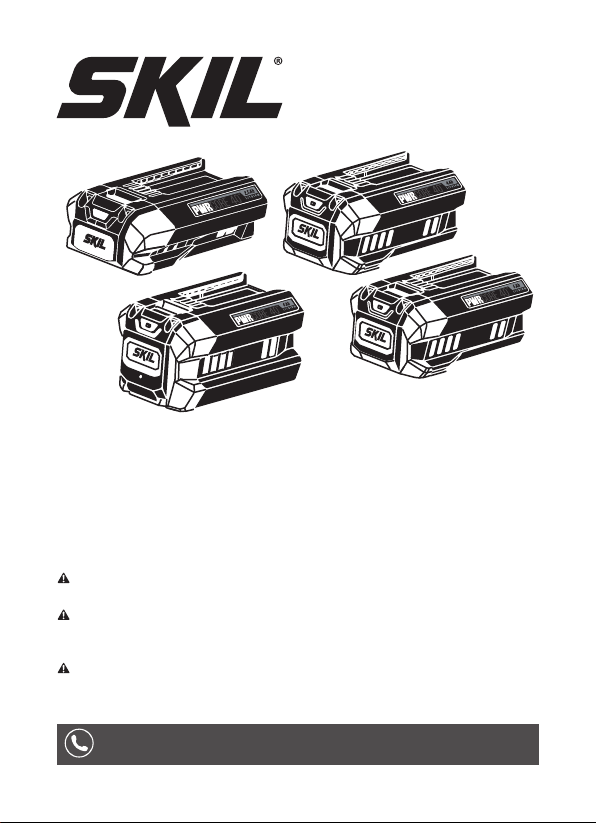
Owner’s Manual
Guide d’utilisation
Manual del propietario
40V Lithium Battery
Batterie au lithium 40V
Batería de litio de 40 V
Model/ Modelo/ Modèle: BY8705-00/BY8708-00/
BY8708C-01/BY8723C-00

2
TABLE OF CONTENTS
Battery Pack Safety Warnings ......................3-5
Symbols ....................................... 6-11
Get to Know Your Battery ...........................12
Specications ....................................12
Operating Instructions ..........................13-16
Maintenance...................................17-18
Battery Care ......................................18
Battery Disposal ..................................19
Troubleshooting ..................................20
Limited Warranty of SKIL Consumer Tools..........21-22

3
READ ALL INSTRUCTIONS THOROUGHLY
BATTERY PACK SAFETY WARNINGS
WARNING Before using battery pack, read all
instructions and cautionary markings on
battery pack, battery charger, and tools using battery. Failure to
follow the warnings and instructions may result in electric shock, re
and/or serious injury.
Recharge only with the charger specied by the manufacturer.
A charger that is suitable for one type of battery pack may create a
risk of re when used with another battery pack.
Use power tools only with specically designated battery
packs. Use of any other battery packs may create a risk of injury
and re.
Know your power tool. Read the operator’s manual carefully.
Learn the tool’s applications and limitations, as well as the
specic potential hazards related to this tool. Following this rule
will reduce the risk of electric shock, re, or serious injury.
Battery tools do not have to be plugged into an electrical
outlet; they are always in operating condition. Be aware of
possible hazards when not using your battery tool or when
changing accessories. Following this rule will reduce the risk of
electric shock, re or serious personal injury.
Keep battery out of reach of children and in original package
until ready to use.
When battery pack is not in use, keep it away from other metal
objects like paperclips, coins, keys, nails, screws or other
small metal objects that can make a connection from one
terminal to another. Shorting the battery terminals together may
cause burns or a re.
Do not place battery tools or their batteries near re or heat.
This will reduce the risk of explosion and possible injury.
Do not store outside or in vehicles.

4
Do not store battery pack in charger. Battery pack stored in char-
ger over a long period of time could lead to battery pack damage
and re.
Do not open the battery. There is a risk of a short circuit.
Do not crush, drop or damage the battery pack. Do not use a
battery pack or charger that has been dropped or received a
sharp blow. A damaged battery is subject to explosion. Properly
dispose of a dropped or damaged battery immediately.
Do not use a battery pack or tool that is damaged or modied.
Damaged or modied batteries may exhibit unpredictable behavior
resulting in re, explosion or risk of injury.
Do not insert battery pack in charger if battery pack case is
cracked. Using damaged battery pack may result in electric shock
or re.
Do not touch the uninsulated portion of output connector or
uninsulated battery terminal. There is a risk of electric shock.
Batteries vent hydrogen gas and can explode in the presence
of a source of ignition, such as a pilot light. To reduce the risk
of serious personal injury, never use any cordless product
in the presence of open ame. An exploded battery can propel
debris and chemicals. If exposed, ush with water immediately.
Do not charge the battery in a damp or wet location. Following
this rule will reduce the risk of electric shock.
Follow all charging instructions and do not charge the battery
pack or tool outside the temperature range specied in the
instructions. Charging improperly or at temperatures outside the
specied range may damage the battery and increase the risk of
re.
For best results, your battery should be charged in a location
where the temperature is greater than 41°F (5°C) and less than
104°F (40°C).

5
Do not expose a battery pack or power tool to re or excessive
temperature. Exposure to re or temperature above 265℉
(130°C) may cause explosion.
Under extreme usage or temperature conditions, battery
leakage may occur. If liquid comes in contact with your skin,
wash immediately with soap and water, then neutralize with
lemon juice or vinegar. If liquid gets in your eyes, ush them
with clean water for at least 10 minutes, then seek immediate
medical attention. Following this rule will reduce the risk of serious
personal injury.
Do not let gasoline, oils, petroleum-based products, etc., come
in contact with plastic parts. These substances contain chemicals
that can damage, weaken or destroy plastic.
Replace battery pack if a substantial drop in operating time per
charge is observed. Battery pack may be nearing the end of its
life.
Have your power tool serviced by a qualied repair person
using only identical replacement parts. This will ensure that the
safety of the power tool is maintained.
Never service damaged battery packs. Service of battery packs
should only be performed by the manufacturer or authorized service
providers.
Save these instructions. Refer to them frequently and use them
to instruct others who may use this battery pack. If you lend
someone this battery pack, lend them these instructions also to
prevent misuse of the product and possible injury.
6
SYMBOLS
Safety Symbols
The purpose of safety symbols is to attract your attention to
possible dangers. The safety symbols and the explanations with
them deserve your careful attention and understanding. The
symbol warnings do not, by themselves, eliminate any danger. The
instructions and warnings they give are no substitutes for proper
accident prevention measures.
WARNING Be sure to read and understand all safety
instructions in this Owner’s Manual, including
all safety alert symbols such as “DANGER,” “WARNING,” and
“CAUTION” before using this tool. Failure to follow all instructions
listed below may result in electric shock, re, and/or serious
personal injury.
The denitions below describe the level of severity for each
signal word. Please read the manual and pay attention to these
symbols.
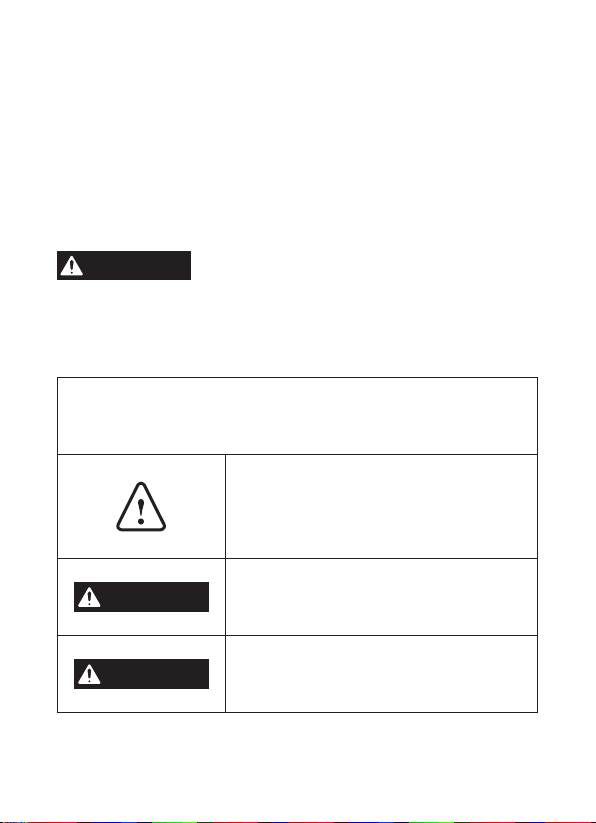
This is the safety alert symbol. It is
used to alert you to potential personal
injury hazards. Obey all safety
messages that follow this symbol to
avoid possible injury or death.
DANGER DANGER indicates a hazardous
situation which, if not avoided, will
result in death or serious injury.
WARNING WARNING indicates a hazardous
situation which, if not avoided, could
result in death or serious injury.

7
CAUTION
CAUTION, used with the safety alert
symbol, indicates a hazardous situation
which, if not avoided, will result in
minor or moderate injury.
Damage Prevention and Information Messages
These inform the user of important information and/or instructions
that could lead to equipment or other property damage if they are
not followed. Each message is preceded by the word “NOTICE”, as
in the example below:
NOTICE: Equipment and/or property damage may result if these
instructions are not followed.
WARNING The operation of any power
tools can result in foreign
objects being thrown into your eyes, which can
result in severe eye damage. Before beginning
power tool operation, always wear safety goggles
or safety glasses with side shields and a full face
shield when needed. We recommend a Wide Vision
Safety Mask for use over eyeglasses or standard
safety glasses with side shields. Always use eye
protection which is marked to comply with
ANSI Z87.1.
8
SYMBOLS (CONTINUED)
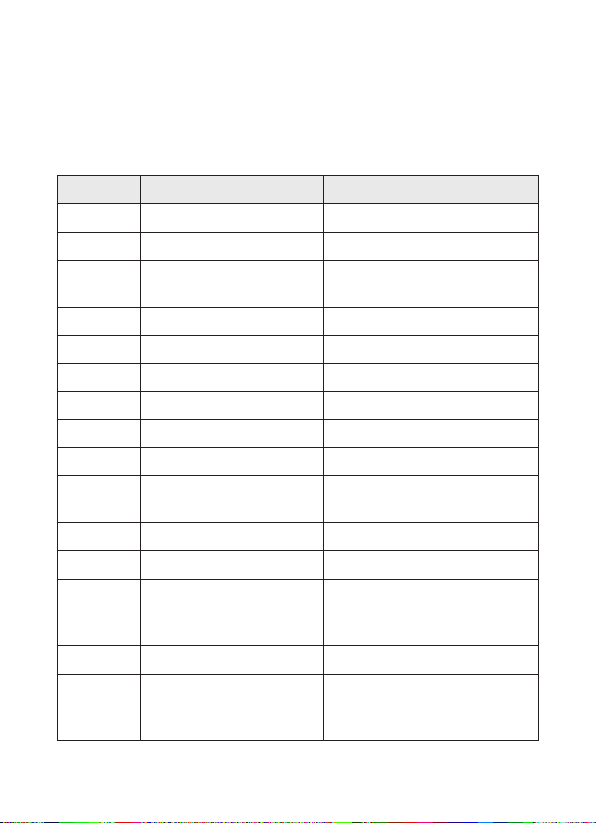
IMPORTANT: Some of the following symbols may be used on
your tool. Please study them and learn their meaning. Proper
interpretation of these symbols will allow you to operate the tool
better and more safely.
Symbol Name Designation/Explanation
V Volts Voltage (potential)
AAmperes Current
Hz Hertz Frequency (cycles per
second)
WWatt Power
kg Kilograms Weight
min Minutes Time
s Seconds Time
Wh Watt-hours Battery capacity
Ah Ampere-hours Battery capacity
øDiameter Size of drill bits, grinding
wheels, etc.
n0No load speed Rotational speed, at no load
nRated speed Maximum attainable speed
…/min
Revolutions or
reciprocations per
minute (rpm)
Revolutions, strokes,
surface speed, orbits, etc.
per minute
OOff position Zero speed, zero torque...
1,2,3,…
Ⅰ,Ⅱ,Ⅲ, Selector settings
Speed, torque, or position
settings. Higher number
means greater speed
9
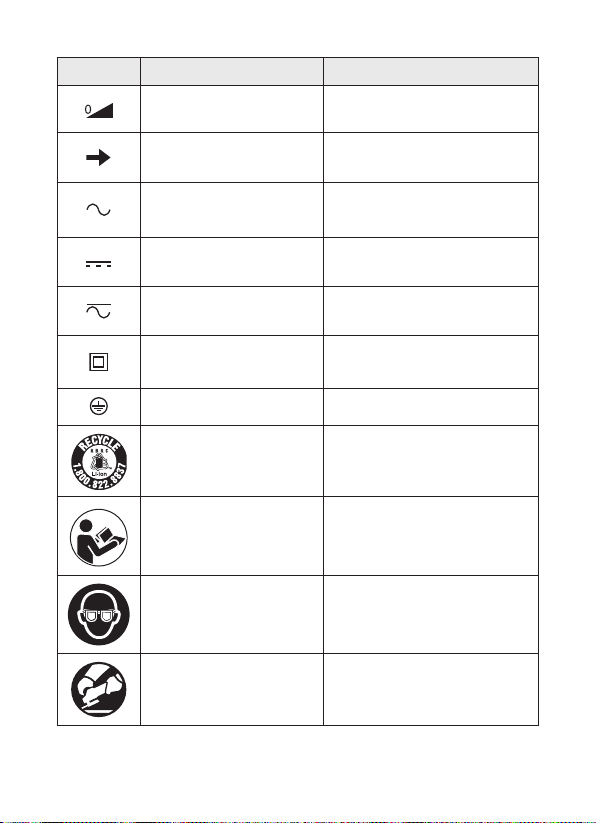
Symbol Name Designation/Explanation
Innitely variable
selector with off
Speed is increasing from 0
setting
Arrow Action in the direction of
arrow
Alternating current
(AC)
Type or a characteristic of
current
Direct current (DC) Type or a characteristic of
current
Alternating or direct
current (AC / DC)
Type or a characteristic of
current
Class II tool Designates Double
Insulated Construction tools.
Protective earth Grounding terminal
Li-ion RBRC seal Designates Li-ion battery
recycling program
Read the instructions Alerts user to read manual
Wear eye protection
symbol
Alerts user to wear eye
protection
Always operate with
two hands
Alerts user to always
operate with two hands
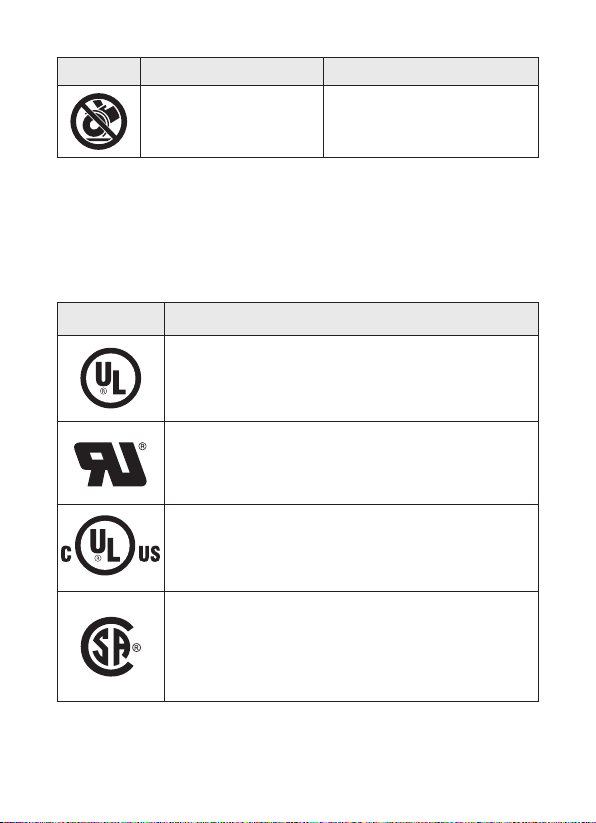
10
Symbol Name Designation/Explanation
Do not use the guard
for cut-off operations
Alerts user not to use the
guard for
cut-off operations
SYMBOLS (CERTIFICATION INFORMATION)
IMPORTANT: Some of the following symbols for certication
information may be used on your tool. Please study them and learn
their meaning. Proper interpretation of these symbols will allow you
to operate the tool better and more safely.
Symbol Designation/Explanation
This symbol designates that this tool is listed by
Underwriters Laboratories.
This symbol designates that this component is
recognized by Underwriters Laboratories.
This symbol designates that this tool is listed by
Underwriters Laboratories, to United States and
Canadian Standards.
This symbol designates that this tool is listed by
the Canadian Standards Association.
Ce manuel convient aux modèles suivants
3
Table des matières
Langues :
Autres manuels Skil Accessoires pour appareils photo


