Shield Fire, Safety and Security Ltd Page 7 of 14 Revision DCM01.01
Shield Digital Control Module Installation Manual
Installation
The DCM allows accurate location of an alarm point along a length of
Shield Digital LHD cable. It continuously monitors up to two zones of
cable for a fault (open circuit) or an alarm (overheat or re condition).
Because of the wide range of applications that Digital LHD cable can
be used for, it may not always be possible, or be too time consuming,
to locate where along the cable an alarm has occurred. Using the
DCM, when an alarm occurs the distance to the overheat condition is
immediately calculated and displayed on the integrated display.
If a fault is detected, the corresponding fault output stops conducting,
triggering a fault at the re alarm control panel. If an alarm is detected, the
corresponding alarm output changes state, triggering an alarm at the re
alarm panel. The fault outputs also stop conducting on power loss to the
unit or microprocessor fault, triggering a fault at the re alarm control panel.
The two wire RS-485 Modbus RTU/ASCII output also outputs the
current state of both zones. See the section “Modbus RTU/ASCII
Communications” for more detail.
There are two primary congurations of the DCM (see gure 1):
1) The Digital LHD cable can be connected directly to the DCM
2) The Digital LHD cable is connected to a length of leader cable
which is connected to the DCM. In this scenario the leader cable
must be “calibrated out” during commissioning of the DCM.
Connections Diagram
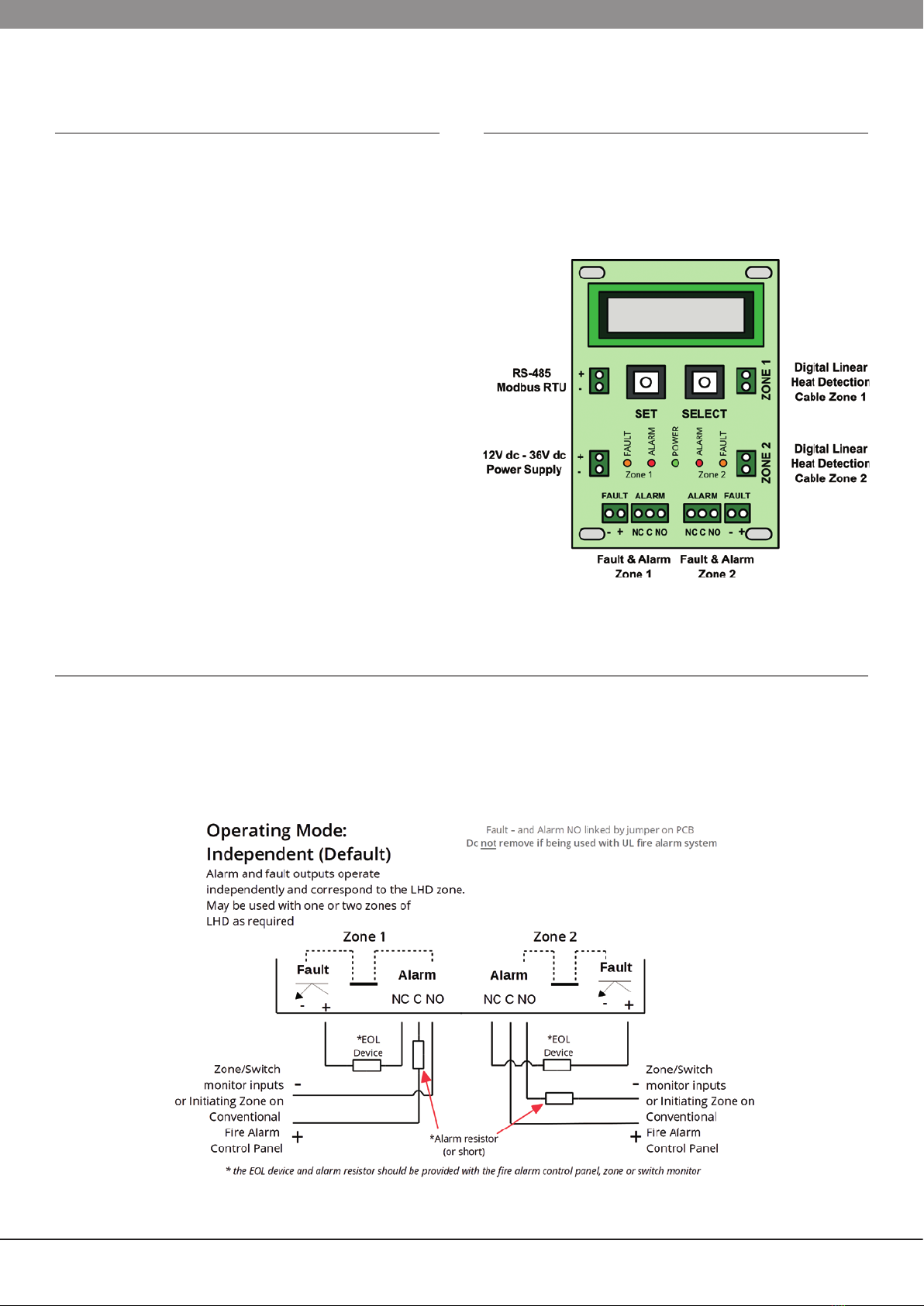
Figure 3 shows the connections diagram for the DCM. The unit is
provided with a 1kohm end of line resistor in each zone input. If only one
zone is required, leave the 1kohm resistor connected across the zone
which is not in use. Otherwise the 1kohm resistor should be connected at
the end of the Digital LHD cable.
Figure 3: Wiring Diagram for the Shield DCM
Operating Modes Wiring Diagram Independent
There are two operating modes for the Digital Control Module:
1. Independent – This is when the DCM is used as a two zone system. When a fault or overheat condition occurs on an LHD zone, the corresponding fault
or alarm output respectively is triggered. The two zones operate independently and both sets of outputs should be connected to a re alarm control panel.
If the zone is not required leave the 1kohm resistor in the zone input terminals as supplied. In this mode, the two zones can either contain identical rated
temperature LHD cables or two dierent rated temperature LHD cables, e.g. a 68 deg C in zone 1 and a 105 deg C in zone 2.