LNK-K
Page 4 LNK-K K06/0422
5. Operating Principle
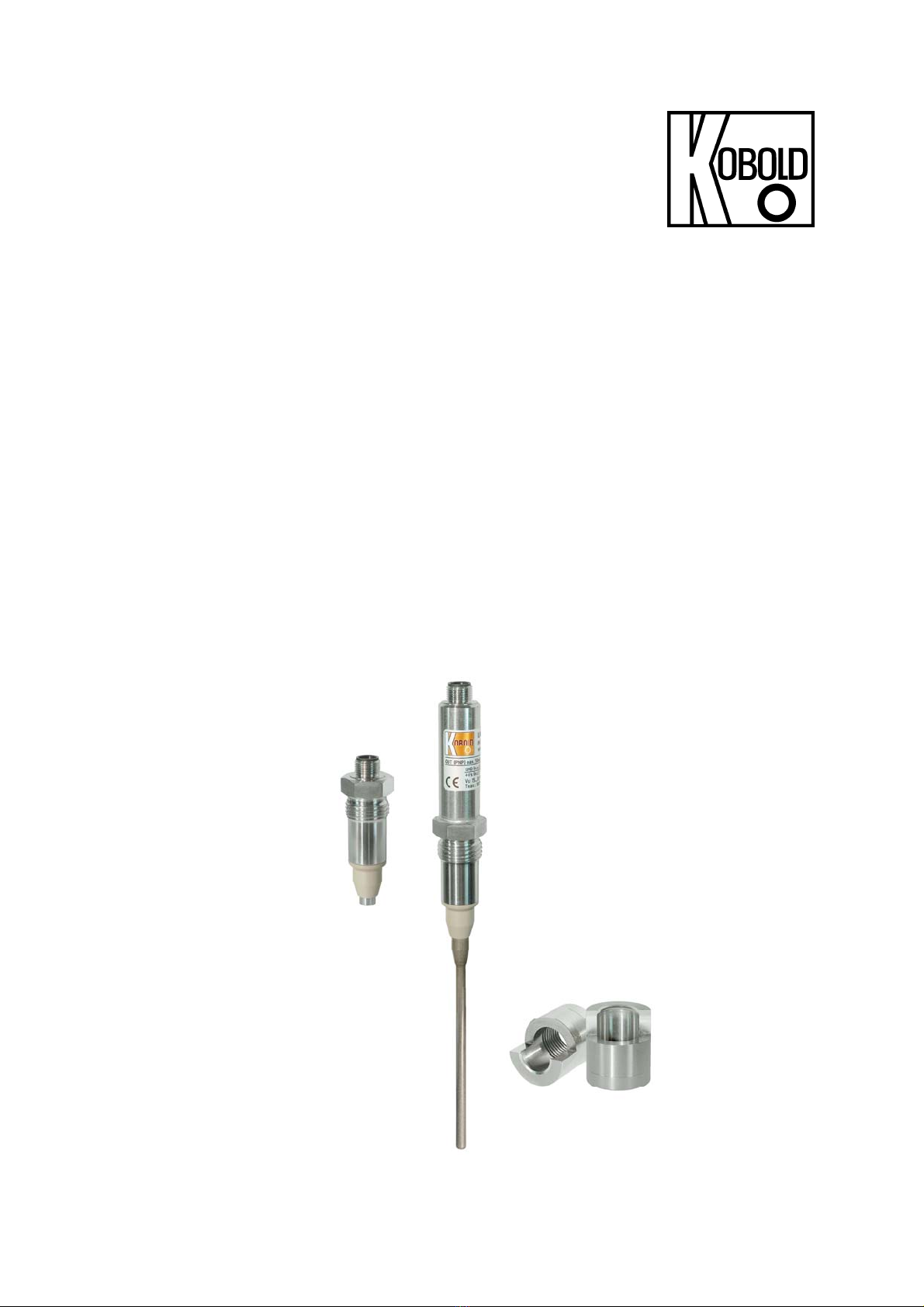
The conductive KOBOLD level probes LNK-K are used for level measurement.
The electrical resistance between metallic vessel and level electrode is measured
and evaluated. In combination with the KOBOLD LZE or LZE-R weld-in sleeves,
the probe provides a measuring point that has no dead space and meets hygiene
standards and (EHEDG approval certificate). This level switch is therefore very
well suited for CIP/SIP cleaning and because of its compact design the device is
suitable for almost every measurement.
The KOBOLD probes LNK-K are also available with integrated evaluating
electronics. The output signal (24 VDC) can thus be connected to a PLC for
evaluation. This means lower installation costs, minimum wiring requirements and
a high degree of noise immunity.
The level probes are connected electronically through an M12x1 plug connection.
Different stem lengths are available. The stem may also be E-CTFE coated, so
that foaming media can be detected.
5.1. External electrode relay (e.g. NE-104, 304)
When the LNK-K is used as a 1-stem probe, the evaluation can take place with
an external electrode relay.
For connection and adjustment please see instruction manual of the external
electrode relay.
6. Mechanical Connection
The electrodes must be mounted in a vertical position in the lid or the ground
of the vessel which must be detected.
The mounting must be done in a way that the electrode stem does not contact
the wall of the vessel.
Note during mounting that the electrodes do not bend and the medium can
drain off easily when they are not longer touched by the fluid.
Shortening the electrodes:
The electrode tip corresponds to the switching point and can be shortened if
desired.
Note, that the bracing of the electrode in the thread-piece is not too heavily
loaded during shortening.
Do not harm the isolation of the electrode.
After shortening, make sure that the E-CTFE isolation is removed of about a
length of 5 mm from the tip of the electrode.