Ironton 81869 Manuel utilisateur

READ & SAVE THESE INSTRUCTIONS
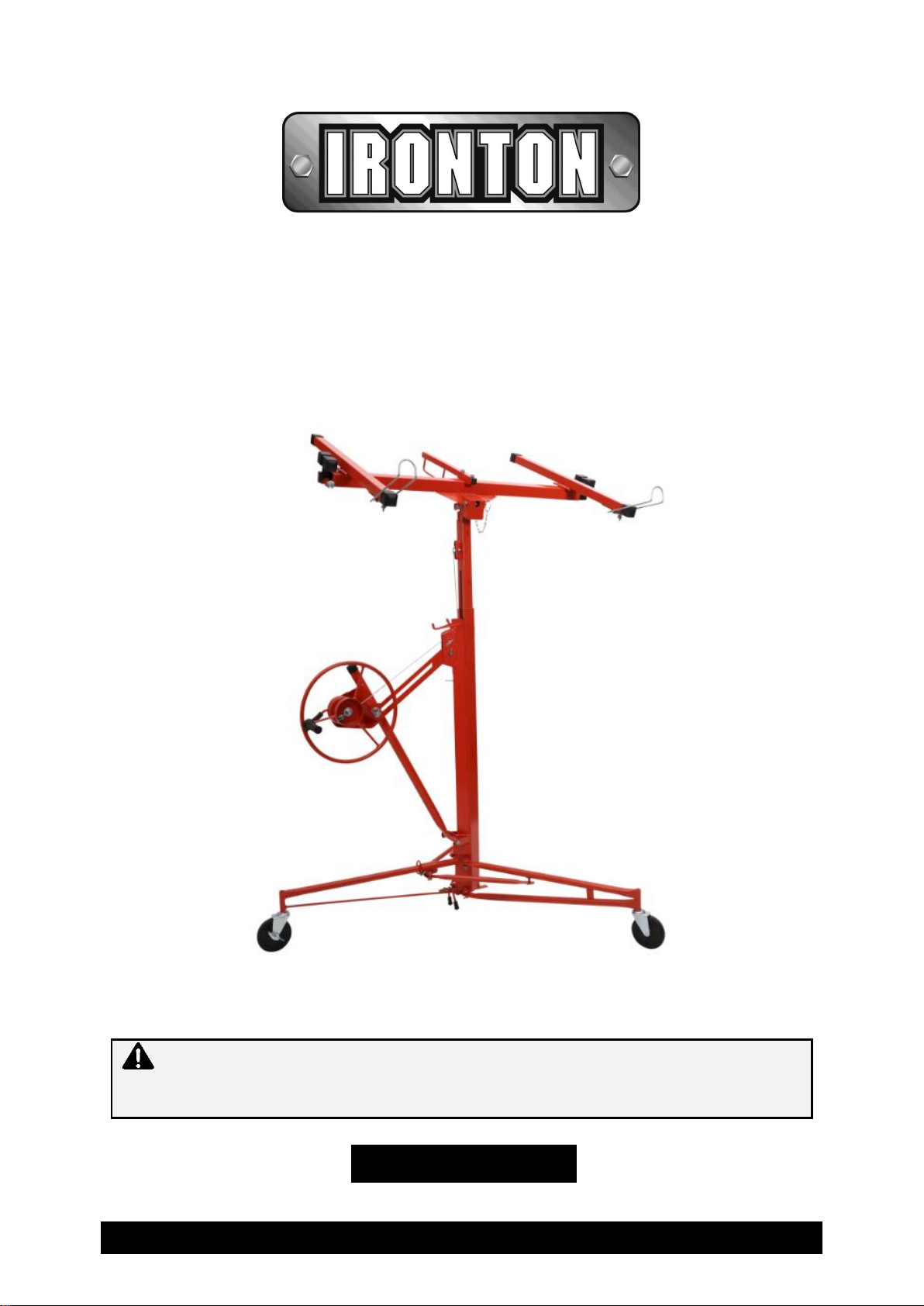
150-Lb. Drywall and Panel Hoist
Owner’s Manual
WARNING: Read carefully and understand all ASSEMBLY AND OPERATION
INSTRUCTIONS before operating. Failure to follow the safety rules and other basic safety
precautions may result in serious personal injury.
Item #81869

Page 2 of 23
Thank you very much for choosing an Ironton™product!
For future reference, please complete the owner’s record below:
Serial Number/Lot Date Code: ________________________________
Purchase Date: ____________________________________________
Save the receipt, warranty, and this manual. It is important that you read
the entire manual to become familiar with this product before you begin
using it.
This hoist is designed for certain applications only. Northern Tool and
Equipment is not responsible for issues arising from modification or
improper use of this product such as an application for which it was not
designed. We strongly recommend that this product not be modified
and/or used for any application other than that for which it was designed.
For technical questions, please call 1-800-222-5381.

Page 3 of 23
Table of Contents
Intended Use..........................................................................................................................................4
Technical Specifications......................................................................................................................4
Important Safety Information...............................................................................................................4
Specific Operation Warnings...............................................................................................................6
Main Parts of Hoist................................................................................................................................6
Assembly Instructions..........................................................................................................................7
Before Each Use..................................................................................................................................11
Operating Instructions........................................................................................................................11
After Each Use.....................................................................................................................................16
Maintenance ........................................................................................................................................17
Troubleshooting..................................................................................................................................17
Parts Diagram......................................................................................................................................18
Parts List..............................................................................................................................................19
Replacement Parts..............................................................................................................................21
Limited Warranty.................................................................................................................................22

Page 4 of 23
Intended Use
The Ironton 150-Lb Drywall and Panel Hoist allows one person to lift a drywall panel without
assistance. The panel can be raised to a maximum height of 11 feet for attachment to level ceilings-or
(with the lift's cradle tilted) to sloped ceilings or side walls.
Technical Specifications
Property
Specification
Load Capacity
150 lb.
Lift
11 ft.
Swivel Wheels
5 in.
Important Safety Information
⚠WARNING
⚫Read and understand all instructions. Failure to follow all instructions may result in serious injury
or property damage.
⚫The warnings, cautions, and instructions in this manual cannot cover all possible conditions or
situations that could occur. Exercise common sense and caution when using this tool. Always be
aware of the environment and ensure that the tool is used in a safe and responsible manner.
⚫Do not allow persons to operate or assemble the product until they have read this manual and
have developed a thorough understanding of how it works.
⚫Do not modify this product in any way. Unauthorized modification may impair the function and/or
safety and could affect the life of the product. There are specific applications for which the product
was designed.
⚫Use the right tool for the job. DO NOT attempt to force small equipment to do the work of larger
industrial equipment. There are certain applications for which this equipment was designed. This
product will be safer and do a better job at the capacity for which it was intended. DO NOT use
this equipment for a purpose for which it was not intended.
⚫Industrial or commercial applications must follow OSHA requirements.
⚠WARNING
WORK AREA SAFETY
⚫Inspect the work area before each use. Keep work area clean, dry, free of clutter, and well-lit.
Cluttered, wet, or dark work areas can result in injury. Using the product in confined work areas
may put you dangerously close to cutting tools and rotating parts.
⚫Do not use the product where there is a risk of causing a fire or an explosion; e.g., in the presence
of flammable liquids, gases, or dust. The product can create sparks, which may ignite the
flammable liquids, gases, or dust.
⚫Do not allow the product to come into contact with an electrical source. The tool is not insulated
and contact will cause electrical shock.
⚫Keep children and bystanders away from the work area while operating the tool. Do not allow

Page 5 of 23
children to handle the product.
⚫Be aware of all power lines, electrical circuits, water pipes, and other mechanical hazards in your
work area. Some of these hazards may be hidden from your view and may cause personal injury
and/or property damage if contacted.
⚠WARNING
PERSONAL SAFETY
⚫Stay alert, watch what you are doing, and use common sense when operating the tool. Do not use
the tool while you are tired or under the influence of drugs, alcohol, or medication. A moment of
inattention while operating the tool may result in serious personal injury.
⚫Dress properly. Do not wear loose clothing, dangling objects, or jewelry. Keep your hair, clothing
and gloves away from moving parts. Loose clothes, jewelry, or long hair can be caught in moving
parts. Air vents on the tool often cover moving parts and should be avoided.
⚫Wear the proper personal protective equipment when necessary. Use ANSI Z87.1 compliant safety
goggles (not safety glasses) with side shields, or when needed, a face shield. Use a dust mask in
dusty work conditions. Also use non-skid safety shoes, hardhat, gloves, dust collection systems,
and hearing protection when appropriate. This applies to all persons in the work area.
⚫Do not overreach. Keep proper footing and balance at all times.
⚫Secure the work with clamps or a vise instead of your hand when practical. This safety precaution
allows for proper tool operation using both hands.
⚠CAUTION
HOIST USE AND CARE
⚫Do not force the hoist. Products are safer and do a better job when used in the manner for which
they are designed. Plan your work and use the correct product for the job.
⚫Check for damaged parts before each use. Carefully check that the product will operate properly
and perform its intended function. Replace damaged or worn parts immediately. Never operate the
product with a damaged part.
⚫Do not use a product with a malfunctioning switch. Any power tool that cannot be controlled with
the power switch is dangerous and must be repaired by an authorized service representative
before using.
⚫Disconnect the power/air supply from the product and place the switch in the locked or off position
before making any adjustments, changing accessories, or storing the tool. Such preventive safety
measures reduce the risk of starting the tool accidentally.
⚫Store the hoist when it is not in use. Store it in a dry, secure place out of the reach of children.
Inspect the tool for good working condition prior to storage and before re-use.
⚫Use only accessories that are recommended by the manufacturer for use with your product.
Accessories that may be suitable for one product may create a risk of injury when used with
another tool. Never use an accessory that has a lower operating speed or operating pressure than
the tool itself.

Page 6 of 23
Specific Operation Warnings
⚠WARNING
⚫To avoid injury, slide bar lock must be fully engaged if winch assembly is extended.
⚫Wear ANSI Z87.1 compliant safety goggles, hard hat, heavy duty gloves, and steel toed boots
during setup and use.
⚫Do not exceed the rated load capacity.
⚫Do not use to transport people or pets.
⚫Secure load before raising or lowering load.
⚫Only use the hoist to raise and lower one panel at a time.
⚫Never load a drywall panel or operate the hoist if the lock pins are not engaged at one of the three
positions.
⚫Use ONLY for lifting a drywall panel.
⚫To avoid serious injury, watch for overhead obstructions when raising panel.
⚫Cradle drops rapidly when brake arm is released.
⚫Control the winch with your right hand on wheel handle BEFORE releasing brake.
⚫Be sure the winch components are clean and dry before operation.
⚫Inspect the tool for wear or damage. Pay special attention to any wear or damage to the wire rope.
⚫Carefully inspect the hoist before operating.
⚫Not for use by or around children.
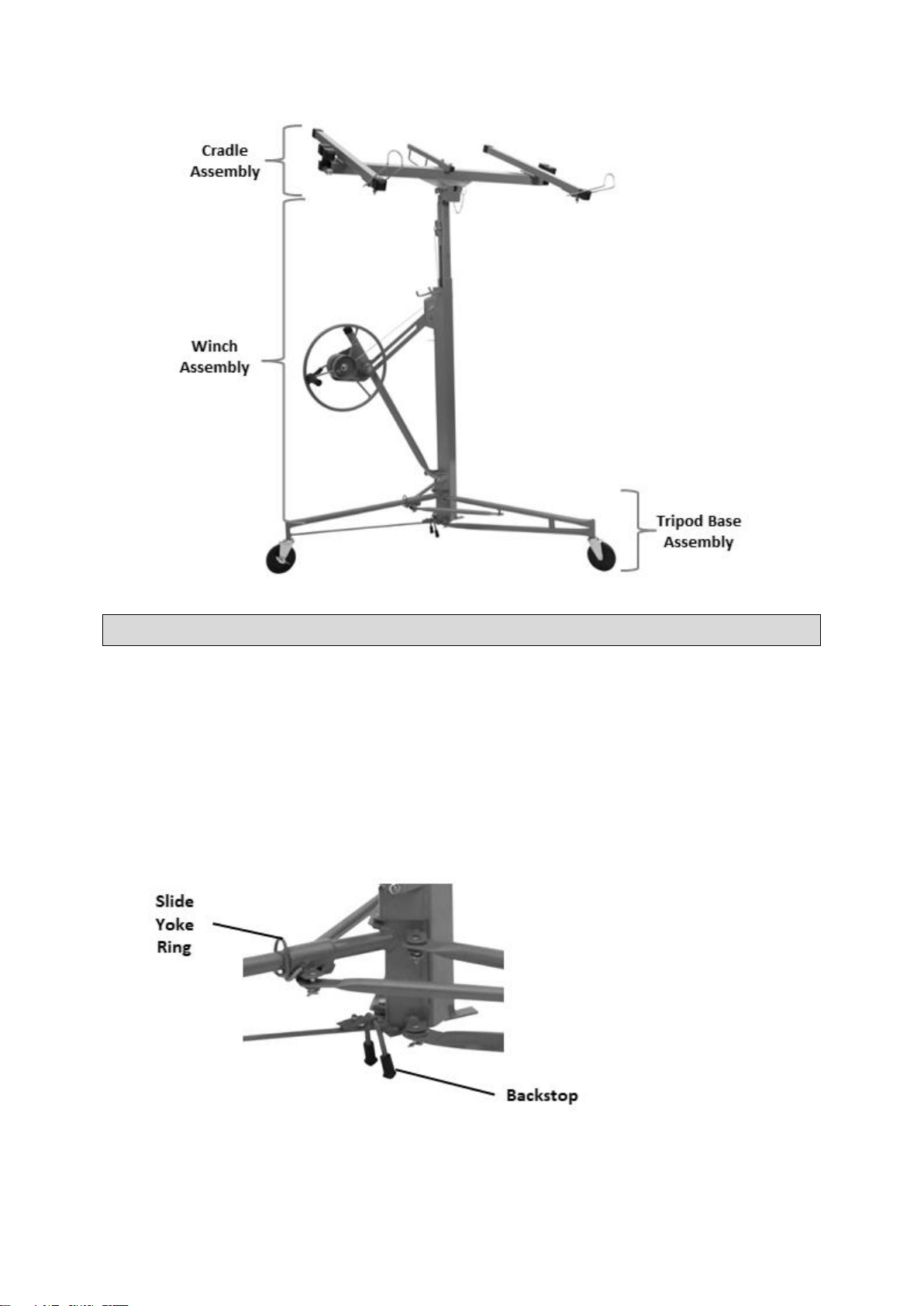
Main Parts of Hoist
Reference
Subassembly
1
Tripod Base Assembly
2
Winch Assembly
3
Cradle Assembly

Page 7 of 23
Assembly Instructions
Set Up the Tripod Base
1. Set the base on the floor.
2. Press down the slide yoke ring on the inner leg (1). Hold the ring down while swinging the two
outer legs (8) forward until the yoke ring snaps into the locking hole on the bottom of the tube.
3. To prevent the tripod base from rolling backward during assembly, lock the casters (9) or lower the
backstop down as shown.

Page 8 of 23
Frame Assembly
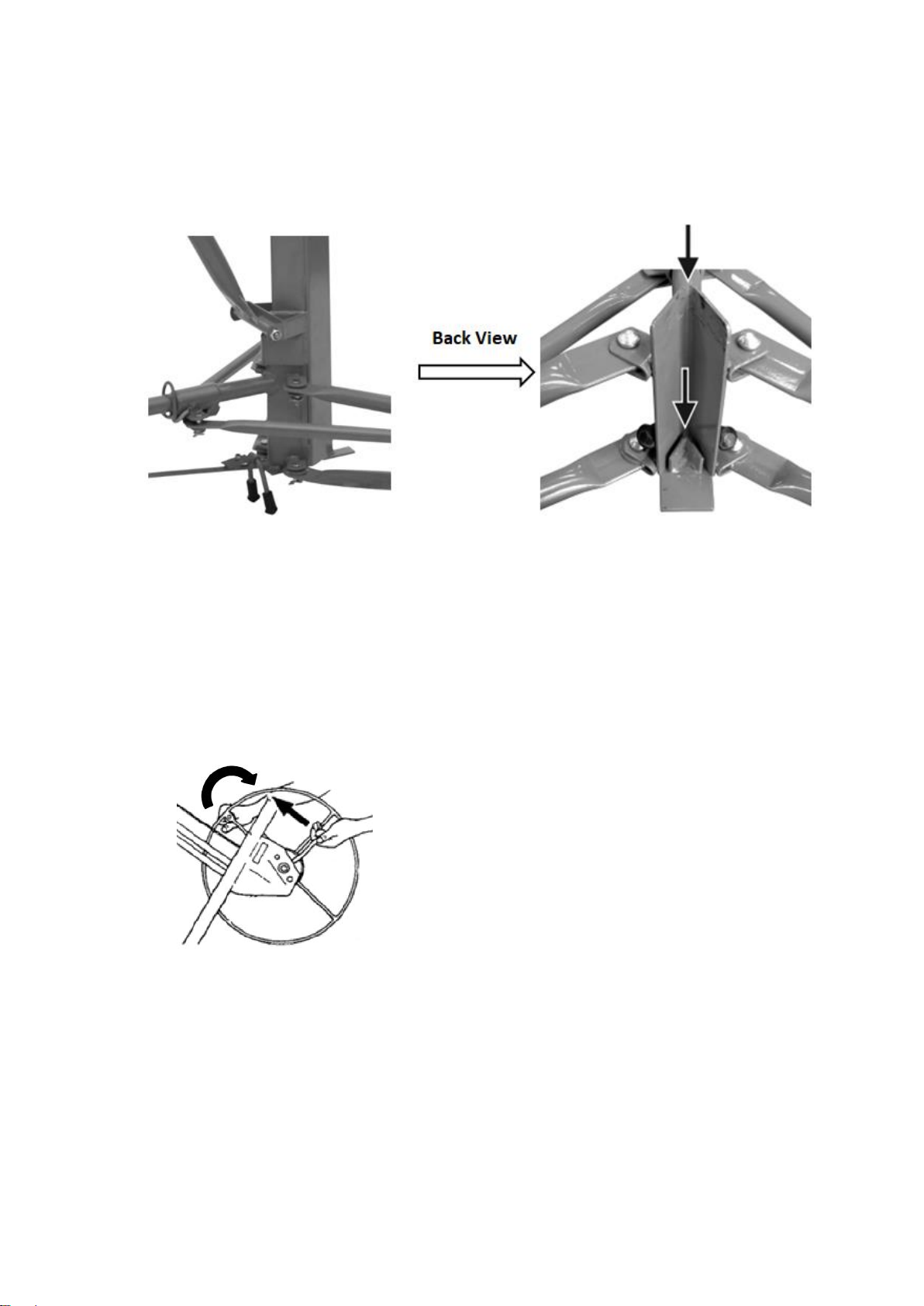
Set the frame assembly onto the two "V" angles on the tripod base. The frame must fit over both
"V” shaped flanges. The frame assembly must sit exactly vertically. If the frame sits at an angle
then the unit is not tucked into the inner "V” shaped flange.
Winch Wheel Set-up
1. Attach the handle (49) to the wheel (36). Tighten the nut and then back it off slightly so the handle
(49) turns freely.
2. Move the wheel to the working position:
•Check that the casters are locked before beginning.
•Hold the brake handle (34) in your left hand and the wheel in your right hand. Rotate the
wheel (29) counter-clockwise while you lift the brake arm to release the brake.
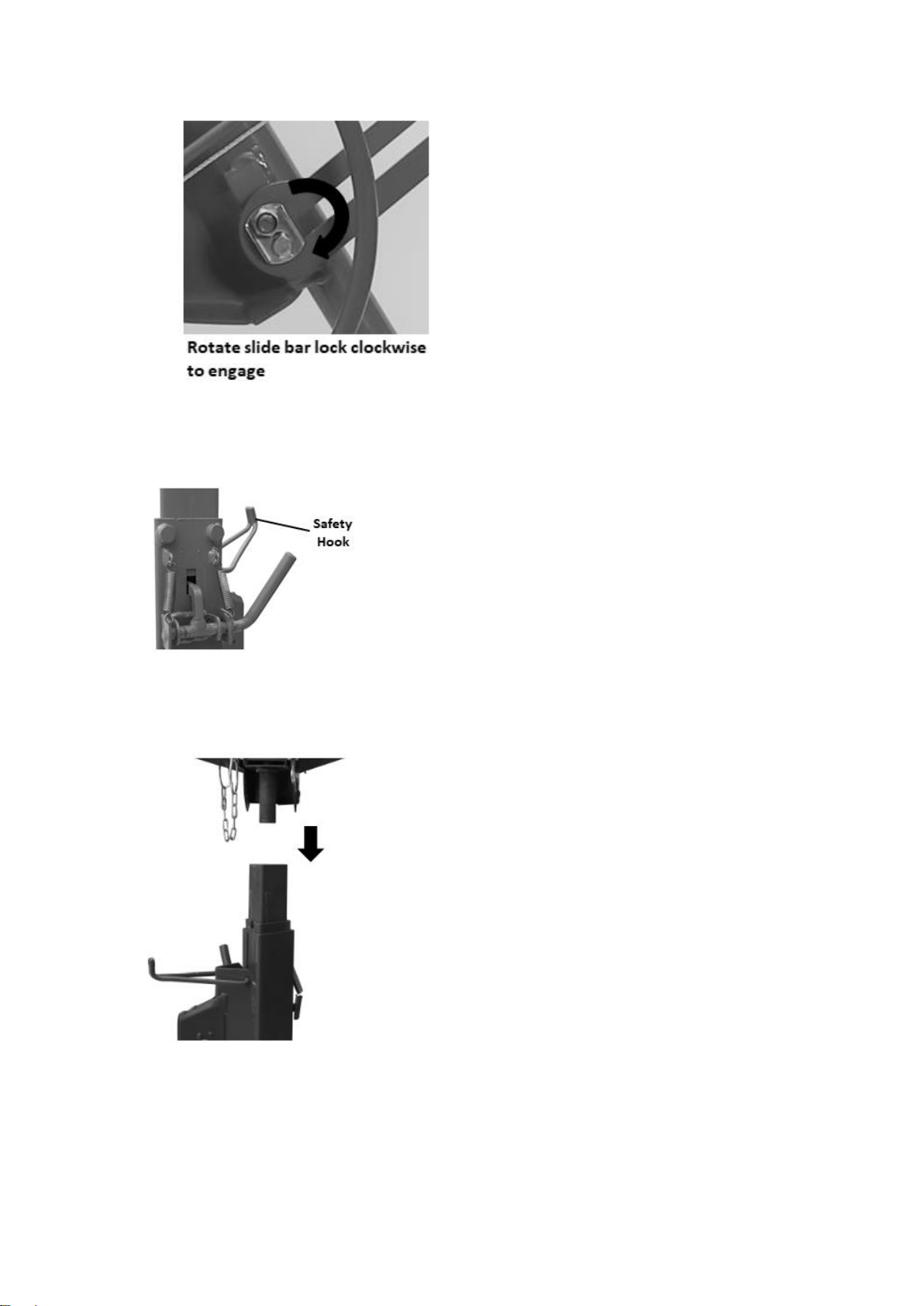
•Pull the winch wheel slightly back toward the frame and rotate the slide bar lock clockwise to
engage, securing the winch wheel into the working position.

Page 9 of 23
•When the winch is fully extended away from the frame, release the brake handle (34) and
swing the safety hook (22) away so it no longer secures the telescoping sections inside the
frame housing (10).
Attach the Cradle to the Frame Assembly
1. Insert the cradle's mounting pin (13) into the opening on top of the frame assembly.
2. Attach the crossarms (42) to the cradle beam (41). Slide the tapered plates on the crossarms (42)
into the tapered sockets on the cradle beam (41).

Page 10 of 23
3. Press each crossarm (42) forward into the socket until the spring tab on the bottom of the cross-
arm (42) snaps into place.
Testing the Assembly
1. With assembly completed, check the panel hoist to be sure all fasteners are tight, the wire
rope is in place and undamaged, and the hoist is safe to use.
2. Check the tripod base to be sure it is firmly attached to the frame. Be sure the legs are firmly
extended and locked in place.
3. Check the frame and winch to be sure they are properly installed and functioning properly.
4. Check that the cradle is properly attached to the frame.
5. Check that the crossarms are firmly attached to the cradle.
6. Raise and lower the cradle, while checking for proper function, before operating the hoist with
a load.
Table des matières
Autres manuels Ironton Support et étagère
Manuels Support et étagère populaires d'autres marques

Salamander
Salamander Acadia AC/W/L400/WH Manuel utilisateur

Fohhn
Fohhn VAT-09 Guide de l'utilisateur

ricoo
ricoo FS0522 Manuel utilisateur

AMSOIL
AMSOIL BMK-22 Guide rapide

Kargo Master
Kargo Master 48220 Manuel utilisateur

Milestone AV Technologies
Milestone AV Technologies SIMPLICITY SLF2 Manuel utilisateur