STARTING THE BOILER
To achieve this, perform the following actions:
1. Check the reading of the pressure gauge. If the
pressure is below 1 bar, the installation has to be
refilled first.
2. Open the gas cock on the gas pipe below the
unit. De-aerate the gas pipe first, if any air is pre-
sent.
3. Turn power on to the boiler.
4. Set the room thermostat to a higher setting than
the ambient room temperature.
5. The unit will initiate the start procedure after 30
seconds. If air is still present in the gas pipe, the
unit will indicate an ionisation malfunction.
Restart the unit using the reset button. Repeat
this action several times, if necessary.
6. Set the room thermostat to the desired room
temperature.
When finished, the boiler will operate automatically
for both the central heating installation and the hot
water supply.
Shutting down the boiler
It is recommended to keep the boiler in operation,
especially during danger of freezing. If the premises
are left for a considerable period of time, you
should set the room thermostat in the lowest
position.
To completely put the boiler out of operation,
carry out the following:
1. Close the gas valve under the unit.
2. Turn ofF the power to the boiler.
If the boiler is completely shut down when there is
danger of freezing, the installation must be totally
drained.
Refer to the corresponding section or consult your
installer.
Maximiser condensing boilers
The boilers are equipped with a unique heat
exchanger, that ensures that the gases released
after combustion give off as much heat as possible.
Because of this the condensing boilers have an
efficiency of more than 90%. The combustion gases
condense in the heat exchanger; therefore a
condense drain is required.
The completely pre-mixed burner construction
ensures a very low NOx- and CO-emission.
Modulating burner
The boilers have a modulating burner construction.
This means that the temperature of the central
heating water can be accurately controlled by
adapting the capacity of the boiler to the desired
temperature.
If a lot of heat is required, the unit starts up to
heat the central heating water. In the unit, a sensor
is installed that measures the central heating water
temperature. As soon as this temperature has
reached the required value, the burner will start
burning at a lower level, thus the desired tempera-
ture is maintained. When heat is no longer
required, the unit switches off, while the pump
keeps running for a certain period of time.
Control panel
The operation of the boiler is completely controlled
and checked by a built-in micro-computer: in the
control panel. As well as ensuring an optimal reac-
tion of the unit to a heat demand, the control panel
also registers when a malfunction occurs, in order to
switch off the unit.
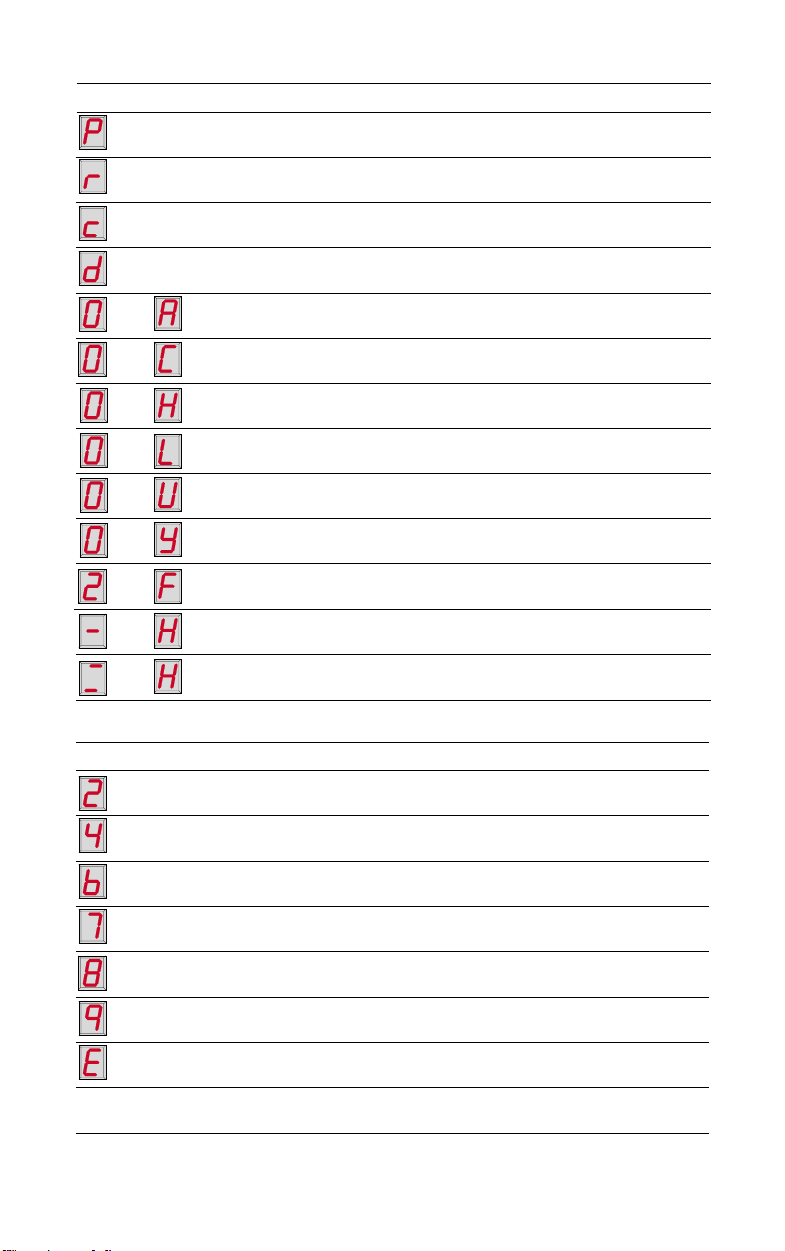
A display on the control unit indicates what is
happening at any given moment. If a malfunction
occurs, the control panel will first try to solve the
malfunction by itself. If the control panel is unable to
do so, the unit will be switched off and a code will
appear on the display, indicating the problem.
Based on this code, the installer can find the cause
of the malfunction and solve it.
The control panel is equipped with a number of push
buttons and adjustments. Their function is described
in the relevant sections of this user's instructions.
Room thermostat
The unit can operate with all common volt free or
24V room (clock) thermostats.
Option kits available:
• Remote indication alarm kit.
• Cascade control (MBC 5) for multiple
boiler installations.
Ask your installer for details of the above options!
Figure 1 Pressure/temperature gauge
The manufacturer of the central heating boiler accepts no liability for damage caused by the
lack of observation of the user's instructions.
211035
705.276 [b.w.] 12/4/00 13:26 Pagina 3