1 General Function 5
1 General Function
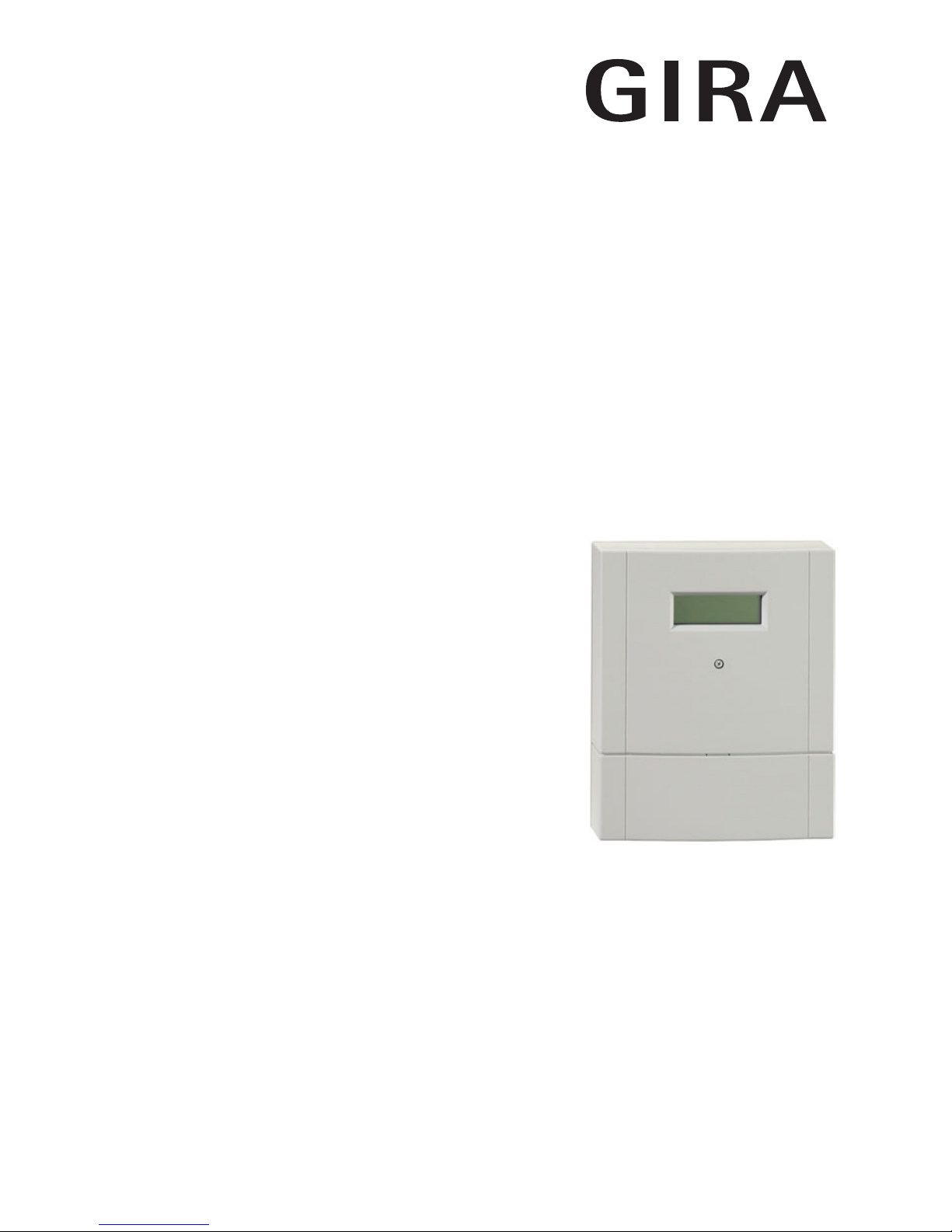
The TeleCoppler 2 is an alarm-
ing and remote switching de-
vice by which up to 6 conven-
tional devices can be
switched via telephone. All
settings will be saved in case
of a power failure – except
for time and date. The be-
havior of the exits in case of a
power failure can be set (after
return of the power voltage:
ON, OFF or restoring the
switching state before the
power failure).
Conventional relays or current-
impulse switches can be con-
nected to the switching out-
puts.
Furthermore, the TeleCoppler
2 is sending messages to se-
lected participants (cf. phone
numbers). These messages
are activated by up to 6 con-
tacts (sensors) which are con-
nected to the alarm inputs (N1
to N6). At each of the inputs
break or make contacts can
be installed.
Should given messages –
send off by the alarm inputs
M1 to M6 – not be confirmed,
then a local alarm exit will be
switched.
The controlling will either be
performed with a DTMF tele-
phone (DTMF = Dual-tone
multi-frequency) or with a
DTMF pocket dialer (optional).
In case of an answering ma-
chine being used at an analog
connection (AB mode), either
the answering machine or the
TeleCoppler 2 can be ad-
dressed.
Individual user data are easy
to program.
The TeleCoppler 2 is operated
by turnkey. Operation is sup-
ported by plain texts on a 20
character 4 line alphanumeric
LCD field and also by an-
nouncements (see page 51).
The user can choose among
6 display languages for the
messages.
The respective software is en-
closed in the scope of deliv-
ery and supports comfortable
configuration. The PC must
have a serial interface.
Messages are transferred ex-
actly to the selected partici-
pants by announcements,
SMS, e-mail, or fax. The num-
ber of dial attempts (0 to 12)
can be set.
The announcements can be
individually recorded by the
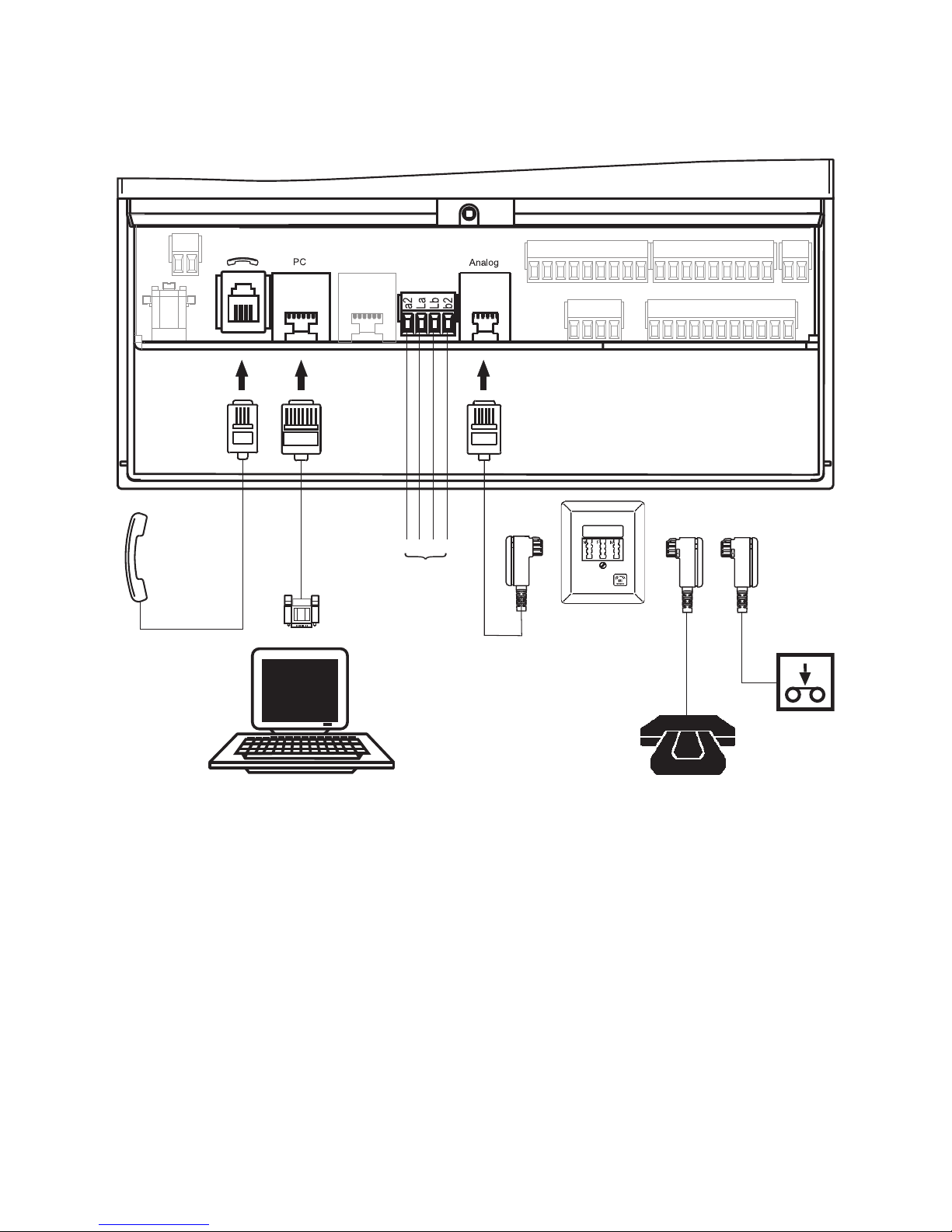
user. In order to do this, the
handset (optional) with the 4-
way RJ10 connector has to
be inserted in the socket (see
figure on page 9). The exam-
ples shown in chapter ”Func-
tion” will explain the operation.