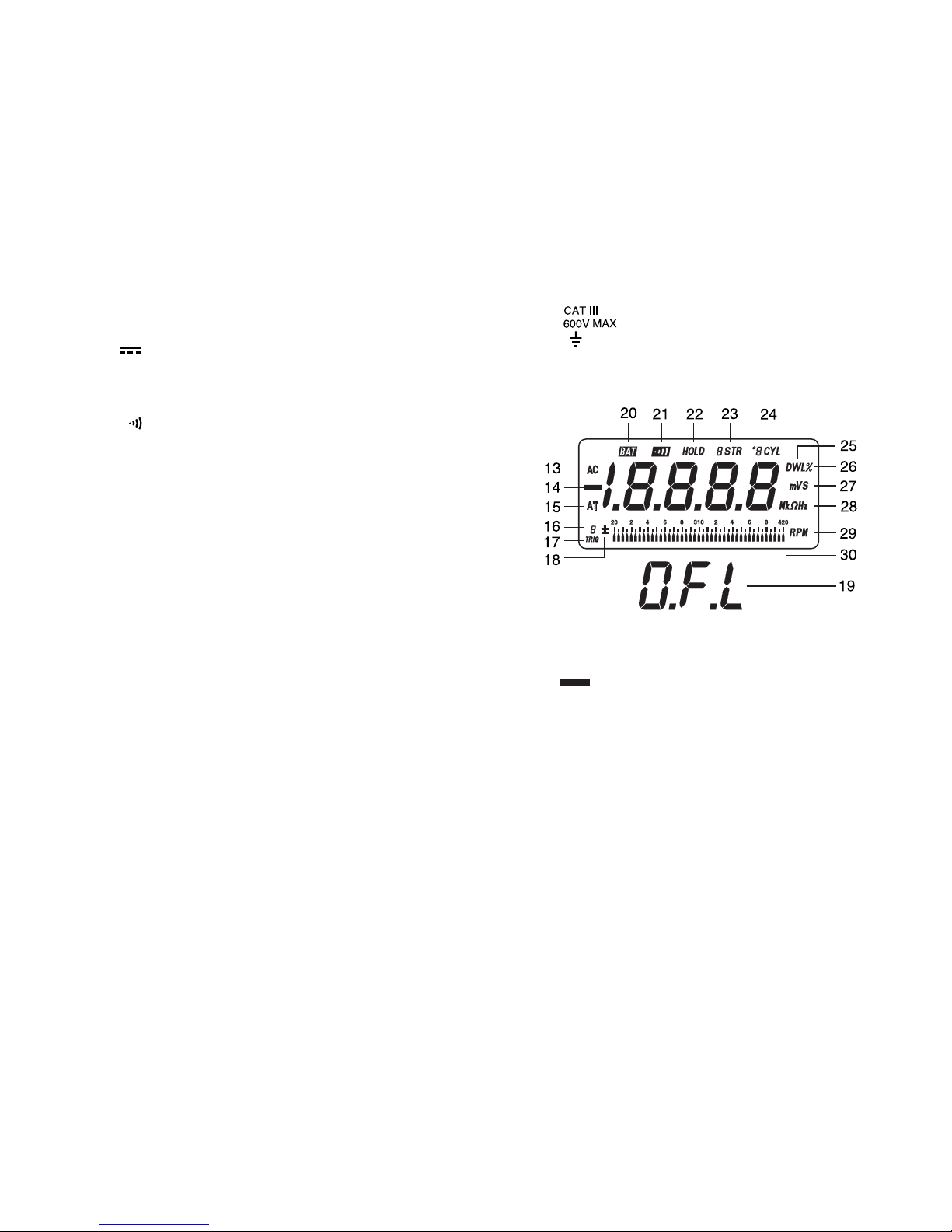
■Keep cigarettes, sparks, and open flame away from battery at all
times.
■Keep yourself clear of all moving or hot engine parts.
■Always avoid working alone.
■Do not try to measure any voltage that exceeds 600 V dc or ac
rms.
■Voltages above 25 V dc or ac rms may constitute a serious
shock hazard.
■Do not attempt to use this instrument if either the instrument or
the test leads have been damaged.
■Use a clamp current probe.
■Avoid electrical shock: do not touch the test leads, tips or the
circuit being tested.
■Select the proper function and range for the measurement.
Do not try voltage measurements that may exceed the ratings
marked on the input limit for switch or terminal.
■Disconnect the live test lead before disconnecting the common
test lead.
International symbols
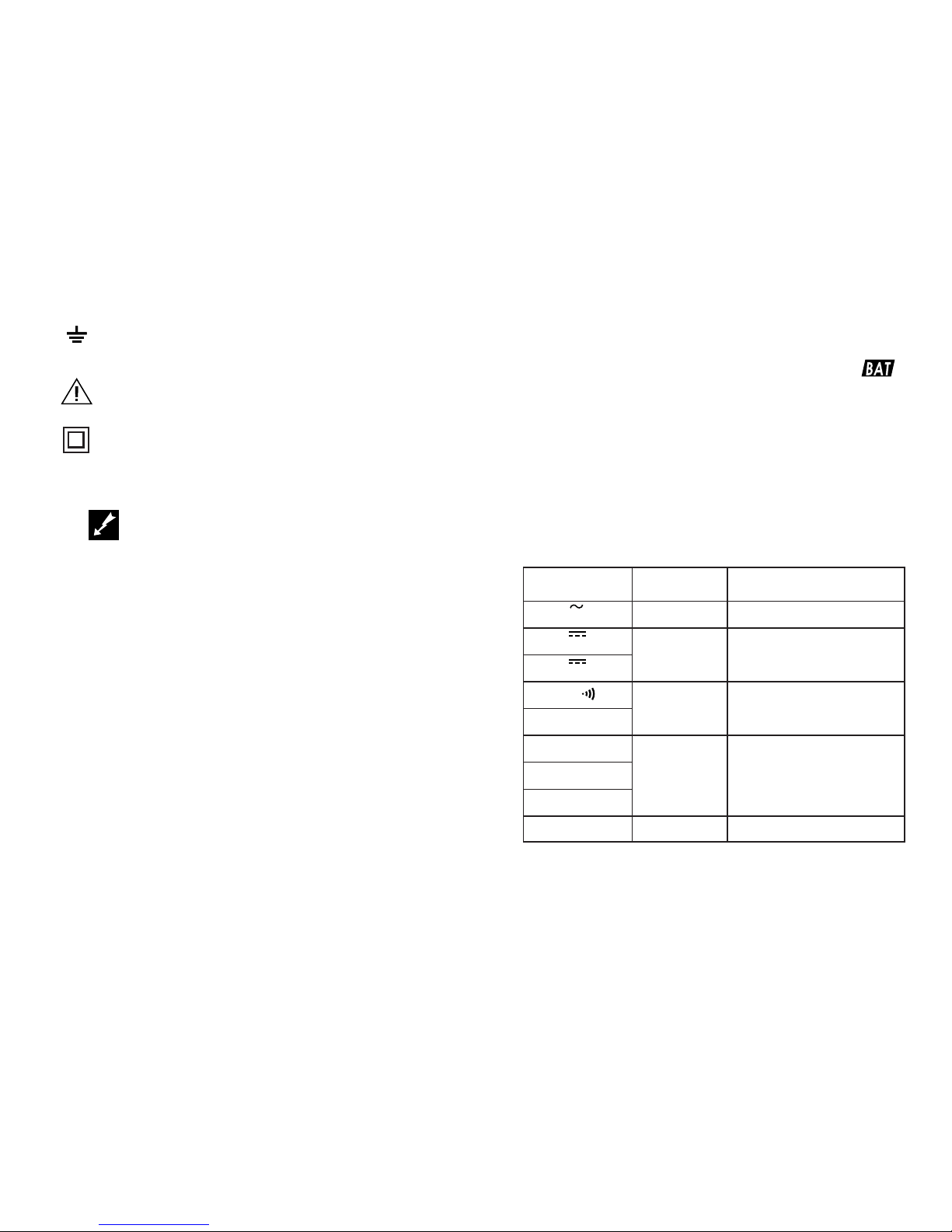
Dangerous Voltage ( Risk of electric shock)
Alternating Current (ac)
Direct Current (dc)
Either dc or ac
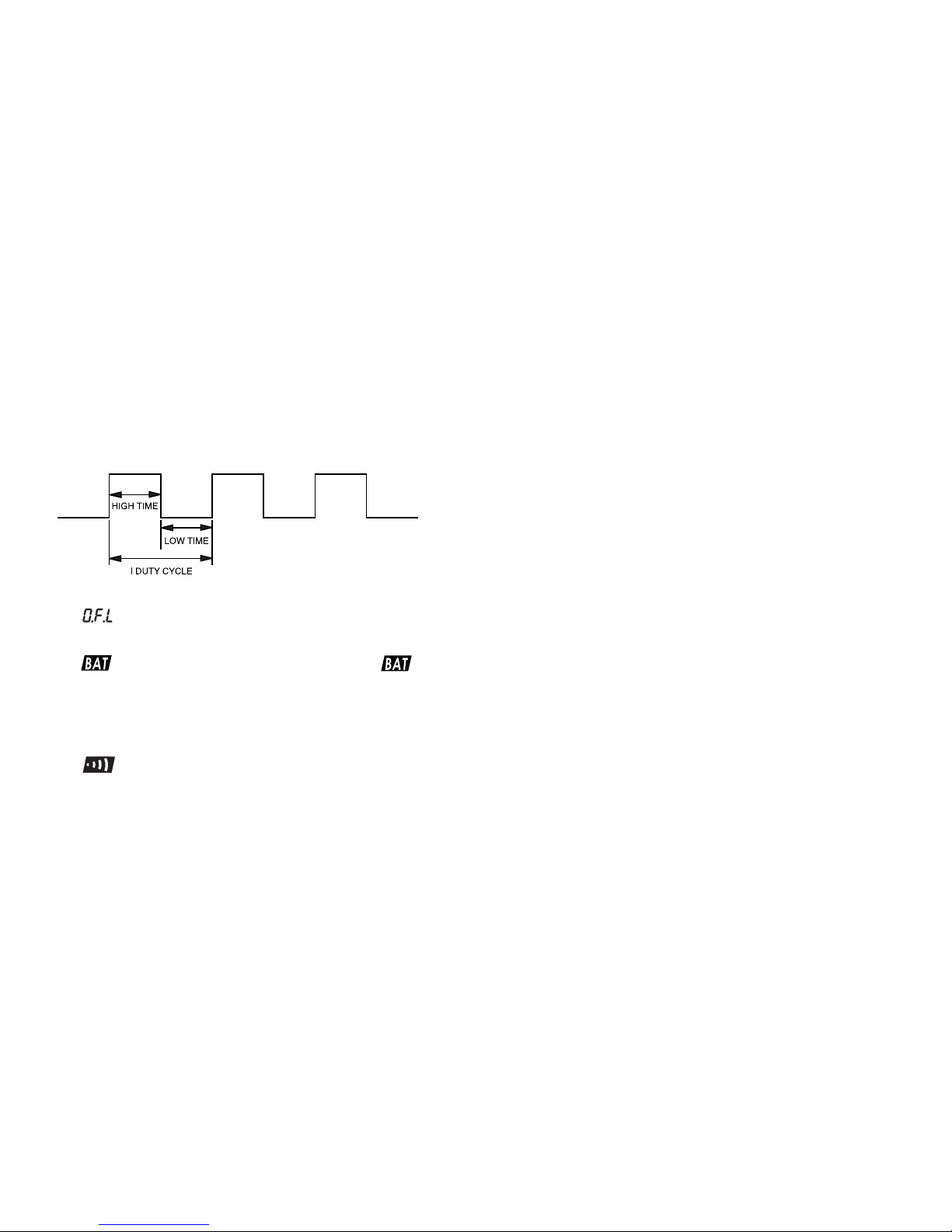
¥This instrument exercises 4 step adjustable +/- triggers on 1 to 8
Cylinders, motorcycles and conventional engines for accurate
measurements of RPM, Dwell, Duty-cycle, and mS-Pulse Width
of injectors.
¥Accurate non-automotive Frequency measurements with 20000
count on the high resolution 4000 count display [ 226 Only ]
¥Temperature measurement up to 2,498 ˚F (or 1,370 ˚C) for
catalytic converters, fan switch on/off,.... [ 228 Only ]
¥Non-TRMS
Electricity is dangerous and can cause injury and death. Always
treat it with the greatest of respect and care. If you are not quite
sure how to proceed, stop and take advice from a qualified person.
■Exhaust gas contains carbon monoxide which is odorless, causes
slower reaction time, and can lead to serious injury. When testing
vehicle with engine running, testing should be always done in a
well-ventilated area or route exhaust gas outside.
■Set the parking brake and block the wheels before testing or
repairing the vehicle, unless instructed otherwise. It is
especially important to block the wheels on front-wheel drive
vehicles: The parking brake does not hold the drive wheels.
The ignition or fuel system must always be disabled when
performing starting system tests.
■Always wear an eye shield when working near batteries.
■Do not smoke or allow open flames or sparks in the work area.
Gasoline fumes and gases produced by batteries are highly
explosive.
2. SAFETY CONSIDERATIONS
4 5