SAFETY PRECAUTIONS
Although all valve-regulated batteries have the electrolyte
immobilized within the cell, the electrical hazard associated
with batteries still exists. Work performed on these
atteries should e done with the tools and the protective
equipment listed elow. Valve-regulated battery installations
should be supervised by personnel familiar with batteries
and battery safety precautions.
Protective Equipment
To assure safe battery handling, installation and
maintenance, the following protection equipment should
be used:
1. Safety glasses or face shield
2. Acid-resistant gloves
3. Protective aprons and safety shoes
4. Proper lifting devices
5. Properly insulated tools
Procedures
The following safety procedures should be followed during
installation: (Always wear safety glasses or face shield
when working on or near atteries.
)
1. These batteries contain no free-flowing electrolyte.
Under normal operating conditions, they do not present
any acid danger. However, if the battery jar or cover is
damaged, acid could be present. Sulfuric acid is harmful
to the skin and eyes. Flush affected area with water
immediately and consult a physician if splashed in the
eyes.
2. Prohi it smoking and open flames, and avoid arcing in
the immediate vicinity of the attery.
3. Do not wear metallic objects, such as jewelry, while
working on batteries. Do not store un-insulated tools in
pockets or tool belt while working in vicinity of battery.
4. Keep the top of the battery dry and clear of tools and
other foreign objects.
5. Provide adequate ventilation (per IEEE standard 1187
and/or local codes) and follow recommended charging
voltages.
6. Extinguishing media: Class ABC extinguisher.
Note: CO2may be sed b t not directly on the cells
d e to thermal shock and potential cracking of cases.
7. Never remove or tamper with the pressure relief valves.
Warranty void if vent valve is removed.
8. Inspect all flooring and lifting equipment for functional
adequacy.
9. Adequately secure battery modules, racks, or cabinets
to the floor.
10. Connect support structures to ground system in
accordance with applicable codes.
11. The below IEEE Standards contain additional information.
Other standards may be relevant to your specific applica-
tion.
IEEE 1187 – Recommended Practice for Installation
Design of VRLA Batteries
IEEE 1188 – Recommended Practice for Maintenance,
Testing, of VRLA Batteries
IEEE 1189 – Selection of VRLA Batteries for Stationary
Applications
RECEIVING & STORAGE
Receivin Inspection
Upon receipt, and at the time of actual unloading, each pack-
age should be visually inspected for any possible damage or
electrolyte leakage. If either is evident, a more detailed
inspection of the entire shipment should be conducted and
noted on the bill of lading. Record receipt date, inspection
data and notify carrier of any damage.
Unpackin
1. Always wear eye protection.
2. Check for visible defects such as cracked containers,
loose terminal posts, or other unrepairable problems.
Batteries with these defects must be replaced.
3. Check the contents of the package against the packaging
list. Report any missing parts or shipping damage to
your East Penn agent or East Penn Mfg. Co. immediately.
4. Never lift batteries by the terminal posts.
5. When lifting batteries, the proper equipment is needed
such as a forklift or a portable crane. Always check the
lifting capacities of the equipment being used and never
lift more than one module at a time by the module
mounting holes.
Stora e
1. Cells should be stored indoors in a clean, level, dry, cool
location. Recommended storage temperature is 0˚F to
90˚F (–18˚C to 32˚C).
2. Stored lead-acid batteries self discharge and must be
given a boost charge six months from the date of
manufacture to prevent permanent performance
degradation. Record dates and conditions for all charges
during storage.
3. Recommended charge during storage is at a constant
voltage of 0.05 volts per cell greater than recommended
float voltage for 24 hours. Reference voltage chart in
SYSTEM OPERATION section.
4. Do not store beyond 12 months.
5. Store in horizontal position only.
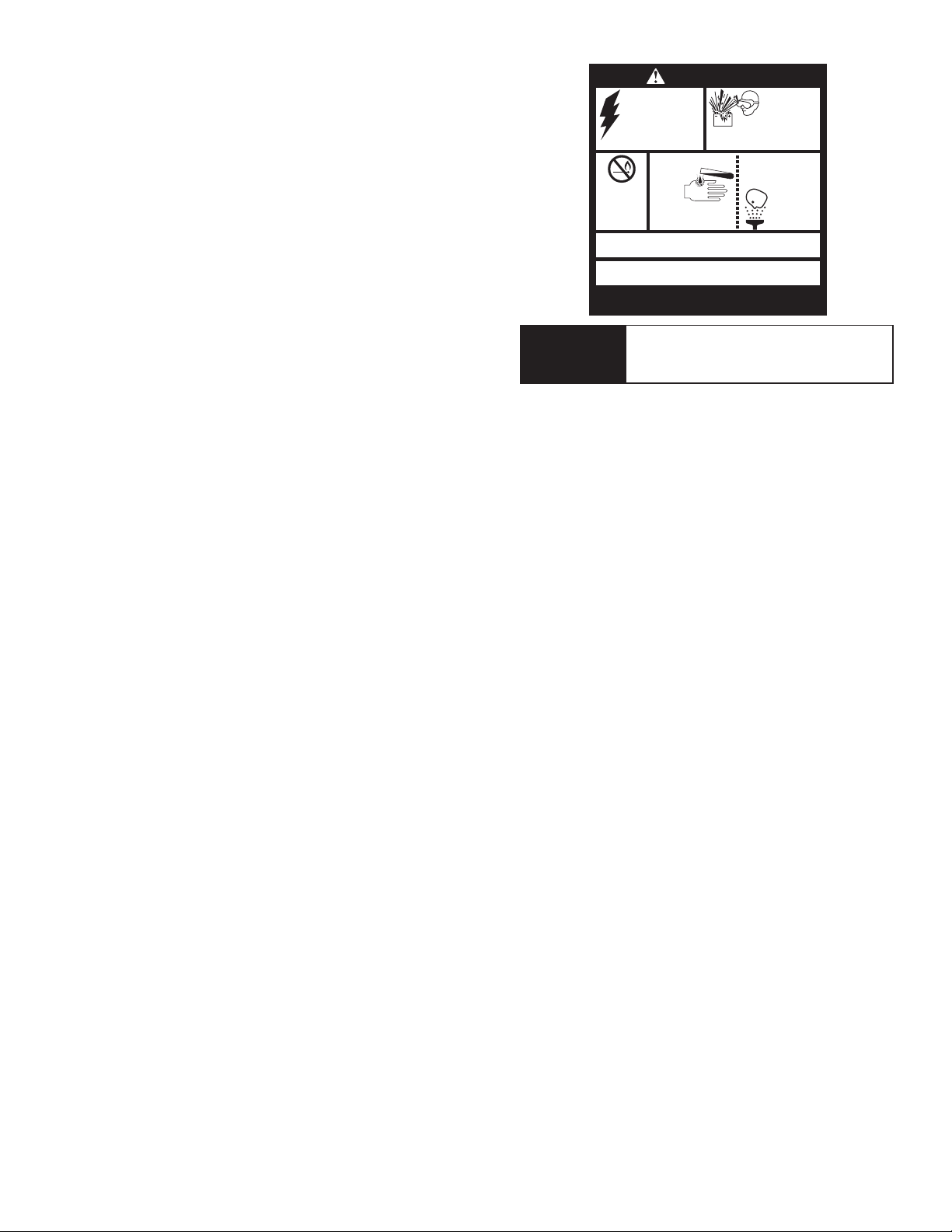
DANGER
SHIELD
EYES.
EXPLOSIVE
GASES CAN CAUSE
BLINDNESS OR INJURY.
HIGH VOLTAGE...
RISK OF SHOCK.
DO NOT TOUCH
UNINSULATED
TERMINALS OR
CONNECTORS.
VENTILATE WELL WHEN IN AN ENCLOSED
SPACE AND WHEN CHARGING.
SEE INSTALLATION, MAINTENANCE AND OPERATION
INSTRUCTIONS FOR IMPORTANT SAFETY PRECAUTIONS.
NO
•SPARKS
•FLAMES
•SMOKING
SULFURIC
ACID
CAN
CAUSE
BLINDNESS OR
SEVERE BURNS.
FLUSH EYES
IMMEDIATELY
WITH WATER.
GET
MEDICAL
HELP
FAST.
DO NOT REMOVE VENT VALVE.
WARRANTY VOID IF VENT VALVE IS REMOVED.
Califor ia
Propositio 65
War i g:
Batteries, battery posts, terminals and related accessories
contain lead and lead compounds, and other chemicals known
to the state of California to cause cancer and birth defects or
other reproductive harm. Wash hands after handling.
3