
CHANCE H1876 Manuel utilisateur
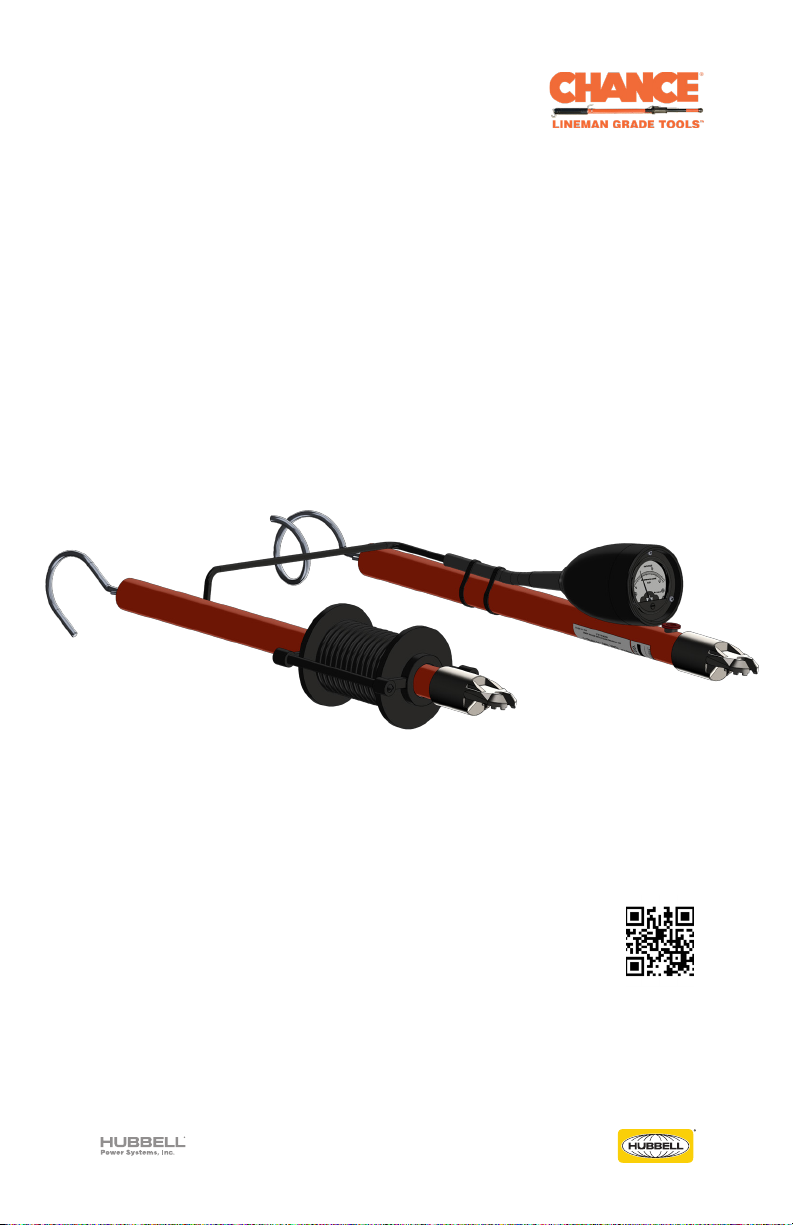
CHANCE® Analog Phasing Meters
Hubbell has a policy of continuous product improvement.
Please visit hubbellpowersystems.com to confirm current design specifications.
Revision A
07/22
Owner's Manual
Model No. H1876, H18761, H18767,
C4030457, C4030458
NOTICE: Before operating a
CHANCE® Phasing Meter, thoroughly
read, understand and follow these
instructions. Keep these instructions
with product for future reference.
2
©2022 Hubbell Incorporated | Chance®Phasing Meter Operating Instructions
Guide to Warnings within Manual
The following is a list of warnings used within this manual and should be read in their entirety
to ensure safe practices.
A DANGER refers to operating procedures, techniques, etc., that, if not followed carefully,
could RESULT IN DEATH.
A WARNING refers to operating procedures, techniques, etc., that, if not followed carefully,
could RESULT IN INJURIES OR DEATH.
A CAUTION refers to operating procedures, techniques, etc., that, if not followed carefully,
could RESULT IN DAMAGE TO EQUIPMENT or LOSS OF SERVICE to customers.
A NOTICE refers to information that is considered important but not hazard related.
!DANGER
!WARNING
!CAUTION
NOTICE
3
©2022 Hubbell Incorporated | Chance®Phasing Meter Operating Instructions
Product Safety
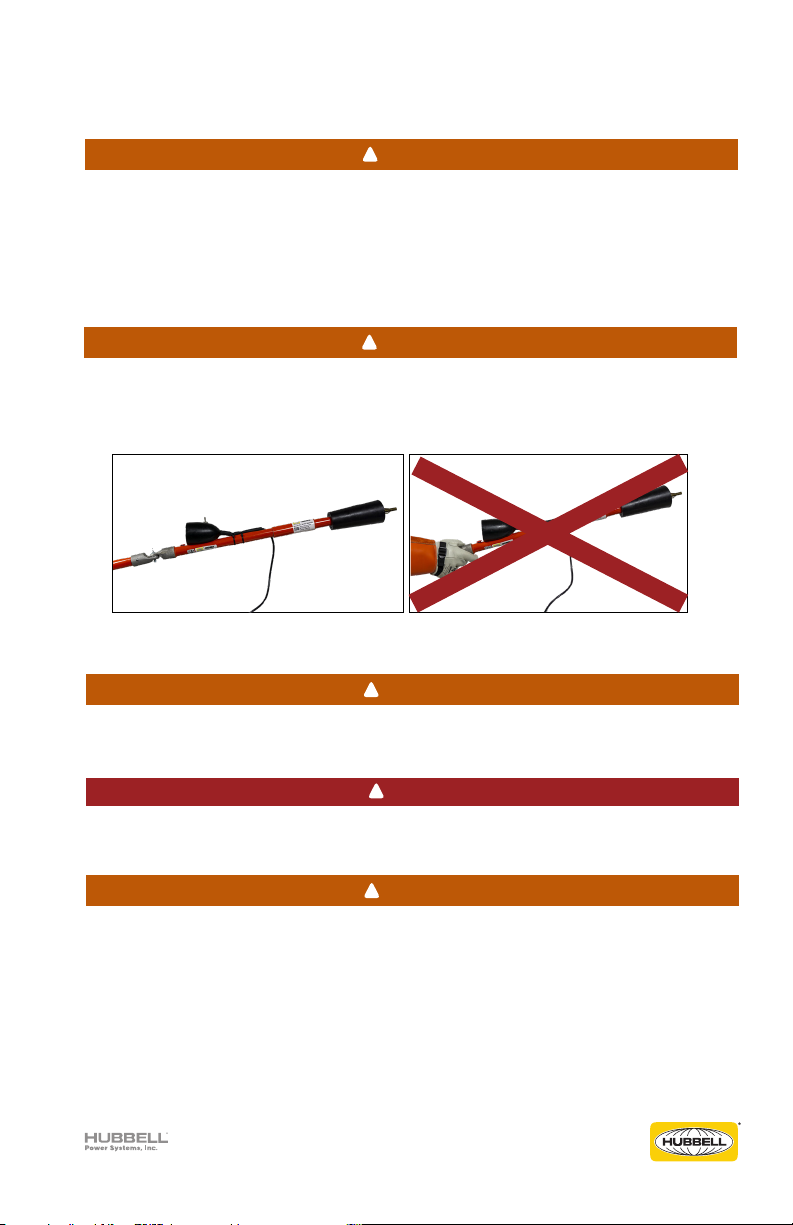
CORRECT USE
INCORRECT USE
Do not allow the universal coupling or housing to become grounded in any way, or to
contact another phase, as this will cause erroneous voltage indication and could cause
severe personal injury or damage to equipment.
When used on higher voltages, observe additional working clearance for the increased
voltage from hands to line parts. Including Epoxiglas™ resistor housings, universal fittings,
meter, and cable.
Always use with an appropriate length insulated hotstick even when wearing rubber
gloves. Contact with the universal coupling or other parts, even with rubber gloves, will
cause erroneous voltage indication. Do not engrave on stick.
Before and after each use, always test the unit on a known energized voltage source or
with an appropriate Voltage Indicator Tester.
Minimum Approach Distances (MAD) should be adhered to at all times. For the latest
information and charts refer to the ocial OSHA website: https://www.osha.gov
The equipment covered in this manual must be used and serviced only by competently
trained personnel familiar with and following approved work and safety practices. This
equipment is for use by such personnel and this manual is not intended as a substitute for
adequate training and experience in safe procedures for this type of equipment.
These instructions neither cover all details or situations in equipment use, nor do they
provide for every possible contingency to be encountered in relation to installation,
operation, or maintenance. Should additional information and details be desired or if
situations arise which are not covered adequately for the user’s purpose, the specifics
should be referred to Hubbell Power Systems.
!WARNING
!WARNING
!WARNING
!DANGER
!WARNING
4
©2022 Hubbell Incorporated | Chance®Phasing Meter Operating Instructions
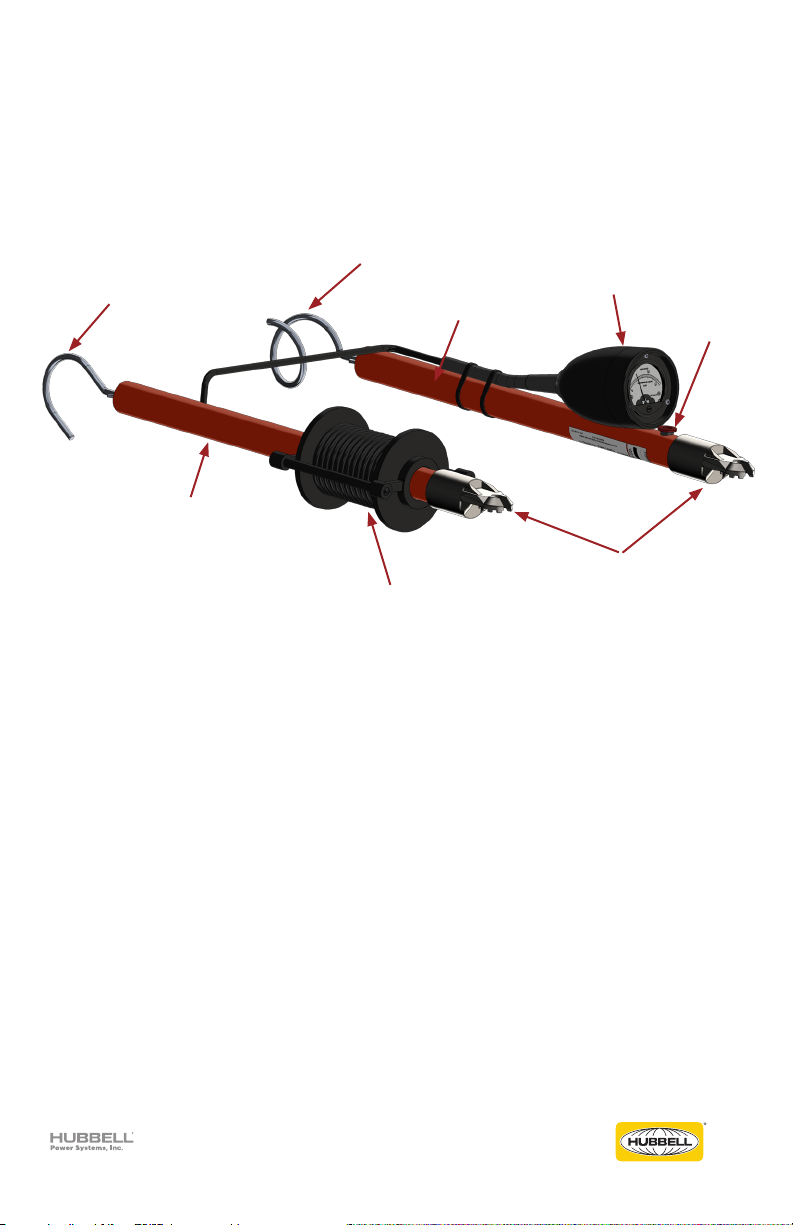
Generic Components of the Phasing Meter
Meter
Cable Reel
Pigtail Hook
Shepherd's Hook
Universal Couplings
Resistor Stick
Resistor Stick
Test Point

5
©2022 Hubbell Incorporated | Chance®Phasing Meter Operating Instructions
Function and Design Overview
The CHANCE®Phasing Meters are portable devices which permit the checking of AC voltages
on distribution and transmission circuits from 1 kV to 161 kV for the purpose of determining
phase relationships and the approximate voltage line-to-line or line-to-ground of the circuits.
When used above 15 kV, extra caution is required to maintain working clearance for the
higher voltage.
The basic instrument, Model No. H18761, is designed for voltages up to 16 kV read directly on
the analog scale of the meter. High impedance resistance units are encapsulated to protect
them from mechanical damage and to prevent moisture penetration or accumulation around
the resistors. The remainder of the handle is foam filled to prevent moisture accumulation.
Between the two resistor units there is a milliammeter and a connecting cable with 15 kV
insulation. The resistors limit current values to less than 1.25 milliamperes at maximum voltage
rating across the probes. Capacitive current to ground through the cable insulation
depends upon area of ground contact. For example, a 4-inch contact pad induced a capacitive
current of less than 40 micro-amperes (0.04 milliamperes) at full voltage. This is below
perception levels. Current to ground resulting from cable insulation failure or damage is limited
to less than 1.5 milliamperes by the resistors.
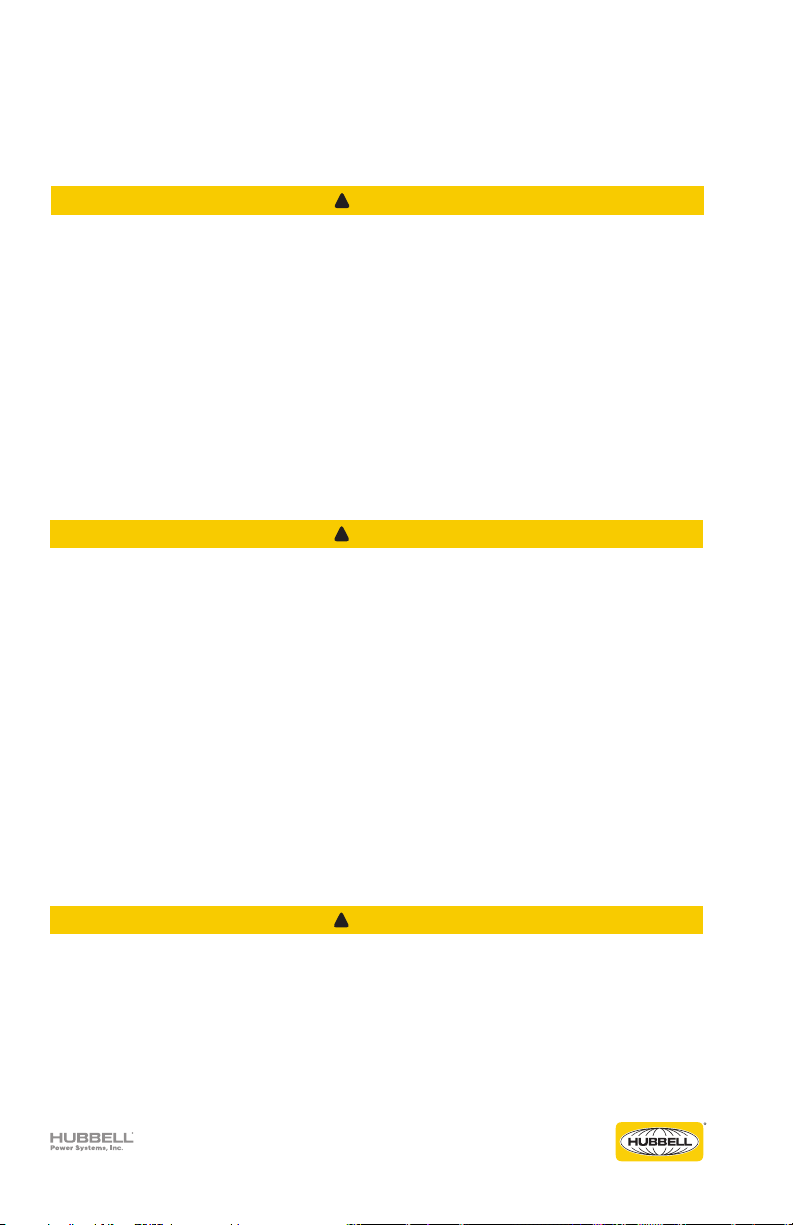
Extension Resistor Sticks are available to increase the voltage range above the instrument's
base voltage. The Extension Resistor Sticks are installed with one on the meter stick and
one on the reel stick. When installed, the scale of the meter will be changed by a factor
determined by which Extension Resistors are used. The space surrounding these resistors is
also encapsulated for mechanical and moisture protection.
For voltages above 16 kV up to 48 kV, add one pair of H18764 Extension Resistors. For
voltages from 48 kV to 80 kV, add one pair of H18762 Extension Resistors. An alternative
application for voltages from 48 kV to 80 kV is to use two pairs of H18764 Extension Resistors,
installed with two on the meter stick and two on the reel stick. NOTE: Extension Resistors are
only for use on 16 kV maximum Phasing Meters.
Extension Resistors
6
©2022 Hubbell Incorporated | Chance®Phasing Meter Operating Instructions
Overhead Operation
The Phasing Meter is equipped with a cable reel on which the cable between the two housings
is stored.
During high voltage testing, only use the length of cable necessary to permit the contacts
to reach between the points of measurement. Any remaining cable length should be kept
wound on the reel.
There are two reasons for this:
1. Cable insulation is limited to 15 kV for light weight and ease of handling. This is adequate
for momentary contact with ground of 15 kV conductors but damaged insulation may
result in an uncomfortable shock if personal contact is made at a damaged area. At higher
voltages, insulation puncture may result. KEEP CABLES FROM CONTACT WITH OTHER
MATERIAL OR PERSONNEL.
2. Meter indications will be aected and error introduced by the capacitance to ground
between the cable and grounded structure, moist concrete, or the earth. Other conductors
will also influence meter indications if the cable is allowed to touch or come in close
proximity to these conductors. RESISTOR ENCLOSURE PORTION CAN PUNCTURE ABOVE
40 kV. KEEP THIS PORTION CLEAR OF CONDUCTORS, STRUCTURES, AND GROUNDS.
This tool is not intended for continuous contact application. Tests at full voltage for 30
minutes produced no damage, although heating of resistors did occur. Contact should be
limited to the time required to note the meter indication.
To measure line-to-ground voltage, the section on which the meter is mounted should
preferably be used at the ground potential contact to minimize stray capacitance influence on
the meter. On line-to-line measurements, contact is made to each phase conductor keeping
connecting cable away from other conductors, grounded or metal structures, and
isolated from contact with platforms or each contact. As noted before, this is to avoid
influence which may distort meter indications.
In tying two energized 3-phase feeders together where it is necessary to match phases,
voltage measurements must be made between a conductor of one circuit and each of
the conductors of the second circuit. This procedure is followed for each phase to avoid
connecting phases in reversed rotation. Re-check the third phase just before making the final
connection to assure proper phase relationship. With matched phases one may expect the
voltage indication to be near zero. More often a voltage will be indicated due to phase shift at
the open point in remotely energized circuits and/or unequal voltage drop. Proper connections
can readily be determined by the meter indications. Preliminary phase-to-phase measurements
of each circuit are recommended to determine that proper voltages are being connected.
In substations, bus and switchgear cubicles, or other crowded areas where electrical fields
are of greater intensity, extra precaution is recommended to avoid disturbing influences
aecting meter indications.
!CAUTION
!CAUTION
!CAUTION

7
©2022 Hubbell Incorporated | Chance®Phasing Meter Operating Instructions
Underground Operation
When using the Phasing Meter on underground systems, the same basic rules and procedures
apply as with overhead, for example, maintaining proper working clearances to all parts of
the tool, keeping tool clean and dry, keeping cable from contacting energized or grounded
surfaces, etc. However, there are some additional considerations when using the tool on
underground equipment.
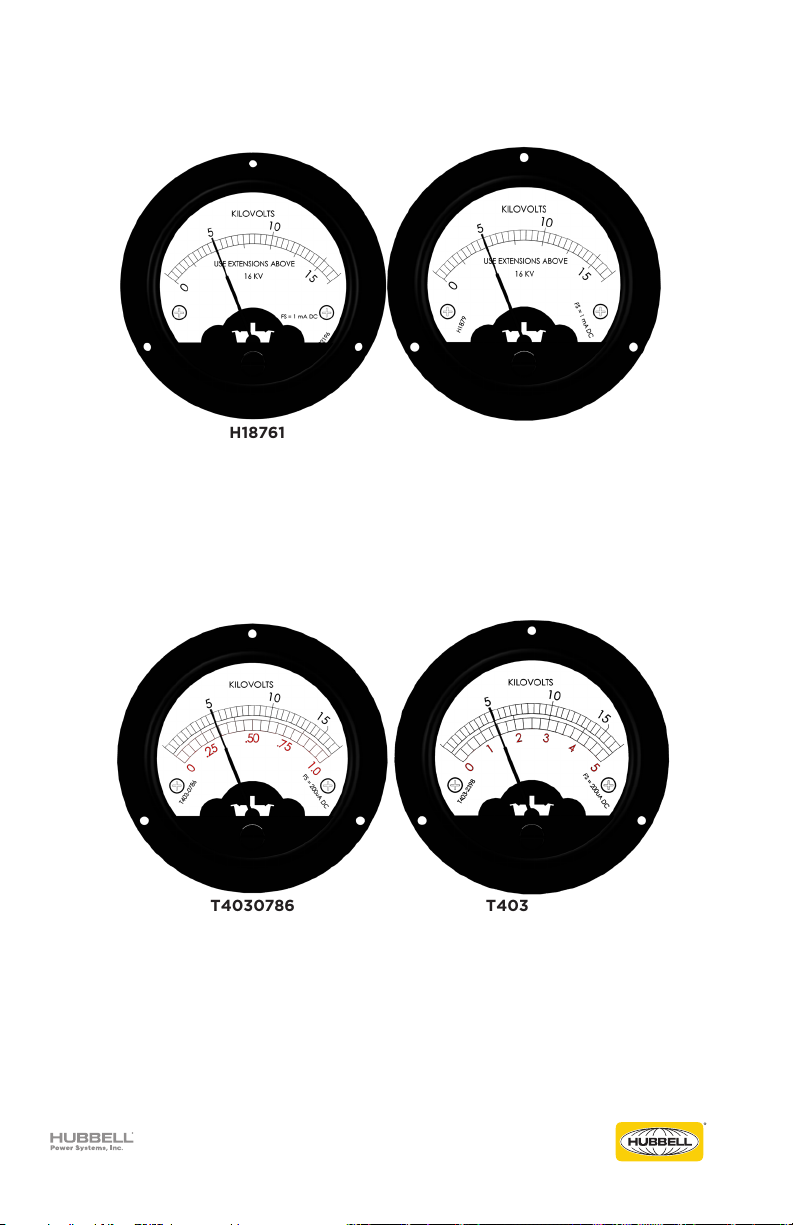
1. When testing dead-front URD equipment, use an appropriate Bushing Adapter on the
Bushing Well. On Capacitive Test Points, use the Straight Probe. Never use the Shepherd
Hook on URD equipment.
2. Use extreme caution when testing live-front URD equipment. Use applicable safe work
practices and procedures. Do not use any Probe or Bushing Adapters on the Phasing
Meter when testing live-front URD equipment. Only use a small hex head machine screw
(1/4-20 X 3/8"long).
!DANGER
8
©2022 Hubbell Incorporated | Chance®Phasing Meter Operating Instructions
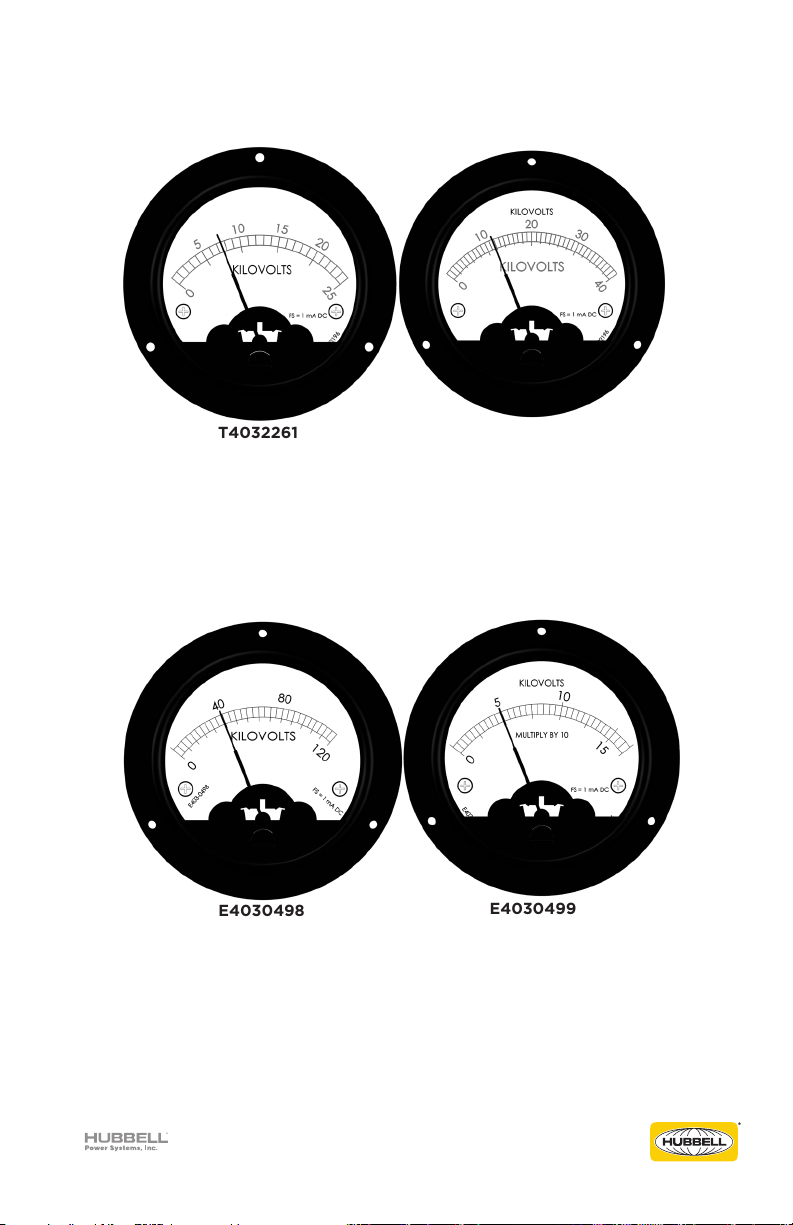
H18761
16 kV
H1879
16 kV
NOTE:
With no extensions, scale is direct reading.
With one PAIR of H18764 extension multiply by 3.
With two PAIRs of H18764 extension multiply by 5.
Dials of Individual Models
T4030786
1 & 16 kV
T4032311
5 & 16 kV
9
©2022 Hubbell Incorporated | Chance®Phasing Meter Operating Instructions
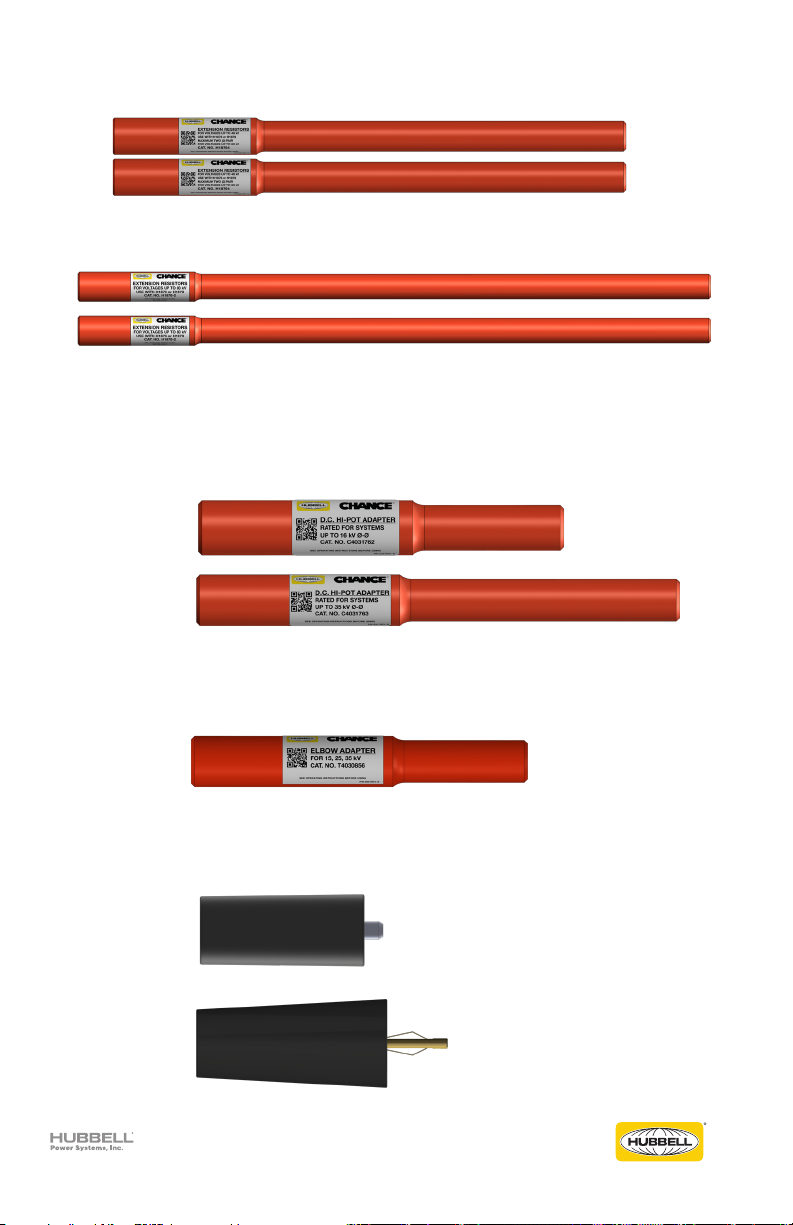
T4032261
25 kV
H18767
40 kV
E4030498
120 kV
NOTE:
Multiply by 10
E4030499
161 kV
10
©2022 Hubbell Incorporated | Chance®Phasing Meter Operating Instructions
DC Hi-Pot Adapters
C4031762
Up to 16 kV
C4031763
Up to 35 kV
Elbow Adapters
T4030856
Up to 35 kV
Bushing Adapters
T4030428
Up to 15 kV
T4030857
Up to 35 kV
Extensions
H18764
48 kV Extension
Use ONLY with 16 kV models
H18762
80 kV Extension
Use ONLY with 16 kV models
Ce manuel convient aux modèles suivants
4
Table des matières
Manuels Instrument de mesure populaires d'autres marques


Endress+Hauser
Endress+Hauser Proline Promag 50 Caractéristiques techniques

Siemens
Siemens SITRANS F Coriolis FCT030 Manuel de la liste des pièces

KLINGER
KLINGER CMF V Series Manuel utilisateur

EXFO
EXFO FTB-2 Manuel d'exploitation et d'entretien

Keysight
Keysight M8290A Manuel utilisateur

ADTEK
ADTEK MW-5 Manuel utilisateur