
CARRON 11KW SE Manuel utilisateur
A qualified solid fuel engineer must carry out the installation of this stove.
We cannot accept responsibility for products not installed in this way.
All local regulations, including those referring to national and European
Standards need to be complied with when installing the appliance.
A list of qualified engineers is available from: www.hetas.co.uk
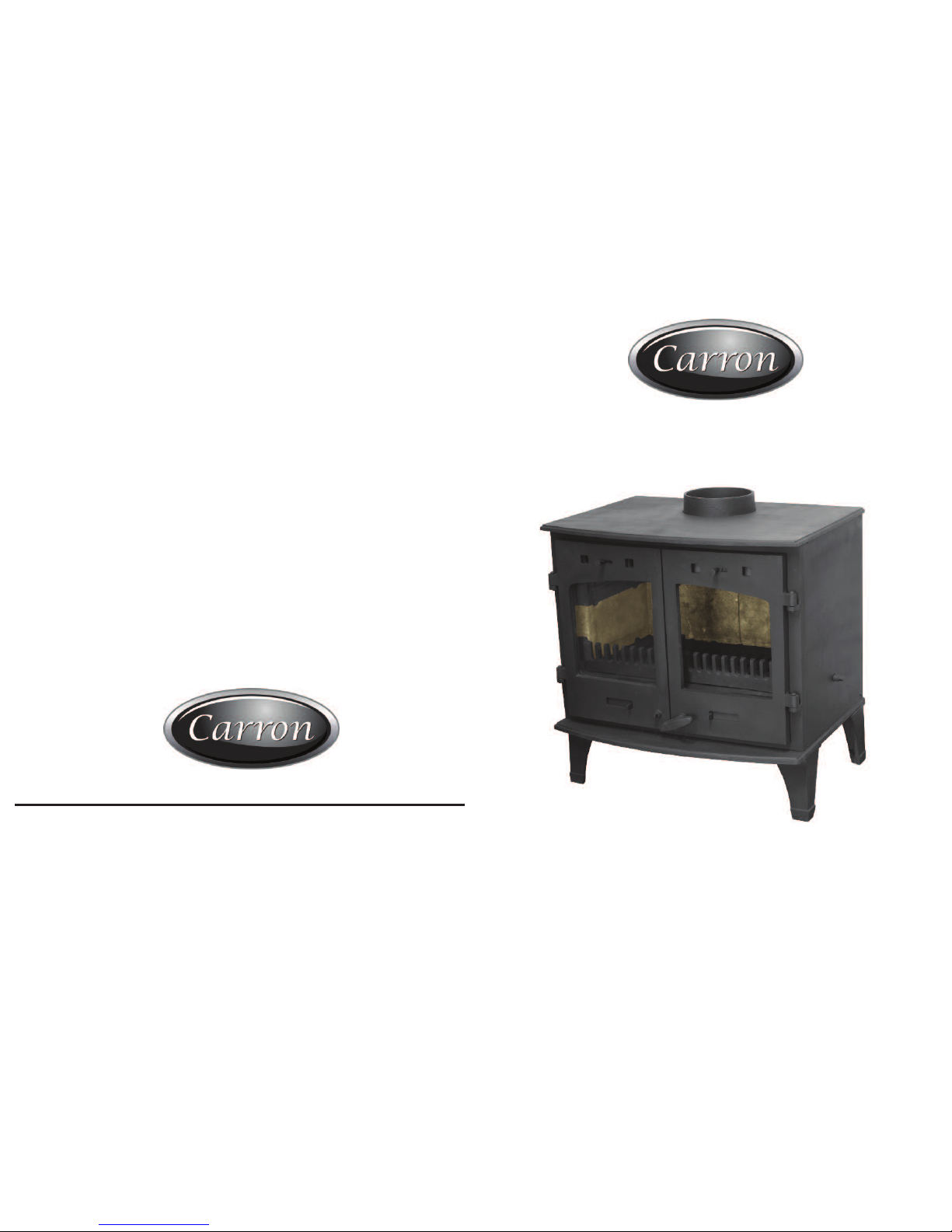
CARR N 11KW SE CAST IR N ST VE
INSTALLATI N AND PERATING INSTRUCTI NS
CARRON 11 W SE STOVE MODEL SEPTEMBER 2012 (SMO E EXEMPT)
Carron stoves are imported and distributed in the UK by:
JIG UK Ltd, Hurlingham Business Park, Fulbeck Heath,
Grantham, Lincolnshire, NG32 3HL
email: sales@carron.uk.net freephone: 0808 129 2224
www.carron.uk.net
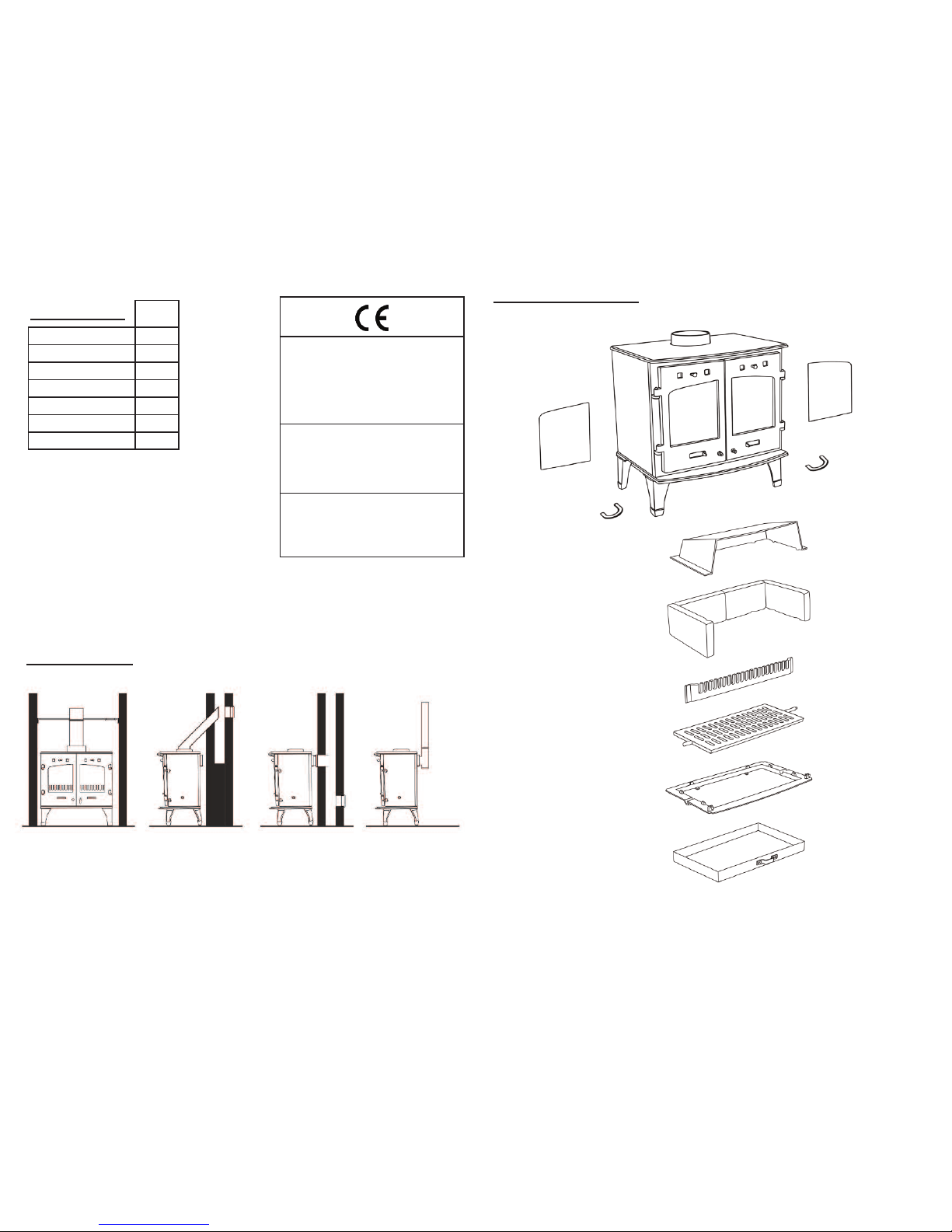
Technical Data
Flue Connection
JIG U Ltd
Hurlingham Business Park
Fulbeck Heath
Grantham
Lincolnshire
NG32 3HL
07
EN13240:2001
THE CARR N ST VE
Minimum distance to combustible materials:
Behind the stove: 1000mm
To the side of the stove: 700mm
CO at 13% 02: 0.35%
Flue gas temperature: 370ºC
Efficiency:77.3%
Nominal Output: 10.9kW
Fuel Type: Wood
Output 10.9kW
Efficiency 77.3%
CO at 13% 02 0.35%
Flue temperature 370°C
Flue draught 12Pa
Flue gas mass flow 6.6g/s
Weight of Stove 132.5 g
Wood
Attach the flue outlet to the stove with the screws and nuts provided. Use a steel closure plate to
seal off the chimney; a cleaning door must be fitted into the plate or flue, and a steel sealing collar
must be used to fit the flue into the steel plate. Seal all joins with fire cement.
Replacement parts list
1
2
3
4
5
6
7
1. Asphan (BHC613) 4. Front firebar (BHC608) 7. Handle (BHC614)
2. Grate frame (BHC610) 5. Firebrick set (BHC612) 8. Glass (BHC611)
3. Grate (BHC609) 6. Baffle plate (BHC618) (2 pieces)
8

Installation instructions
Ensure that the floor has sufficient load bearing capacity.
Fit a load bearing plate if necessary.
To ensure that your chimney meets the required specifications it must: -
- be at least 5 metres high
- have no bends sharper than 45 degrees
- be swept clear of any obstructions by a qualified chimney sweep
- terminate at least 1 metre above any roof ridge
- have an internal cross-section of between 0.018m2and 0.14m2
- be free from sources of leakage
- be connected only to the one appliance i.e. not a shared flue system
- be well insulated, or have a wall thickness of at least 100mm
Attach the legs using the bolts supplied. Place the stove on a solid non-combustible
hearth extending 300mm at the front of the stove, 150mm either side of the stove and
50mm at the rear. The hearth must have a thickness of at least 150mm. (Refer to
document J of the U Building Regulations)
Minimum Installation Clearances
Side (mm) Rear (mm)
Combustibles 700 1000
Non Combustibles 250 200
Ensure there is a permanent air entry opening or openings with a total free area of at
least 550mm2 per kW of appliance rated output above 5kW,
ie: 2kw x 550 mm2 =1100 mm2.
When installing any air inlet grilles ensure they are positioned so they are not liable to
blockage.
Note: The Stove must not be installed in a room with an extractor fan operating.
perating Instructions
Fuels suitable for use in your Carron Stove: -
Wood – Logs (200mm - 300mm) should be dried for at least a year prior to
burning, for other fuels please contact the manufacturer. The stove is suitable for
intermittent operation and we recommend a refuel time of 1 hour.
When the stove is to be used in a smoke exempt zone, the secondary air controls must
be changed for the ‘SE’ type. These modified control plates ensure the required 4mm
air supply is maintained.
Lighting the stove for Woodburning – please note that the first fire you light in your
stove should be small, with the air inlet set as low as possible. This will prevent possible
damage to the stove.
Place a small amount of screwed up paper and dry sticks, or several firelighters, at the
back of the grate, and light them. Once they are burning, fill the stove with dry fuel and
set the air control to as high as possible.
Do not fill the stove to a level higher than the bricks, and do not operate the stove with
the door open, except during refuelling.
Refuelling for wood burning - When refuelling with wood, open both the primary and
secondary air for aproximately 5 minutes afterwards, or until the new fuel is well
alight, before closing to the desired settings.
Never leave the room until the new refuel charge is well alight
The Clean Air Act 1993 and Smoke Control Areas
Under the Clean Air Act local authorities may declare the whole or part of the district of
the authority to be a smoke control area. It is an offence to emit smoke from a chimney
of a building, from a furnace or from any fixed boiler if located in a designated smoke
control area. It is also an offence to acquire an "unauthorised fuel" for use within a
smoke control area unless it is used in an "exempt" appliance ("exempted" from the
controls which generally apply in the smoke control area).
The Secretary of State for Environment, Food and Rural Affairs has powers under the
Act to authorise smokeless fuels or exempt appliances for use in smoke control areas in
England. In Scotland and Wales this power rests with Ministers in the devolved
administrations for those countries. Separate legislation, the Clean Air (Northern
Ireland) Order 1981, applies in Northern Ireland. Therefore it is a requirement that fuels
burnt or obtained for use in smoke control areas have been "authorised" in Regulations
and that appliances used to burn solid fuel in those areas (other than "authorised" fuels)
have been exempted by an Order made and signed by the Secretary of State or
Minister in the devolved administrations.
The Carron 11 w Stove has been recommended as suitable for use in smoke control
areas when the secondary air control has been fixed to a minimum closure of 4mm
open and when burning wood logs.
Further information on the requirements of the Clean Air Act can be found here:
http://smokecontrol.defra.gov.uk/
Your local authority is responsible for implementing the Clean Air Act 1993 including
designation and supervision of smoke control areas and you can contact them for
details of Clean Air Act requirements.
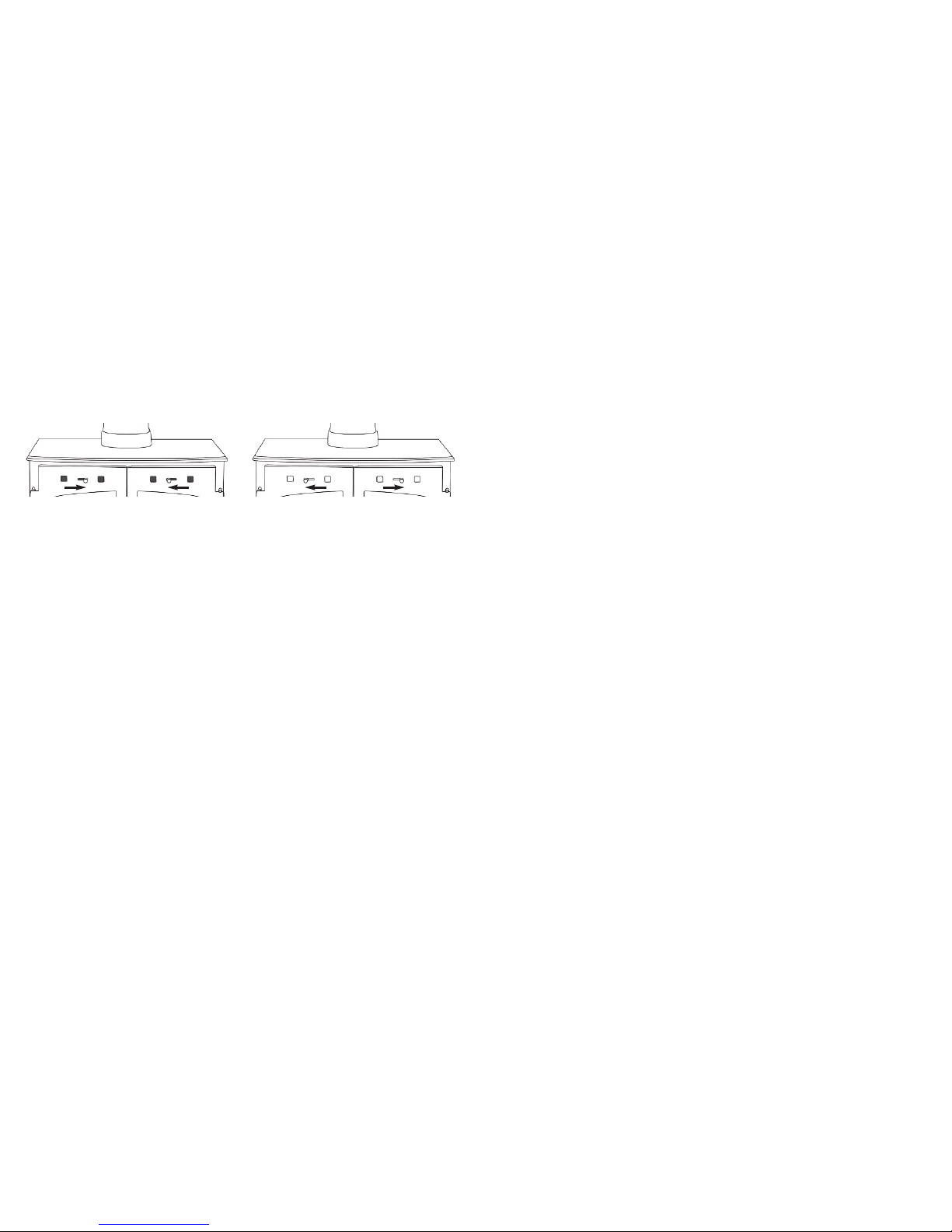
Controlling the stove - Setting the primary air supply (the inlet below the glass doors)
air control – sliding the air controls outwards will allow the maximum amount of air into
the stove, and cause the fire to burn quickly. Sliding it to the centre will allow the
minimum of air into the stove, and the fire will burn more slowly, and give off less heat.
Setting the secondary air supply (the inlet above the glass doors) air control – is the
same operation as above. These air supplies must be kept clear of blockages and
regularly checked. The below diagrams show the operation of the air controls:
If the stove goes out with fuel still in it, the air controls are set too low. Generally the
ideal setting is to have the primary inlet almost closed and the secondary inlet 1/2 open.
However this may vary depending on the flue draught and you will need to fine tune
these settings to suit your preferred burn rate. Should the stove overheat, shut down
the stove by ensuring the door and all inlets are closed.
Operation with the air controls, dampers or door open can cause excess smoke. The
appliance must not be operated with the air controls, dampers or door left open, except
as directed in the instructions.
Cleaning the stove – To ensure the performance of your stove is not affected, regular
cleaning is necessary. To clean, allow the stove to cool, then wipe with a soft damp
cloth. The throat plate should be removed and cleaned monthly along with checking the
door seals for damage.
Do not use any abrasive cleaning products, as they will damage the finish of the stove.
The window is self-cleaning due to the “air-wash” at the top of the door. The use of
damp fuels may cause staining of the window. After long periods of non-use it is
necessary to check the flue for blockages.
Refuelling on to a low fire bed - If there is insufficient burning material in the fire bed
to light a new fuel charge, excessive smoke emission can occur. Refuelling must be
carried out onto a sufficient quantity of glowing embers and ash that the new fuel
charge will ignite in a reasonable period. If there are too few embers in the fire bed, add
suitable kindling to prevent excessive smoke.
Emptying ashes – ensure ashes are entirely cool before they come into contact with
plastic dustbins or bin-bags. It is important that ash does not build up to the extent that
it contacts the underside of the grate.
Precautions to note:
Carron stoves do not contain asbestos. However, please take care not to disturb any
existing asbestos when removing an old stove.
The stove is very heavy; move it with assistance.
Take care to ensure fire cement does not come into contact with skin.
In the unlikely event of a chimney fire, close the stove door and both air supplies,
evacuate the property immediately, and call the fire brigade. Do not attempt to
extinguish your stove.
Persistent fume emission should not occur if the product is properly installed and
operated. However, should this occur, take immediate action as follows:-
- ventilate the room
- extinguish the fire
- check the chimney/flue for blockages and clean if required
Seek expert advice if necessary.
The stove and flue pipe will become extremely hot during use; take care especially
when children or the infirm are present. Do not store flammable materials near to the
stove. Any combustible furnishings must be at least 700mm away.
Only use replacement parts supplied by the manufacturer and do not modify the stove
in any way.
Warranty
Carron Stoves are supplied with a 3 year stove body and 1 year inner components
warranty.
This warranty does not cover items considered consumables. These items include door
glass, fire bricks, fire rope and grates. The use of incorrect fuels would invalidate this
warranty.
This appliance must be installed by a HETAS engineer. Proof of purchase and
certificate of installation would be required in the case of a warranty claim.
Occasionally the enamel finish can show a crazing/cracking effect on the surface of the
stove during use. This effect will normally lessen as the stove cools and should not be
considered a defect. This crazing effect can be made worse by incorrect fuel or
over-fueling.
Air Supply Closed
Slide air controls to centre Slide air controls outwards
Air Supply pen
Table des matières
Autres manuels CARRON Poêle


Manuels Poêle populaires d'autres marques


Vermont Castings
Vermont Castings Intrepid 2 Manuel utilisateur

Italiana Camini
Italiana Camini CLASSICA Guide de démarrage rapide

Avalon
Avalon Vashon Avanti DVS FS Manuel utilisateur

Spartherm
Spartherm ambiente a1 Manuel utilisateur

Dimplex
Dimplex MCFSTV12AU Manuel utilisateur

Warmlite
Warmlite WL46040 Manuel utilisateur