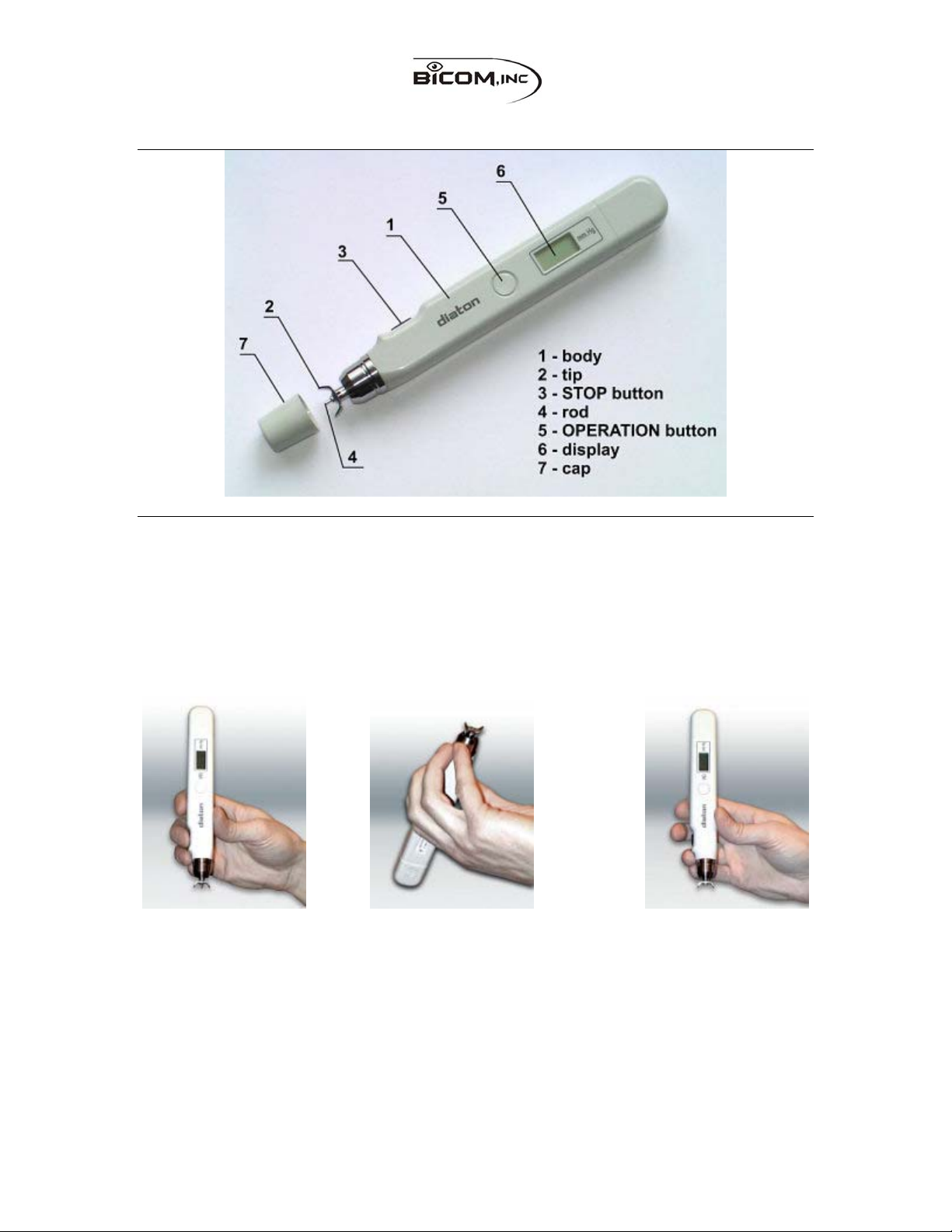
Testing the tonometer.
The storing case is equipped with a round testing plate that should be used to test the tonometer
and to practice your skill at using it.
While holding the tonometer strictly vertically (the sound signal alerts of the incorrect position),
place the tip supports into the indentations on the testing circle of the storing case as shown in
Figure 3 (page 1)
Press the tonometer slightly down to make the rod fall. You will hear a short sound and the test
results will show in the display window.
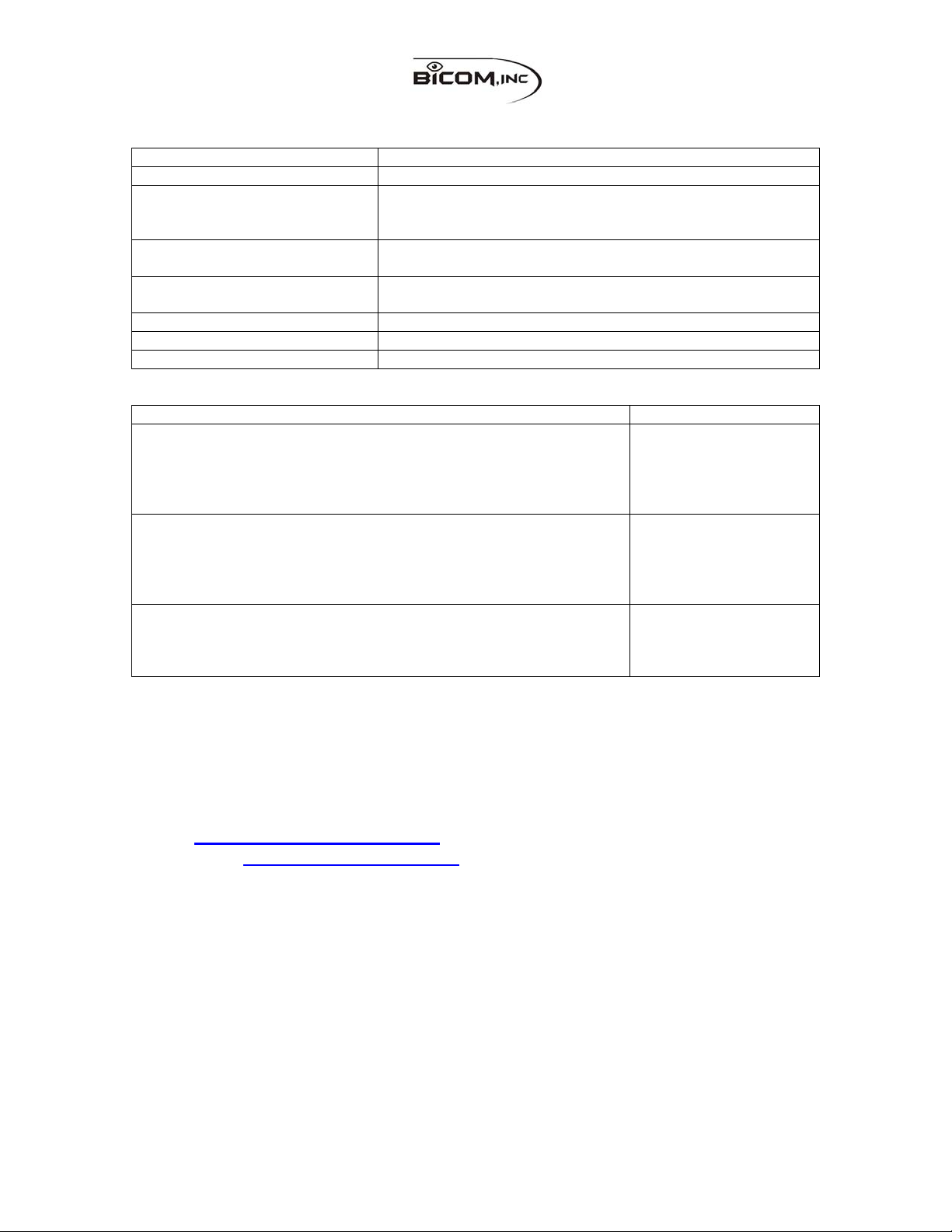
Repeat the test 6 times and if the displayed results are within the range of 18-22 and there are no
L (a new test is needed) or H (cleaning is needed) indicators, the tonometer is working properly
and you are using it correctly.
Turning off the tonometer.
To turn the tonometer off, press the Operation button twice. If you haven’t touched the tonometer
for 30 seconds, it will turn off by itself.
TESTING FOR INTRAOCULAR PREASSURE
Preparing for the test.
- Make sure the patient is sitting or reclining with the patient’s head placed horizontally on
a head support.
- Check if the tonometer’s tip and the rod have been disinfected.
- Make sure the tonometer is functioning properly, it is turned on and the rod is retracted.
IOP test procedure.
Fix the patient’s glance on an object. It is recommended to instruct the patient to extent one arm
at the 45 degree angle and keep looking at the index finger. (Figure 4)
Figure 4 Figure 5
Stand behind the patient and on the left - if you are right-handed, or on the right – if you are left-
handed.
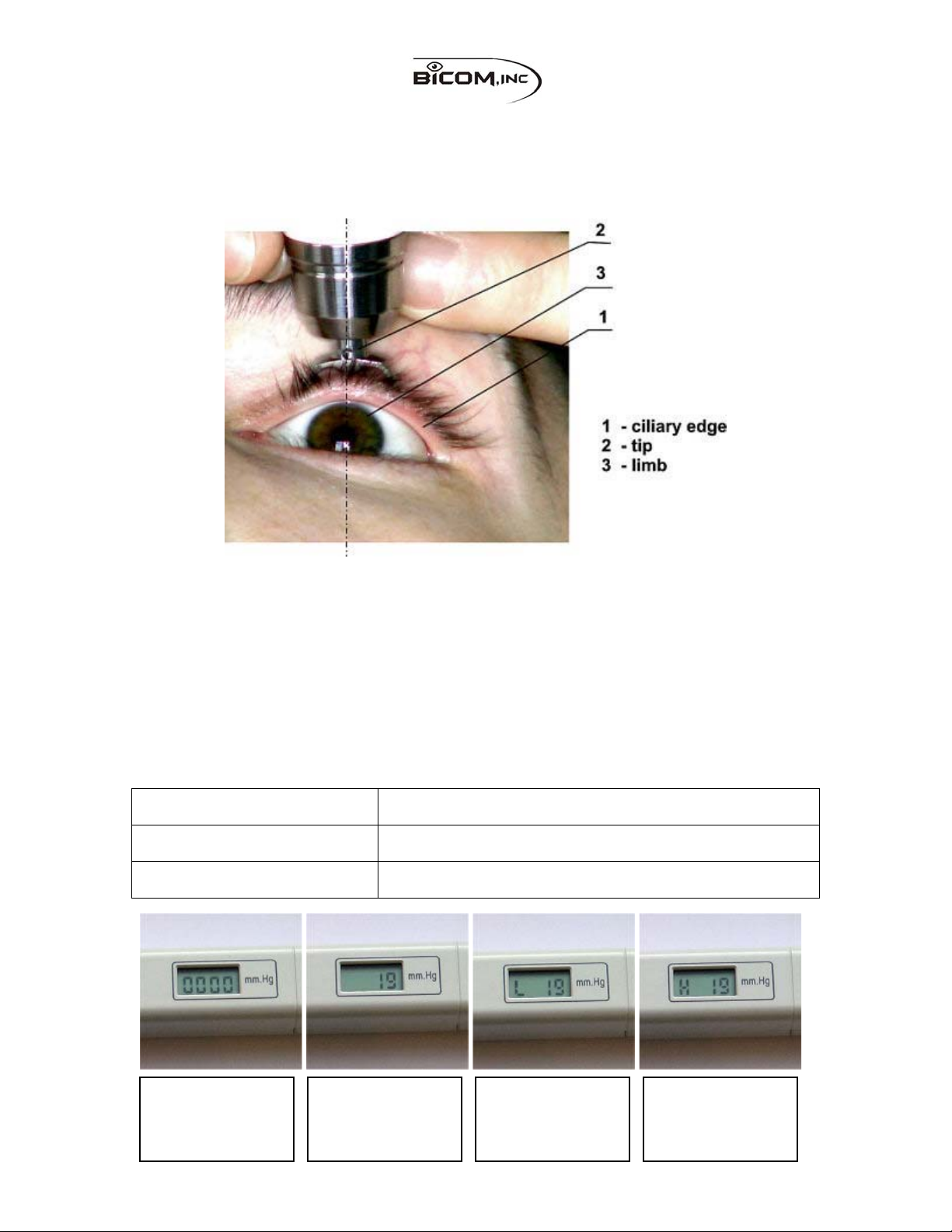
Using a finger of the free hand, stretch the patient’s eyelid up as shown in Figure 5 till the edge of
the upper eyelid coincides with the limb. Do not pull the eyelid or press the eyeball! To make
adjustments to the patient’s anatomic peculiarities, move the patient’s focal point.
Place the edge of the hand holding the tonometer on the patient forehead.
Place the tonometer above the patient’s eyelid holding the device strictly vertically until the
interrupted sound signal stops.