The SoundField ST250 Issue 1.5 User Guide
2
Using the ST250
M-S recording, although known for many decades, has in practise been a minority pursuit.
Suitable equipment has not been readily available and whereas most recording engineers could
easily find a reasonably matched pair of cardioids suitable for X-Y recordings, high quality
figure of eight microphones (essential for the S signal) were not so common. M-S and X-Y
recordings are exactly the same fundamentally. The mathematical relationship between the two
is that of a linear transformation. So why M-S? We believe that M-S is a more natural way to
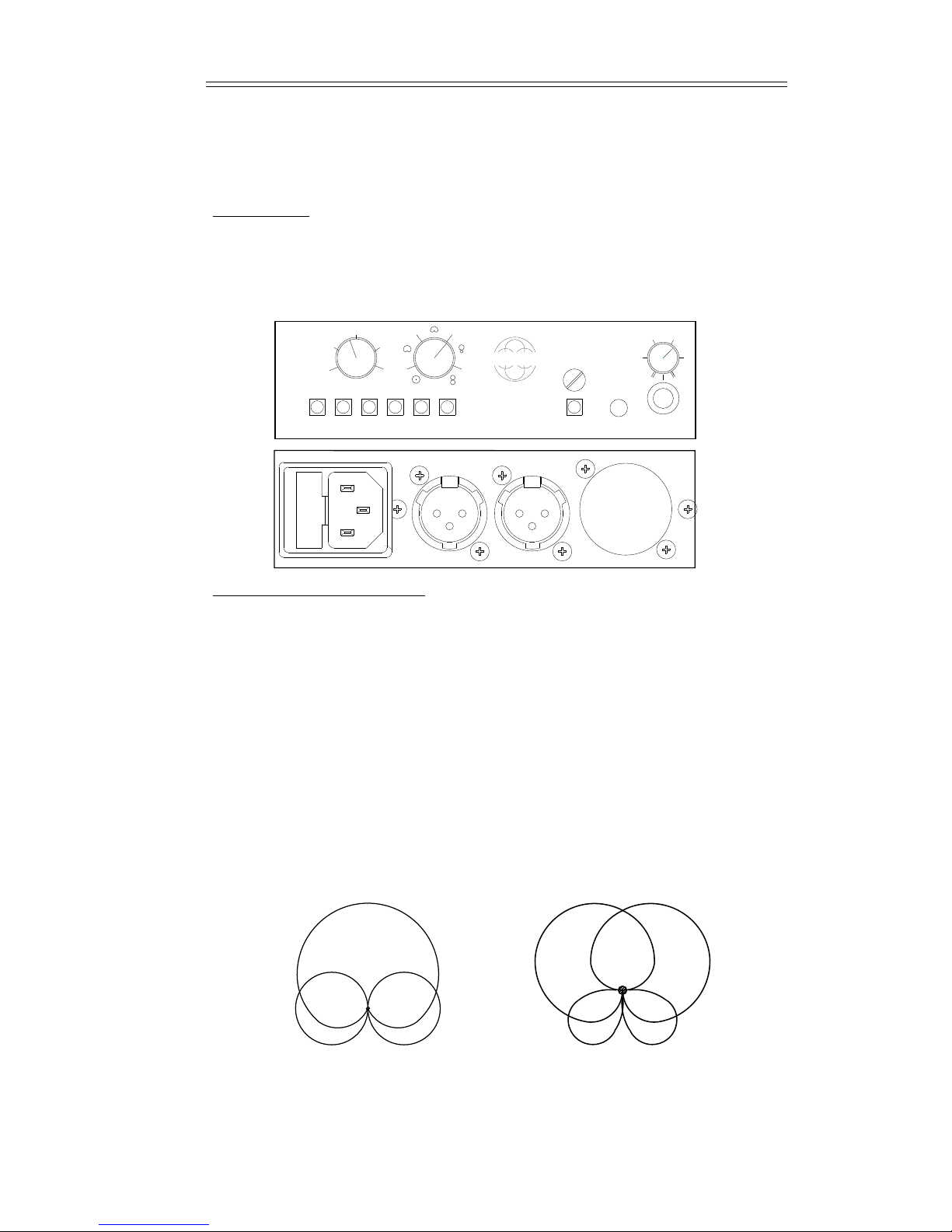
control a recording. Adjust the M pattern to control signals from the rear of the microphone.
Wherever the M pattern control is set the gain for something in front of the microphone is held
constant. The stereo width can then be set using the width control.
These parameters can be clearly heard and with use will become very familiar. The adjustment
of either will not be affected by the other. Contrast this with X-Y recordings where the pattern of
two microphones and the angle in between are set. The acoustic results here are not at all
obvious and, for example, increasing the rear rejection and at the same time maintaining stereo
width is not easy.
Noise
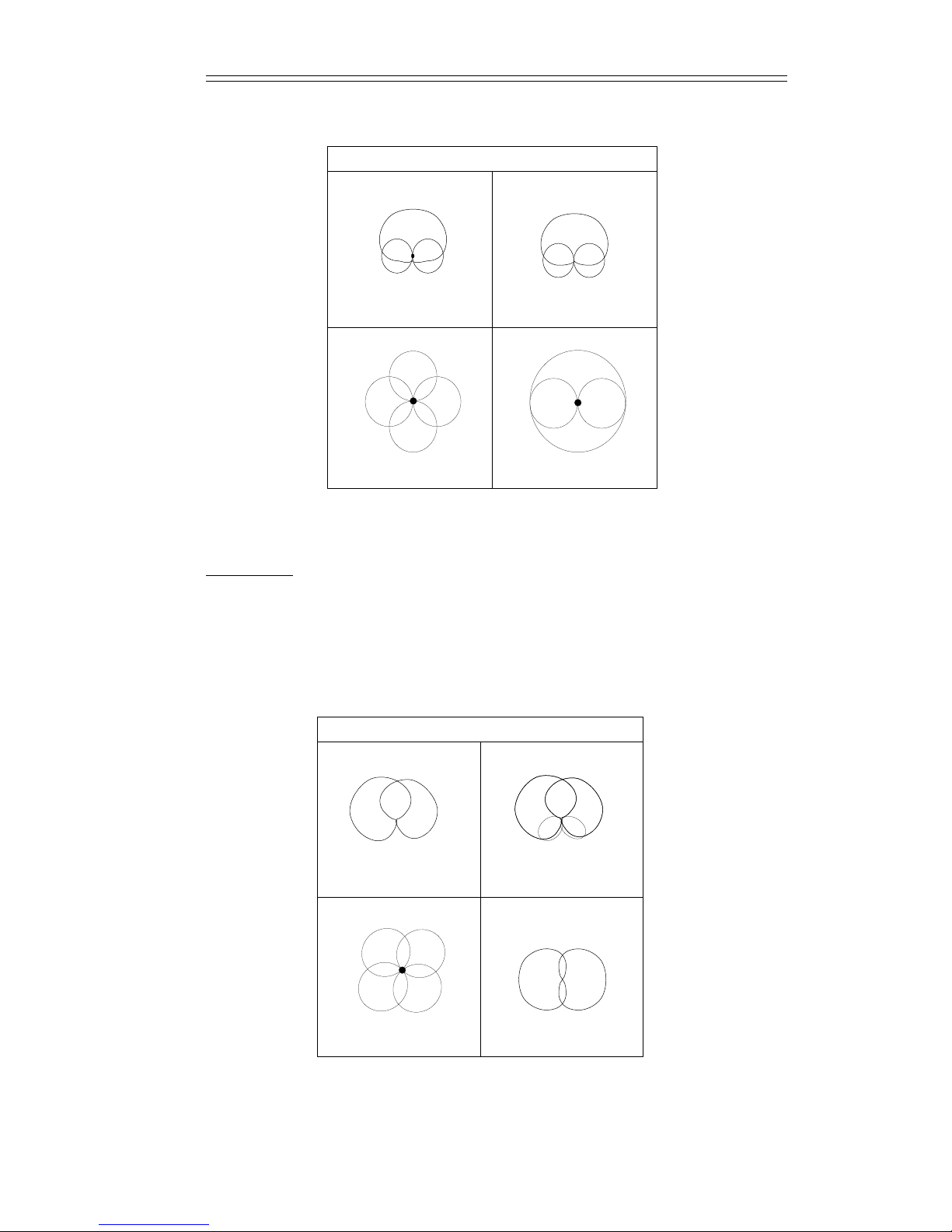
The self noise of the microphone will differ according to the pattern and width settings. In
general the lowest noise performance is achieved by setting M pattern as close to omni as
possible and having as little width as possible.The microphone, practically, has very low noise.
It takes a few minutes for the polarising circuit to charge up the capsules, perhaps 5 minutes if
the microphone hasnt been used for several weeks. Otherwise possibly a few seconds if the
microphone ìhas been used within a day. During this time gain will be low, noise will be high
and patterns will be peculiar.
Condensation
Condensation problems occur when moist warm air comes into contact with the capsules.
Typical situations would be when the microphone is brought into a warm studio from outdoors
or when a microphone is used on close vocals. Symptoms are high noise typically with a hissing/
rumbling effect. The cure is to leave it to come to equilibrium with its enviroment. This may
take up to half an hour. When powered from 110/240V a capsule heater is in circuit and the
microphone should not suffer from this. Mains/line powering is always the preferred mode. On
close vocals an anti-pop screen should be set at about 20cm or 8 inches from the microphone. It
has no acoustic function other than keeping the vocalist at a fixed distance from the microphone
(see page 10).
Levels
If it is anticipated that the level of sound may exceed 115dB SPL peak then the attenuator should
be engaged. In practice the microphone is not much noisier in this mode. We have been caught
unawares by the levels of sound generated by some instruments (eg a trumpet playing jazz
peaking at 133dB SPL at half a meter). The power indicator LED serves as a crude level
indicator it will blink on peak levels about 10dB below clipping level.
Headphones
The headphone output is only for use as a quick check; it is not intended for serious monitoring.
Phones used should be high impedance (400 ohms minimum), high
sensitivity (100dB SPL per mW minimum) and closed.
On phantom or battery power the phones should not be used during a recording.
The reason for this is that the power available is restricted and headroom may suffer if power is
diverted to the headphones.