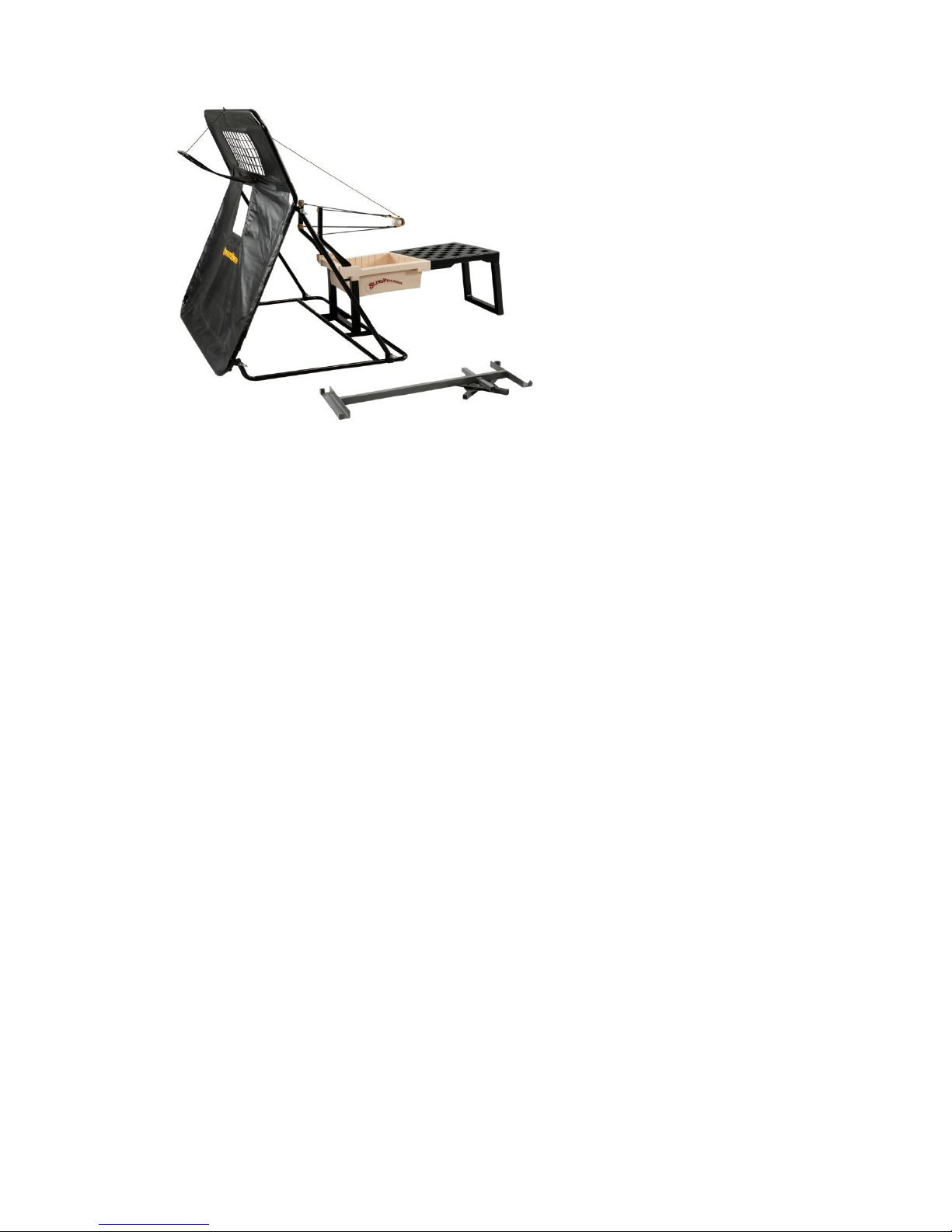
5. The Sling PitcherTM can throw virtually any type of baseball, softball, or tennis ball. Regulation
baseballs and softballs will not attain the same velocity as lighter balls, but can cause significant
damage to the operator, or the Sling Pitcher, if returned by a batter at a high rate of speed. These
balls should not be used without the use of the protective Sling Guard, if there is any danger to
the operator or the Sling Pitcher. It is the sole responsibility of the operator, or adult supervisor
to determine the risk involved and to take proper steps to protect against returned balls.
It is important that the operator maintain a consistent, fluid motion, especially at high speeds, to
allow the batter to adjust to the flight of the ball, and time his/her hitting motion. If the hitter still has
trouble anticipating when the ball will be released, a simple nod of the operator’s head, or some verbal
signal such as “ball”, just as the operator starts his/her motion will allow the hitter to adjust to the
release of the ball. (Recognizing change-ups is the challenge and responsibility of the hitter).
Use with the Fly-BallArms
The Fly-Ball Arms allow baseballs to be thrown in excess of 150 feet vertically, and to a horizontal
distance of approximately175 feet, on the fly. (See instructions for placement of the Fly-Ball Arms
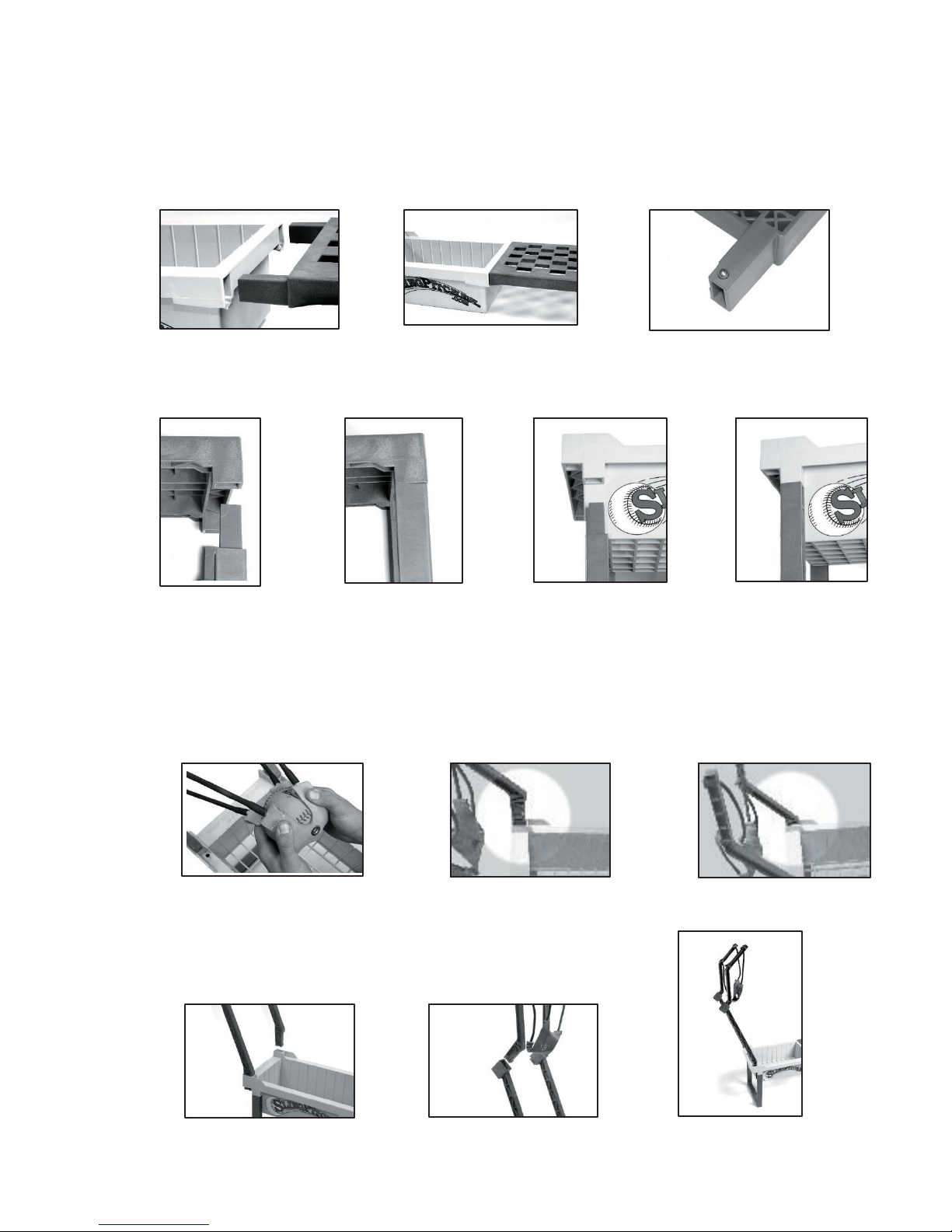
under “Set-up of Sling Pitcher” on page 5). The operating instructions for the Fly-Ball arms are
the same as for throwing pitches, except that the pouch is pulled down into the basket of the Sling
PitcherTM, instead of into the mid-section of the operator.
When using the Fly Ball Arms, the operator should always wear safety glasses, or other protective
eyewear. On occasion, it is possible the Sling Arms or the Fly-ball Arms may inadvertently dislodge
from their sockets during operation. This is most likely to happen when shooting very lightweight
balls, such as the perforate plastic balls. It is recommended that the perforated plastic balls not be
used with the Fly-Ball Arms.
It is important that the operator sit firmly on the Sling Pitcher seat when shooting the fly balls, and
that both feet remain firmly on the ground. The Sling Pitcher Pouch should always be pulled down
into the basket, and never at an angle above the line to the operator’s belt line. Pulling the pouch
at a higher angle could cause damage to the Sling Pitcher or injury to the operator.
Maintenance and Storage (and cold weather use)
To clean the Sling PitcherTM, wash with warm soapy water and wipe dry with a cloth. Store the Sling
PitcherTM in a cool dry area. Keeping the Sling PitcherTM out of direct sunlight when not in use will
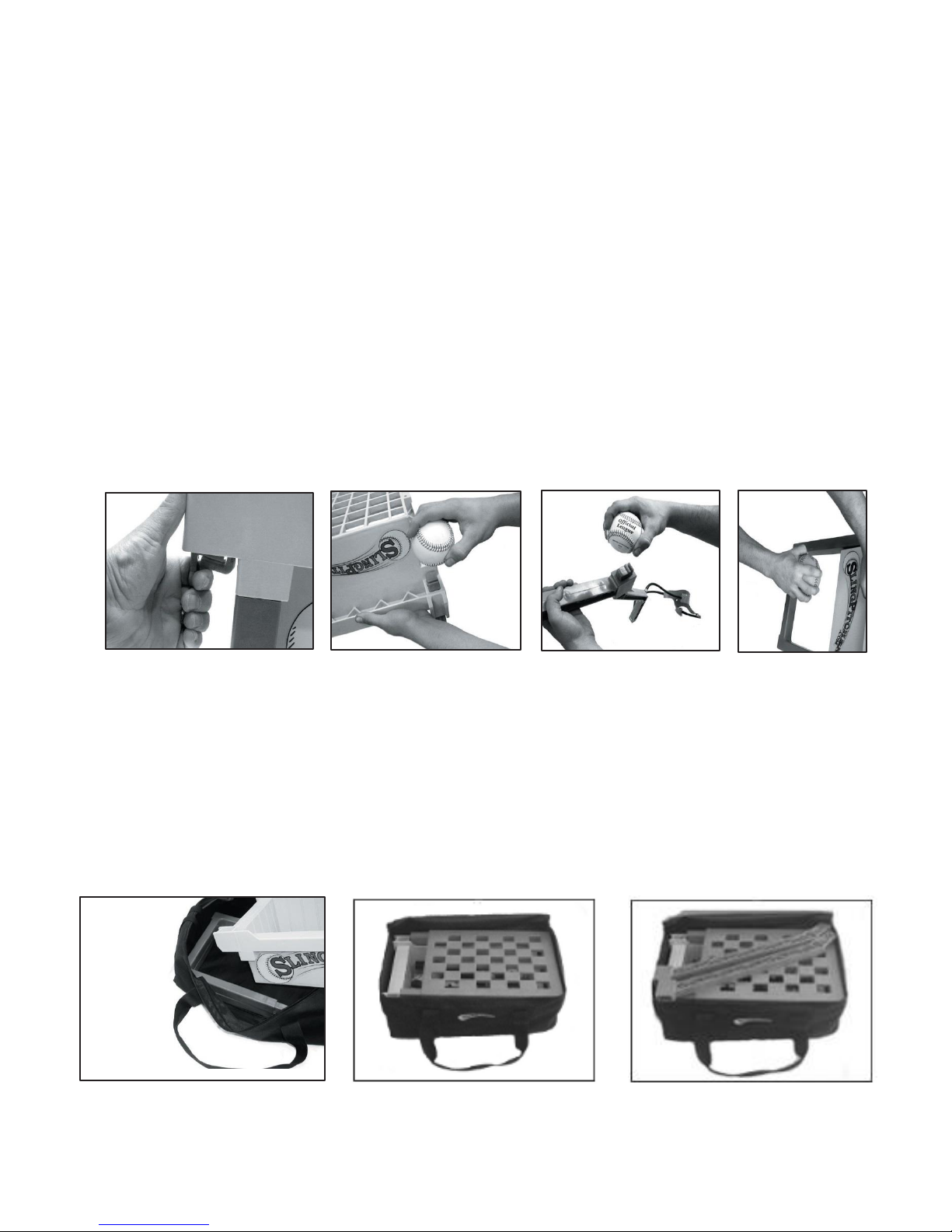
extend the life of the elastics and leather pouch. For best storage, keep the Sling PitcherTM in the
supplied carrying case when not in use. Avoid extreme temperatures. Operating the Sling Pitcher in
extreme cold (below freezing) will make the unit more susceptible to damage or parts failure.
Accessories
The present line of accessories includes all parts to the Sling PitcherTM, (plastic parts, elastic bands,
and leather pouch) as well as the plastic and foam balls and the carry bag.
The Sling Guard is a protective shield that works in conjunction with the Sling PitcherTM to provide
greater protection to an operator from returned balls. It is highly recommended the Sling Guard be used
whenever there is a risk of injury to the operator by returned balls from a batter. Even with the use of
the Sling Guard, the operator should always use protective gear, including, but not limited to, a helmet
and safety glasses.
The Sling Turret is a swivel base that fits beneath the Sling PitcherTM and allows the operator to rotate
to any field or position. This is especially effective for outfield and infield drills. The Sling Turret
and Sling Guard can also be purchased on line at www.slingpitcher.com, or from any authorized
dealer or retail outlet.