Skitrab AERO Manuel utilisateur

SKITRAB.com
Compliant with new
European Regulation
(EU) 2016/425
AERO HELMET
STANDARDS
EN 1077:2007/B
EN 12492:2012

Notified body intervening for the EU type
examination:
Ente Notificato che ha svolto l’esame UE del tipo:
Benannte Stelle, die die EU-Musterprüfung
durchgeführt hat:
Organisme notifié qui a effectué l’examen de l’UE du
type:
Certifikovaná zkušebna která ručí za typovou
zkoušku EU:
Firmaet som har utført tester i henhold til EUs
regelverk:
Dolomiticert Scarl
(N.B. 2008),
Z.I. Villanova/7a, Longarone (BL) - IT

CASCO AERO
ATTENZIONE: Per la vostra sicurezza leggete
attentamente le seguenti istruzioni prima di
utilizzare il dispositivo!
Il presente casco è un dispositivo di protezione
individuale (DPI) di II categoria ed è stato
studiato e fabbricato in conformità al
Regolamento UE 2016/425 ed alle norme
tecniche armonizzate per lo sci alpino e lo
snowboard (normativa EN 1077:2007/B) e per
l’alpinismo (normativa EN 12492:2012).
La dichiarazione di conformità UE è
consultabile sul sito www.skitrab.com
Il presente dpi è un casco leggero,
confortevole e studiato per proteggerti il
capo dagli urti dovuti alla caduta durante
lo svolgimento delle attività sportive
sopra indicate e/o dalla caduta di massi
(evento frequente nell’alpinismo). Un dpi
non è sinonimo di garanzia di incolumità,
pur limitando le ferite alle zone coperte, il
dispositivo non può proteggerti da ogni tipo
di impatto o incidente e non è in grado di
escludere la morte o l’invalidità permanente.
Il casco è costruito in modo tale da assorbire
l’energia di un impatto attraverso la
distruzione parziale o il danneggiamento dei
componenti dello stesso. Anche se il casco
non presenta danni evidenti/visibili dopo
un impatto (caduta e/o colpo) è necessario
sostituirlo ed eliminarlo. Si consiglia di
sostituire il dispositivo dopo 10 anni dalla data
di produzione anche se è stato poco o mai
utilizzato. La data di produzione è riportata sul
casco, la sua durata dipende da diversi fattori
inclusi sole, temperatura ed uso (usi estremi
possono ridurre drasticamente la durata). Nel
caso di dubbio sulla sicurezza del dispositivo
si raccomanda di sostituirlo. Utilizzate il casco
solo per le attività per cui è stato realizzato!
E’ vietato apportare qualsiasi modifica al casco
e aggiungere, modificare o togliere qualsiasi
componente.

COME INDOSSARE IL CASCO
Attenzione: allo scopo di garantire una
protezione adeguata il casco deve adattarsi ed
essere indossato correttamente ogni volta che
praticate attività sportiva.
Il casco deve calzare perfettamente e risultare
confortevole. In caso contrario Scegliete
un’altra taglia o un altro modello. Indossare
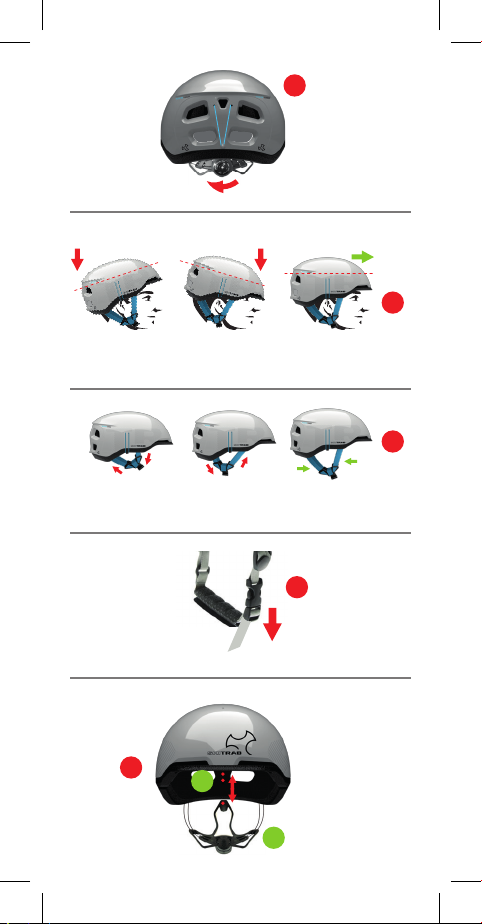
il casco e ruotare in senso orario la ghiera
di regolazione (vedi fig.1) per regolare la
taglia fino ad ottenere una calzata stabile e
confortevole.
Il casco deve essere calzato correttamente in
posizione orizzontale sulla testa, deve coprire
la fronte e deve permettervi un ampio campo
visivo (vedi fig.2).
Portate in posizione corretta il divider dei
cinturini di chiusura (fig.3), fate in modo che
entrambi i cinturini siano regolati in modo
uguale.
Regolare e stringere bene il cinturino per
evitare il rischio che il casco venga scalzato
dalla testa. (fig.4). Il casco, correttamente
calzato, non si deve muovere in alcuna
direzione.
Per una miglior vestibilità potete regolare
l’altezza del sistema di chiusura (A): togliete
il casco e spostate i punzoni di fermo in una
delle due posizioni della ghiera forata B (fig.5 )
e verificate.
Ogni modifica non indicata dal produttore
può pregiudicare il corretto funzionamento/
protezione del casco. In ogni caso utilizzate
esclusivamente accessori originali.Tramite gli
elastici laterali del casco è possibile fissare
una lampada frontale al casco.

1
2
3
4
5B
A
NO NO OK
NO NO OK

SIGNIFICATO DELLA
MARCATURA SUL CASCO
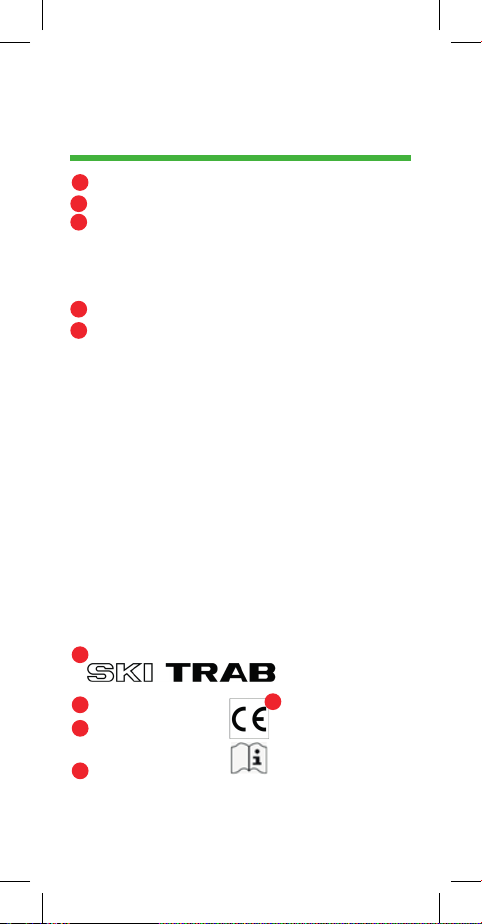
Logo/nome ed indirizzo del fabbricante
Model: cod.36023
Referenza del prodotto
Name: AERO: Nome del dispositivo
Size: S-M (52-56 CM): Taglia in cm del girotesta
Weight: 300 gr.: Peso del casco (arrotondato ai
50gr più vicini)
Date 09/20: Mese e anno di fabbricazione
CE: Marcatura di conformità al regolamento
europeo (UE) 2016/425 relativo ai
Dispositivi di Protezione Individuale: Dettagli
istruzioni su nota informativa allegata al casco
EN1077:2007 CLASS B:
Caschi per la pratica dello sci alpino e per lo
snowboard. I caschi di classe A e di classe B
sono per lo scialpino, snowboard e attività simili.
I caschi di classe A offrono comparativamente
più protezione. I caschi di classe B possono
offrire una maggiore ventilazione ed una migliore
capacità uditiva, ma proteggono un’area più
ridotta della testa ed offrono un minore grado di
protezione contro la penetrazione.
EN 12492:2012 - Casco per alpinisti-
1
3
2
Sticker Helmet Aero cod.36023
dimension 60mm x 20mm
Model : cod.36023
Name: AERO
Size: S-M(52-56 CM)
Weight: 300 gr.
Date 09/20
EN1077 CLASS B
HELMET FOR ALPINE SKIERS
AND SNOBOARDERS
EN 12492
HELMET FOR MOUNTAINEERS
srl
via btg.Tirano,6-23032 Bormio Italy
Made in China
5
1
2
3
4
4
5

MANUTENZIONE
Prima di ogni utilizzo Verificare sempre
lo stato del casco e delle fettucce. Se si
dovessero verificare abrasioni o anomalie
sostituite il casco!
Il casco va pulito esclusivamente con acqua e
sapone neutro, evitare manutenzione e pulizia
con sostanze che potrebbero avere effetti
dannosi sui materiali del casco.
Evitare il contatto con sostanze corrosive.
I materiali utilizzati mantengono intatte
le loro caratteristiche entro temperature
comprese tra -20° e +35°.
Conservare il casco al riparo dalla luce solare e
da fonti di calore: non lasciarlo nell’abitacolo al
sole o nelle vicinanze di fonti di calore.
Si consiglia di stoccare e traspor-tare il casco
in sacchetti/scatola in plastica/cartone di
protezione idonei (esempio la sua confezione
originale).

AERO HELMET
WARNING: For your safety please read the
following instructions carefully before using
this item!
This helmet is an item of category II personal
protective equipment (PPE) and has been
designed and manufactured in accordance
with EU regulation 2016/425 and the
harmonised technical standards for alpine
skiing and snowboarding (regulation EN
1077:2007/B) and mountaineering (regulation
EN 12492:2012).
The EU declaration of conformity can be found
at www.skitrab.com.
This article of PPE is a lightweight,
comfortable helmet designed to protect your
head from impact due to falls during the
aforementioned activities and/or rock falls
(a frequent occurrence when ski touring).
An item of PPE is not a guarantee of safety;
though it limits injuries to the covered area, it
cannot protect you from every kind of impact
or accident, and cannot exclude the possibility
of death or permanent disability. The helmet
is constructed in such a way as to absorb
the energy of an impact through the partial
destruction or damage of its components.
Even if the helmet does not show any evident/
visible signs of damage after an impact (fall or
blow) it must be substituted and destroyed. It
is highly recommended to change the article
10 years after the date of production even
if it has rarely or even never been used. The
date of production is shown on the helmet,
its durability depends on a variety of factors
including sun exposure, temperature and
use (extreme use can drastically reduce its
lifespan). In case of doubts over the safety of
the product, substitute it. Use this helmet only
for the activities for which it is designed!
It is forbidden to make any modifications to
the helmet or to add, modify or remove any of
its components.

HOW TO WEAR THE HELMET
Important: In order to guarantee adequate
protection the helmet must be adjusted and
worn correctly every time you use it.
The helmet must fit perfectly and be
comfortable. If not choose another size or
model.
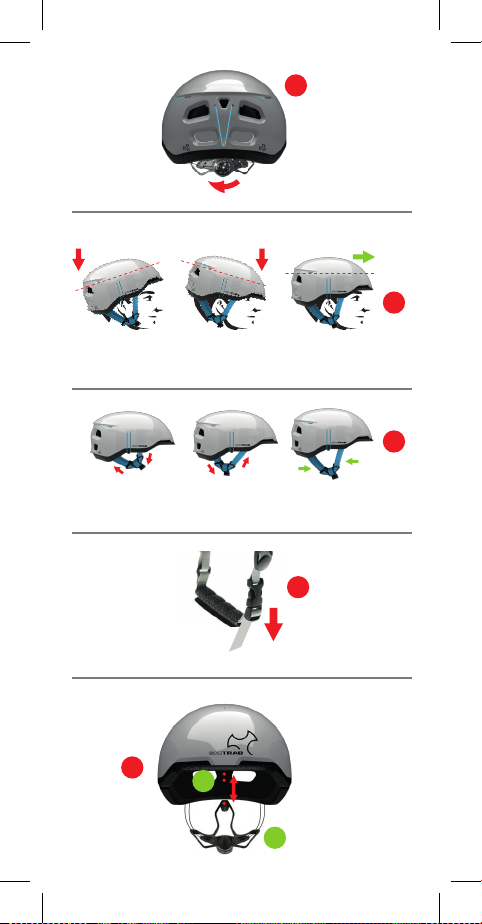
Put the helmet on and turn the dial clockwise
(see fig.1) to regulate the size until you obtain
a stable, comfortable fit. The helmet must fit
correctly in a horizontal position on the head,
it should cover the forehead and allow a wide
range of vision (see fig.2).
Adjust the divider of the chin strap (fig.3),
making sure that both straps are the same
length. Regulate and tighten the strap to stop
the helmet coming off the head (fig.4). The
helmet, when fitting correctly, should not
move in any direction.
For a better fit you can regulate the height of
the closing system (A): remove the helmet and
move the pin to one of the two holes in dial B
(fig.25) and check it.
Every modification not recommended by
the manufacturer could affect the correct
performance/protection of the helmet. Always
use original accessories only.
Thanks to the fixing device on the helmet it is
possible to attach a headlamp.

1
2
3
4
5B
A
NO NO OK
NO NO OK
Ce manuel convient aux modèles suivants
1
Table des matières
Langues :
Manuels Accessoires pour motos populaires d'autres marques

SRC
SRC B-TRK502-01-01-SL Manuel utilisateur

3M
3M Speedglas 9100 MP Manuel utilisateur

hepco & becker
hepco & becker 6307520 00 01 Manuel utilisateur

HOMCOM
HOMCOM AA0-077 Manuel utilisateur

hepco & becker
hepco & becker 6307558 00 01 Manuel utilisateur

Wunderkind Custom
Wunderkind Custom 106503-F15 Guide de l'utilisateur