8
4. Connecting the Propane Fuel
This is a low pressure propane appliance. Do not use high pressure propane.
The heater only operates on low pressure propane (11’ WC or 27.4 mbars)
and should have a low pressure regulator (part# 19-151) installed within the
fuel line. The propane gas connection can either come from an already
installed propane system, a single 10 or 20 lbs tank or a 1 lb disposable
bottle. The propane tank should always face upwards. To run the fuel to the
unit, copper tubing or a rubber approved hose can be used. The size of the
fuel line should be no smaller then 3/8” in diameter. When running the fuel
line, make sure the ends are sealed so no debris can get inside the line. This
can block the gas coming through the heater small orifice. Make sure to
blow through the fuel line before connecting.
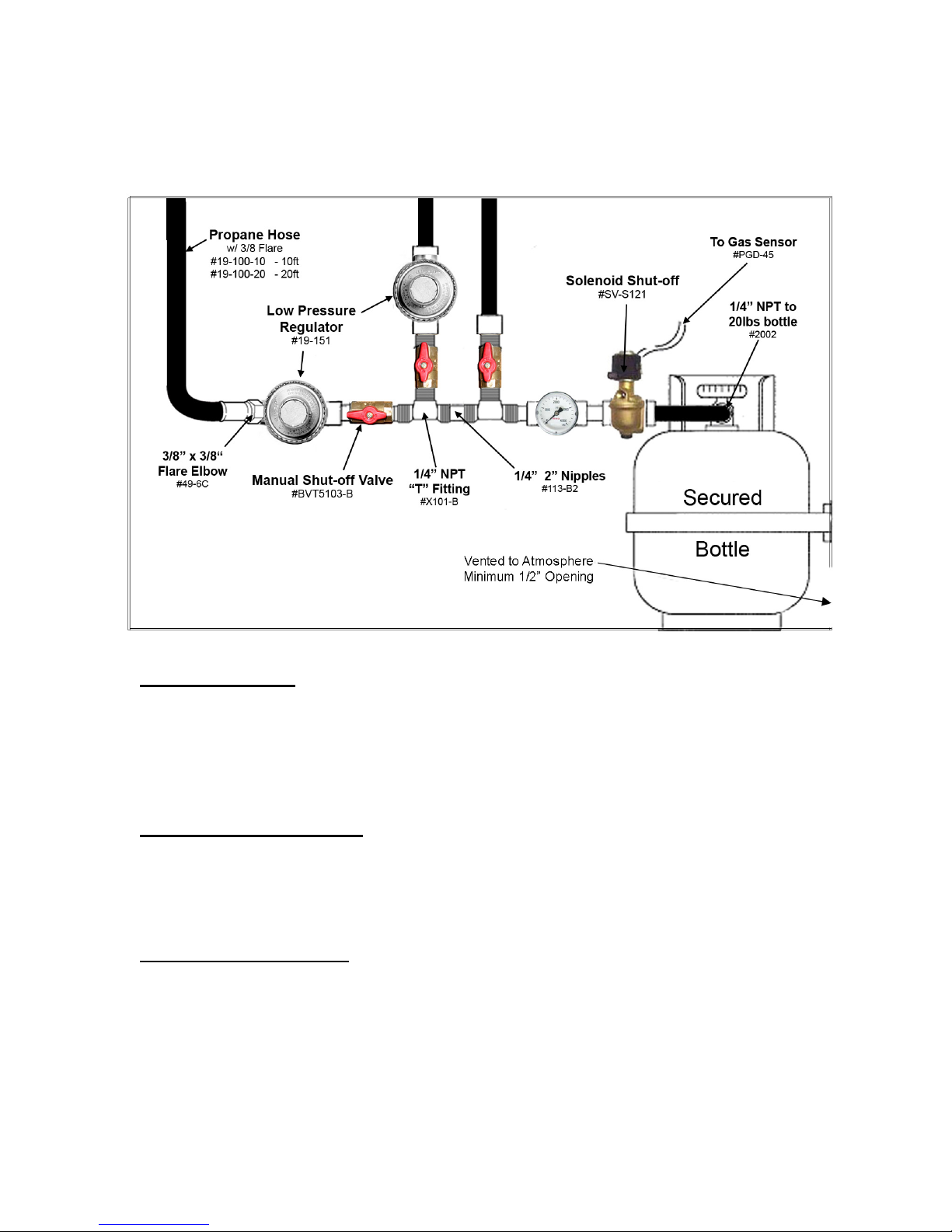
NOTE: Each low pressure propane appliance should have its own low
pressure regulator and fuel supply line as shown on the propane locker
diagram on pg. 9.
Reasons for having a separate low pressure regulator for each appliance:
1. The ABYC Standards state- 1.7.2 – Each appliance shall be served by a
separate low pressure regulator and supply line that shall originate inside the
cylinder locker. We recommend you follow the ABYC standard.
2. The regulator only serves a very low pressure of gas, through a small 3/8”
gas line, and depending on the distance, 1 regulator for 2 appliances
may starve the burners of gas for 1 appliance.
3. Some older appliances do not have thermocouples on the burners, and if the
gas valve on that appliance was left in the “on” position, gas would leak while
using the heater or any other appliance and could result in a serious explosion.
The diagram on pg. 9 is to illustrate a typical installation only and should not
be used to illustrate any particular regulatory code, insurance requirement or
to override manufacturer’s instructions on any fittings or components.
Install your propane system in accordance to local, national or industry
specific regulations. Retain the installation and owner’s manual for your gas
components such as the solenoid and regulator. Installation requirements for