
Q-SUN Xe-1 Manuel utilisateur
QUICK SET UP GUIDE
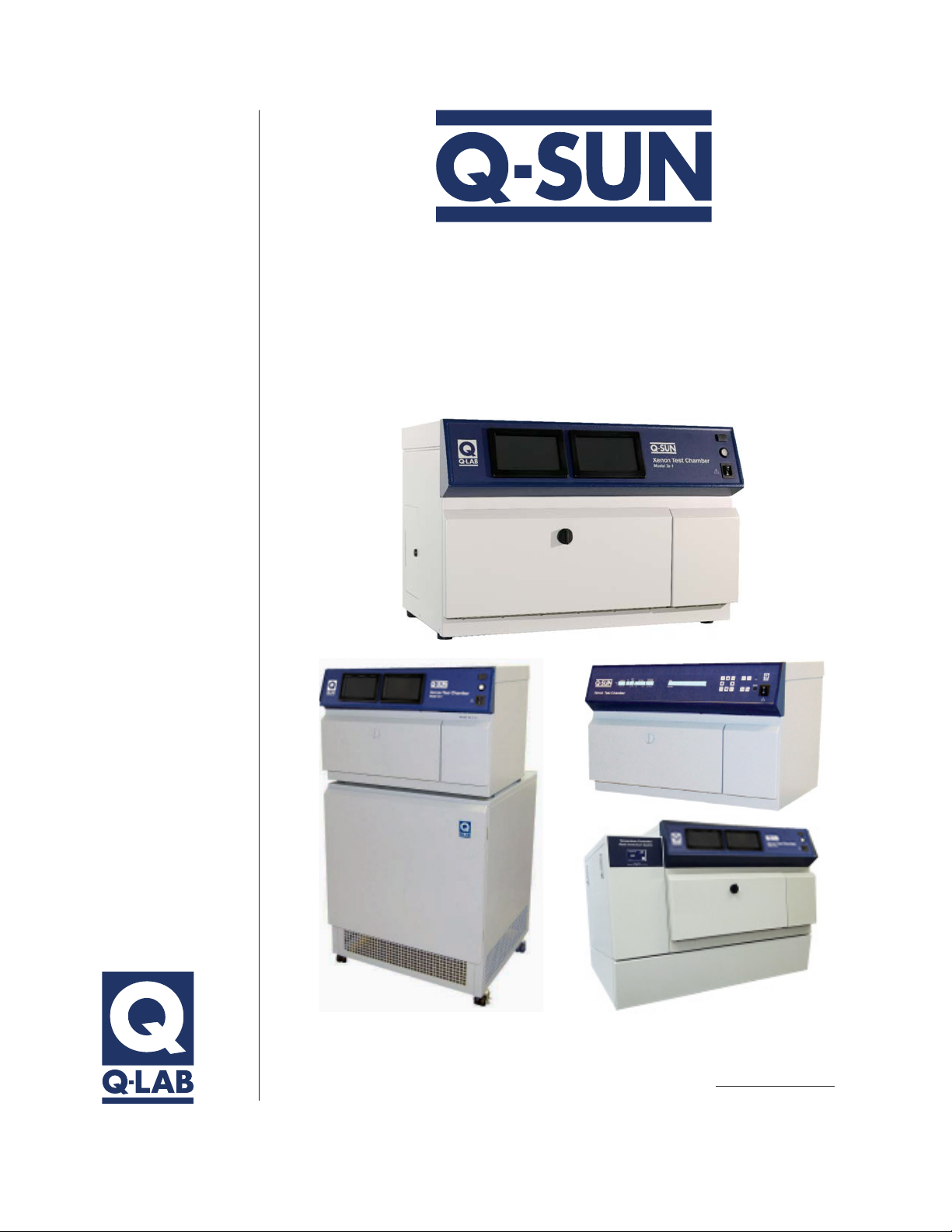
Xenon Test Chamber
Q-SUN Xe-1
LX-5090-QS
Revision Date
11 Apr 2022

2
Table Of Contents
1. Specications, Classications, Symbols............................... 3
1.1 Specications, Classications (Mar 2019)............................. 3
1.2 Symbols (Aug 2020).............................................................. 4
2. Safety Information (Feb 2022)................................................. 5
3. General Description (Feb 2022).............................................. 8
4. Operating Environment ........................................................... 9
4.1 Suitable Environments (May 2020)....................................... 9
4.2 Unsuitable Environments (May 2020)..................................10
5. Uncrating................................................................................ 12
5.1 Overview (Feb 2022) .......................................................... 12
5.2 Models Without Chiller (Feb 2022) ..................................... 12
5.3 Models With Chiller (Feb 2022) .......................................... 16
6. Set Up ..................................................................................... 22
6.1 Dimensions and Space Requirements (Mar 2022)............. 22
6.2 Electrical (Apr 2022) ........................................................... 24
6.3 Water (May 2020) ............................................................... 25
6.4 Venting (May 2020)............................................................. 29
7. Start Up................................................................................... 31
7.1. Specimen Mounting (May 2020) ......................................... 31
7.2. Q-SUN Xe-1 All “E” Models Control Panel (May 2020)....... 31
7.3. Q-SUN Xe-1-B Control Panel (May 2020)........................... 33
8. Warranty (Oct 2020) ............................................................... 34
9. Repair and Tester Support (Mar 2019).................................. 35

3
Section 1. Specications, Classications, Symbols
1. Specications, Classications, Symbols
1.1 Specications, Classications (Mar 2019)
●The recommended ambient operating temperature and relative humidity (RH) for the Q-SUN tester is 23 ± 5 °C
and 50 ± 25% RH.
●The maximum ambient operating temperature and humidity is 40 °C and 80% relative humidity.
●Temperatures outside the recommended range may cause chamber temperature and/or humidity faults.
●Transportation and Storage Temperature: -40 °C to 80 °C.
●Installation Category: Category II for transient over-voltages.
●Pollution Control: Pollution Degree 2.
●Sound Pressure Level: Sound Pressure Level does not exceed 75 dBA.
●Altitude: 2000 meters or less.
●Operation: Continuous Rating.
●Supply Connection: Permanently connected or plug/socket connection (industrial type per IEC 6309 or twist lock type
in North America).
●External Disconnect: Required for all connections.
●External Over-Current Protection: Must be rated for not more than 40 A (USA, Canada) or 64 A (Europe).
Section 1. Specications, Classes, Symbols
Section 1. Specications, Classications, Symbols
4
1.2 Symbols (Aug 2020)
Electrical Shock Hazard
Hot Surfaces Hazard
Attention
Finger/Hand Crushing Hazard
Local waste & recycling regulations per the WEEE Directive
2002/96/EC on Waste Electrical and Electronic Equipment
Section 1. Specications, Classes, Symbols

Section 2. Safety Information
2. Safety Information (Feb 2022)
Overview
Q-Lab accepts no responsibility for the consequences if the user fails to comply with the instructions in this Technical
Manual. Q-Lab will accept responsibility for defective parts or components only if the machinery was defective at the
time that the tester was shipped.
●Warning: If the equipment is used in a manner not specied by the manufacturer, the protection provided by the
equipment may be impaired.
●This manual does not claim to address potential safety issues, if any, associated with the use of this product.
●It is the responsibility of the user of this manual to establish appropriate safety and health practices and to determine
the applicability of regulatory limitations prior to use.
●If the equipment is used in a manner not specied by the manufacturer, the protection provided by the equipment
safety devices may be impaired.
●The Q-SUN meets the European Low Voltage Directive 2014/35/EU and complies with the requirements of
EN 61010-1: 2010 (Third Edition), “Safety of Electrical Equipment for Measurement, Control and Laboratory Use”.
●The Q-SUN meets the European Electromagnetic Directive 2014/30/EC and complies with the requirements of
EN 55011:2007 Radiated and Conducted Emissions – class A.
●Use only parts that have been supplied or recommended by Q-Lab.
5
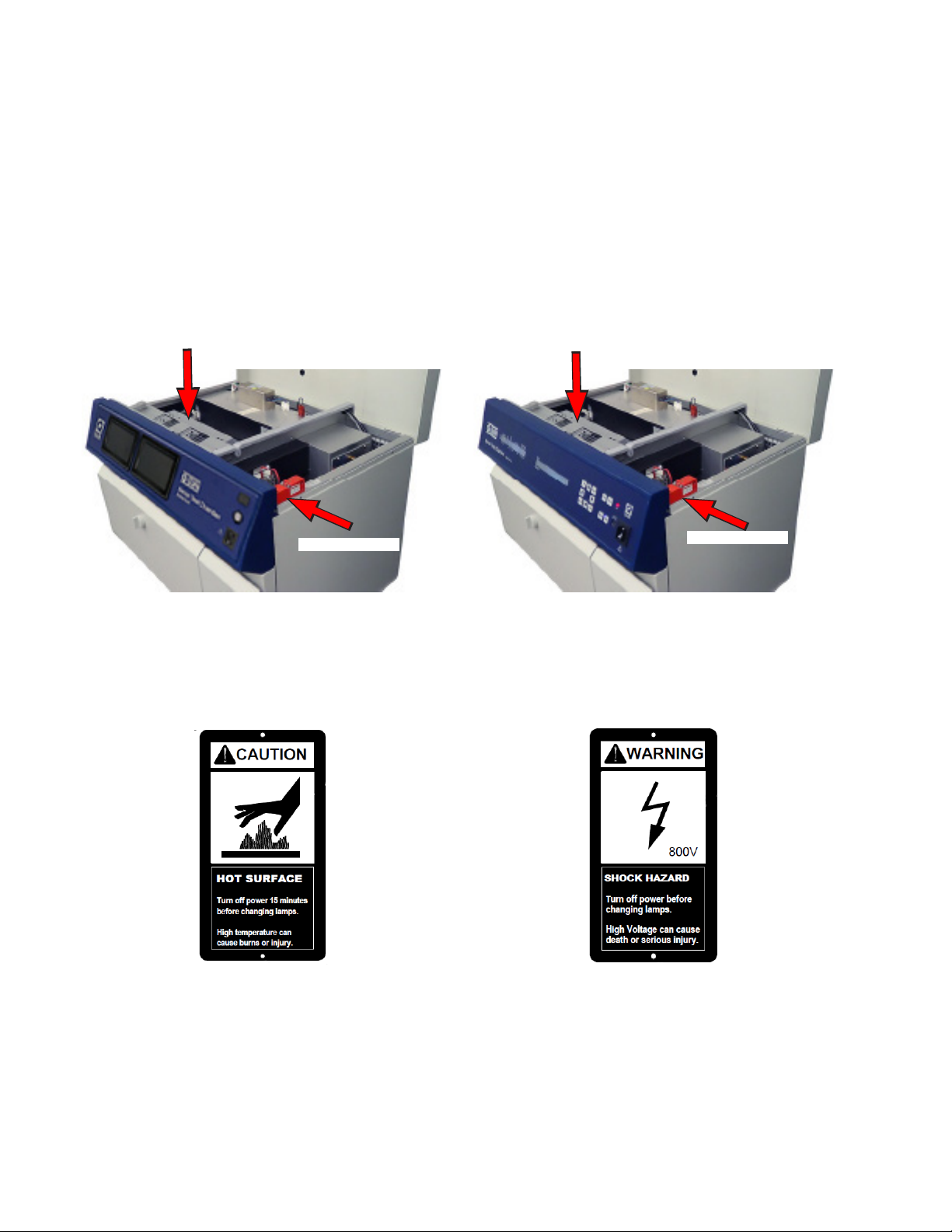
Figure 2a: "E" model testers warning label and interlock
switch location (lamp access door open).
Warning Labels
Interlock Switch
Figure 2b: Basic model tester warning label and interlock
switch location (lamp access door open).
Warning Labels
Interlock Switch
Figure 2c: Hot surface warning label. Figure 2d: Shock hazard warning label.
Heat and Electrical Shock Hazards
Warning Labels
●All Q-SUN Xe-1 models are equipped with a lamp access door interlock switch that turns off the xenon lamps when
the lamp access door is opened (Figure 2a and Figure 2b).
●Warning labels (Figure 2c and Figure 2d) indicate heat and electric shock hazards inside the Q-SUN Xe-1 tester.
●Do not defeat the switch that turns off lamps when the lamp access door is open.
Section 2. Safety Information
6
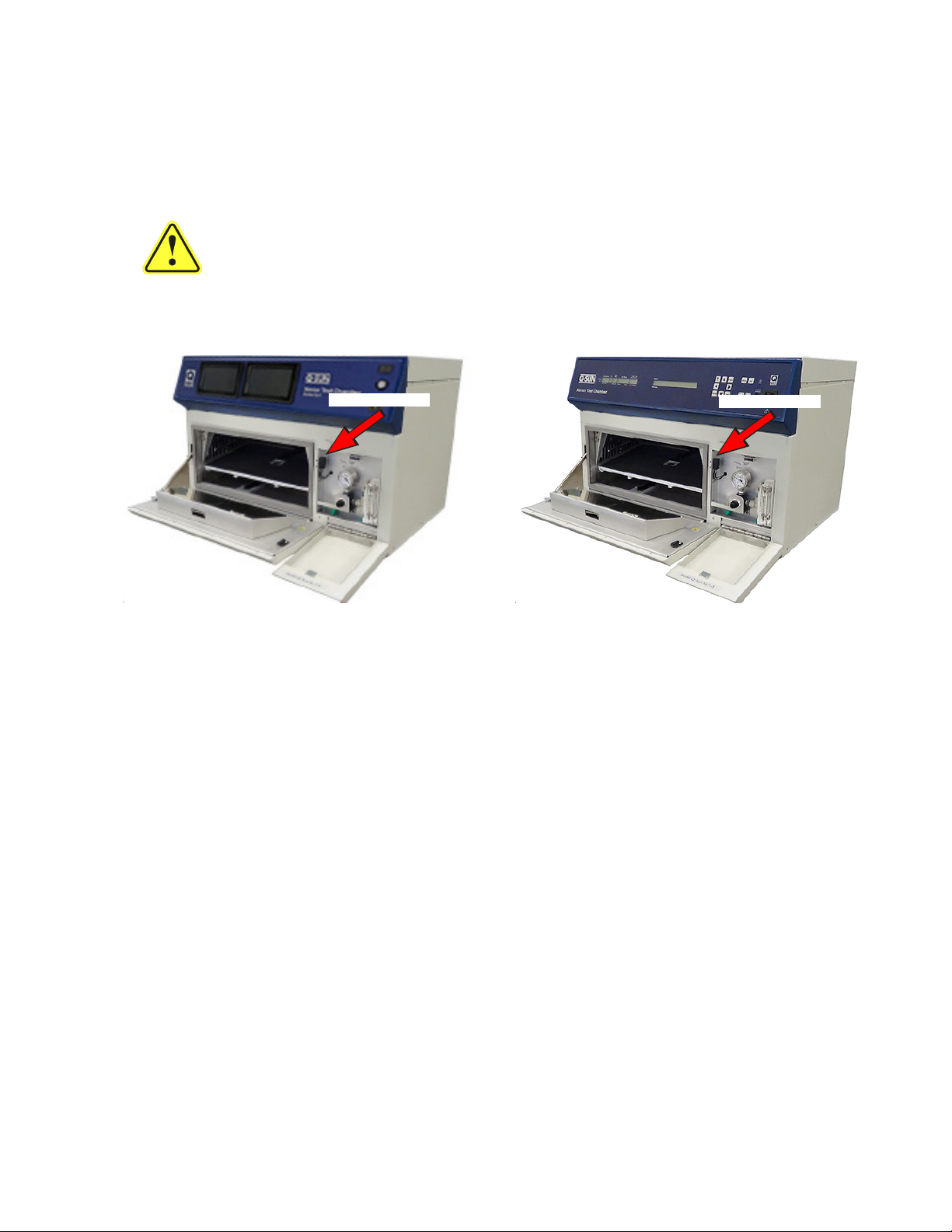
Figure 2e: "E" model testers chamber door interlock
switch location (test chamber and plumbing access door
open).
Interlock Switch
Figure 2f: Basic model tester chamber door interlock
switch location (test chamber and plumbing access door
open).
Interlock Switch
Ultraviolet and Infrared Hazards
Ultraviolet (UV) Light
●There is no Ultraviolet (UV) hazard from any Q-SUN tester in normal operation with the doors closed.
●The Q-SUN lamps produce UV light that can cause severe sunburn, eye inammation, and damage to
your vision.
●All Q-SUN Xe-1 models are equipped with a chamber door interlock switch that turns off the xenon lamps
when the chamber door is opened (Figure 2e and Figure 2f).
●Do not defeat the switch that turns off lamps when the chamber door is open.
Section 2. Safety InformationSection 2. Safety Information
7

Overview
●This Quick Setup Guide is not a Technical Manual.
●This document is intended to explain only the basics of uncrating and setting up a Q-SUN Xenon Test Chamber.
●See the LX-5090-TM Q-SUN Xe-1 Technical Manual for complete information on the installation, operation, and
maintenance of Q-SUN Xe-1-SE, Xe-1-BCE, Xe-1-SCE, and Xe-1-WE testers.
●See the LX-5090B-TM Q-SUN Xe-1 Technical Manual for complete information on the installation, operation, and
maintenance of Q-SUN Xe-1-B testers.
Q-SUN Xe-1 Models Covered in This Guide:
Model Conguration Installation Control Interface
Xe-1-B B: Basic Tester Tabletop Keypad/LCD
Xe-1-SE S: Water Spray Tabletop Dual Touchscreen
Xe-1-BCE C: Chiller Stand-Alone Dual Touchscreen
Xe-1-SCE Chiller + Spray Stand-Alone Dual Touchscreen
Xe-1-WE W: Water Immersion Tabletop Dual Touchscreen
NOTE: All Q-SUN “E” models have enhanced performance over the basic tester, including longer lamp life, or higher
irradiance capability.
Section 3. General Description
3. General Description (Feb 2022)
8

NOTE: Testers shown in this section are “E” models.
Required operating environment conditions are
exactly the same for the Xe-1-B model.
9
Section 4. Operating Environment
4. Operating Environment
The Tester Must Be Located in a Suitable Environment
●All Q-Lab test chambers are sophisticated scientic instruments.
●All tester models must be operated in a suitable controlled environment (Section 4.1).
●Operating the tester in an unsuitable environment (Section 4.2) will void the warranty.
4.1 Suitable Environments (May 2020)
Ambient Laboratory Temperature and Humidity
●The recommended ambient operating temperature and relative humidity (RH) for Q-SUN testers is 23 ± 5 °C and
50 ± 25% RH.
●Operating outside the recommended range (or in rare cases, even within it), certain standards or test cycle conditions
may not be achievable.
●Operating outside the recommended range can result in the tester producing chamber temperature and/or humidity
faults.
●Never operate your tester in lab temperatures >40 °C or >80% RH.
●Consult with Q-Lab for more specic information about achievable chamber temperature/humidity values based upon
various ambient lab conditions.
Physical Environment
●A room that is dry, clean, and free of dust, particles, gases, or salt fog.
●A room with an HVAC (heating/ventilation/air-conditioning) system.
●A location away from windows or HVAC vents.
●A location that provides the necessary minimum clearances as specied in Section 6.1.
Section 4. Operating Environment
10
4.2 Unsuitable Environments (May 2020)
Salt Fog or Other Airborne Contamination
●Operating a Q-SUN tester in an unsuitable environment will void the warranty.
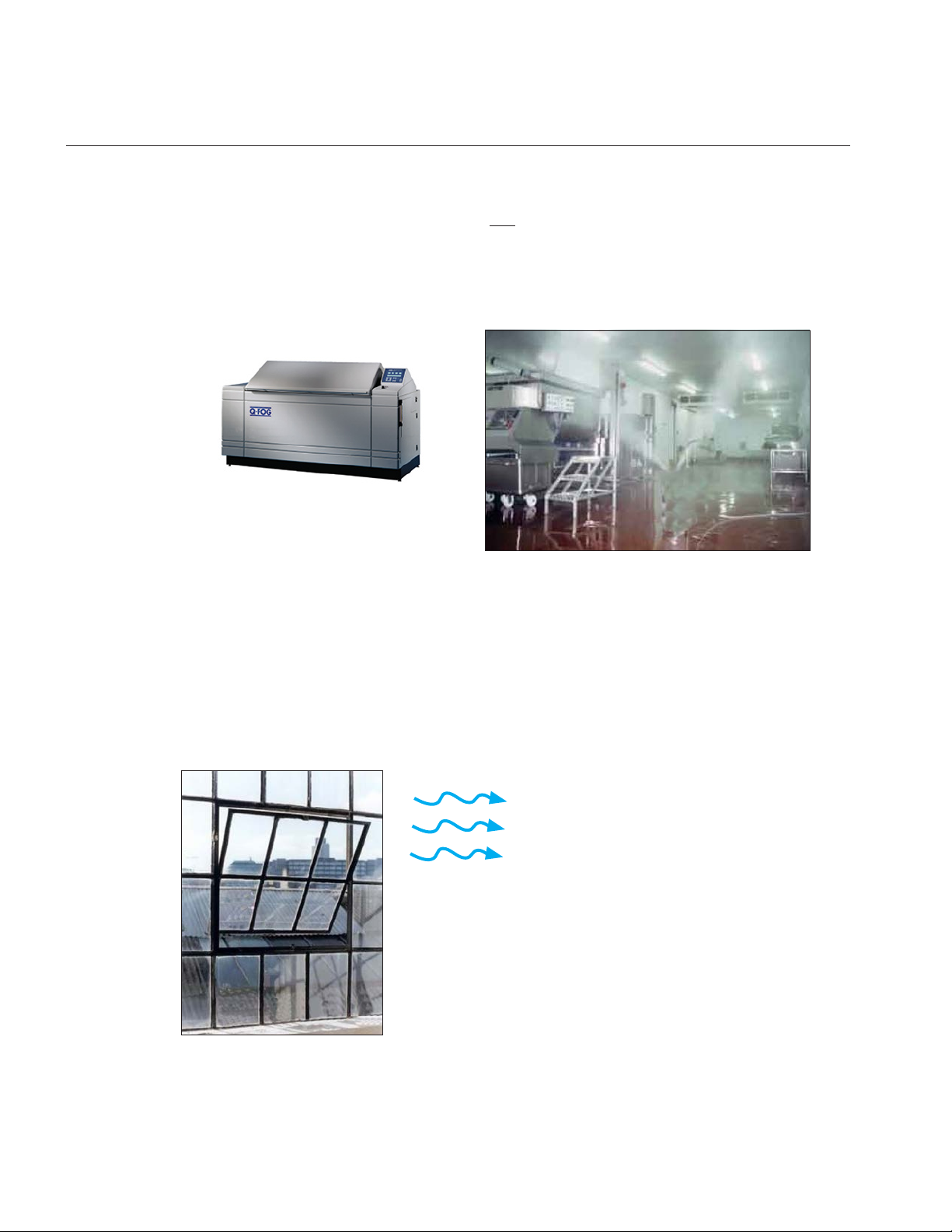
●DO NOT install Q-SUN testers in a room with corrosion chambers (Figure 4.2a).
●DO NOT locate a Q-SUN tester in a room with machines or processes that generate dust,
particles, vapors, gases, etc (Figure 4.2b).
X
Figure 4.2a: Do not install testers in a room
with corrosion chambers.
Figure 4.2b: Do not locate testers in a room
with airborne dust, particles, or gases.
Uncontrolled Temperature and Humidity
●Do not operate the tester in a room with uncontrolled temperature and humidity (Figure 4.2c).
●Do not locate tester near sources of cold or hot air (Figure 4.2d).
Figure 4.2c: Do not locate testers near open windows.
X
X
Ce manuel convient aux modèles suivants
5
Table des matières
Manuels Équipement de test populaires d'autres marques

SMART
SMART KANAAD SBT XTREME 3G Series Manuel utilisateur

Agilent Technologies
Agilent Technologies BERT Serial Manuel utilisateur

Agilent Technologies
Agilent Technologies N3280A Manuel utilisateur

Vernier
Vernier Go Direct Voltage Manuel utilisateur

Lifeloc
Lifeloc R.A.D.A.R. Manuel utilisateur

Fluke
Fluke T5-600 Instructions d'utilisation et d'installation


