5
Rev 13
certainly not impossible. Water may freeze over the air valves and controls, heating costs will be high and
most people will find -30° air temperatures too extreme. Special insulation techniques would have to be
considered to keep a tub running in such extreme winter conditions, in order to keep the heating costs rea-
sonable. These including having the floor insulated (a standard option available at time of order), and
insulating the sides and pipes (see the Question and Answers section of Northern Lights Cedar Tub As-
sembly Manual). We also offer an “artic cover” with 50% better insulation coefficient than our regular
cover (R21 vs. R14). Never, however, insulate around the pump motor since it generates significant heat
that must be allowed to dissipate. It is essential to keep the pump running continuously on low speed in
the winter and not to use the timer or filtration cycle during the winter (set filtration setting to FC or 12).
Water in the pipes will freeze much before any water in the tub freezes and having the pump running
keeps the pipes warmer and the pump additionally adds some heat. Digital controllers have freeze protec-
tion sensing. This means that should the water temperature drop to in the range of 44°F (6.6C) the pump
is turned on, even if the filtration cycle is not set at continuous.
Persons having ordered a gas heater should not use the gas heater in freezing winter conditions, since spa
gas heaters are not designed to be run in freezing temperatures due to condensation problems. Northern
Lights Cedar Tubs now offers a hybrid gas/electric heating system. This allows the gas heater to be turned
off in sustained freezing conditions but the hot tub can stay heated using the electric heater.
When draining the tub for the winter season, it will be advantageous to wait for frost so the moisture in the
wood will freeze. This stops the wood from drying. Turn off the electric breaker and then drain the tub,
retaining the residual water that is below the drain hole. For all systems, know where water can get
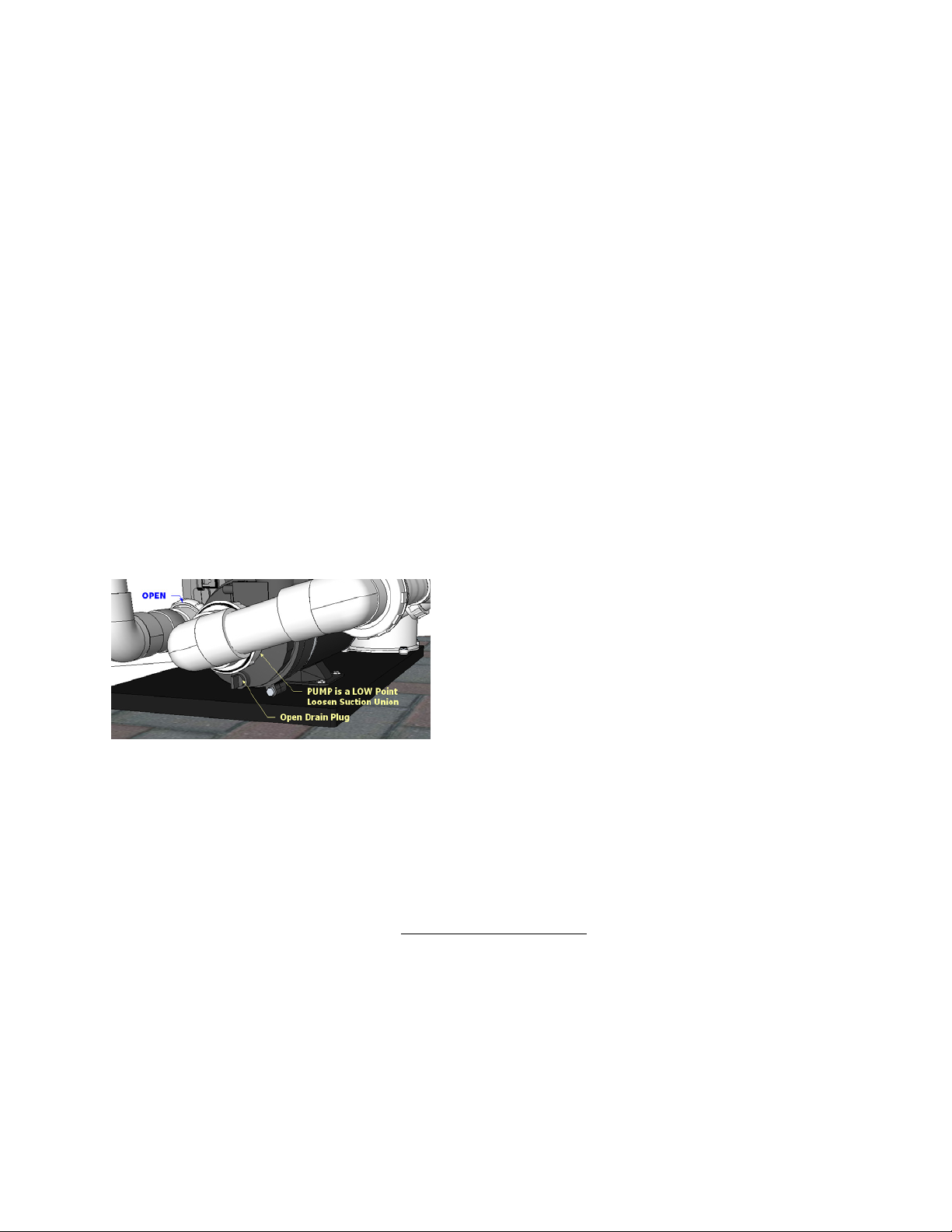
trapped which are typically the low points and get rid of the water at these low points. Remove the filter
cartridge, clean it and store it. Loosen appropriate union
fittings on the heater and pump suction to drain the water
that is trapped in the pump and heater, which are two of
the low points. You also want to open the drain plug in
the pump, if it has one. If you also have a gas heater,
open the unions and let water drain from its pipes. The
water that remains in the tub can safely be allowed to
freeze. Add some algaecide, so the water won’t turn bad
should it get warm before you are ready to fill the tub
again. If you wish, you can also suck the remaining water out using a wet & dry shop vacuum cleaner or a
portable sump pump, to clean the floor. However, after cleaning, add an inch (2.5 cm) of clean water back
in and again add some algaecide. Attach the cover and ensure it is sealing good all around the tub.
In the spring you will find that the staves are still moist. First reconnect any open unions and plugs.
Check that all unions have been tightened and that the O-rings have been seated properly. Replace the
filter. Check that the isolating valves are open. If you refill the tub while freezing conditions still exist,
you need to apply external heat to any location that may have retained ice. This can involve placing a fan
style heater on the seat to thaw any ice in the bottom of the tub. Also the tub should be filled to the initial
3” (7.5cm) level (above the suction drain) through the top of the filter using warm water. This will thaw
any ice that may be in a low spot in the piping or equipment. Start the filling procedure, as per section 3,
paragraph 2. This will avoid the spa pack registering freeze conditions, which with some spa packs can
cause problems in quickly heating the water, especially if the pack is set to LOW current mode. Because
the wood may have shrunk a small amount (provided you didn’t allow it to completely dry out), a little
swelling may need to occur again to seal the tub.
Persons living in warm climates, where the tub gets used during the winter but not during the hot summer,
need to consider all options, before they decide to drain the tub and allow it to dry out. In a hot desert
climate, a drained tub will quickly dry and excessive shrinkage of staves may occur. It would be better to
keep the tub filled, with the spa pack set to sleep mode or, if the tub has no digital spa pack, keep the
pump running at low speed but with heater off. Of course sanitizer must still remain present and for pro-
longed no-use the Argenia Silver Water System would be ideal. It does not even need the pump to be