LCR-750THX & Center-750THX page 8
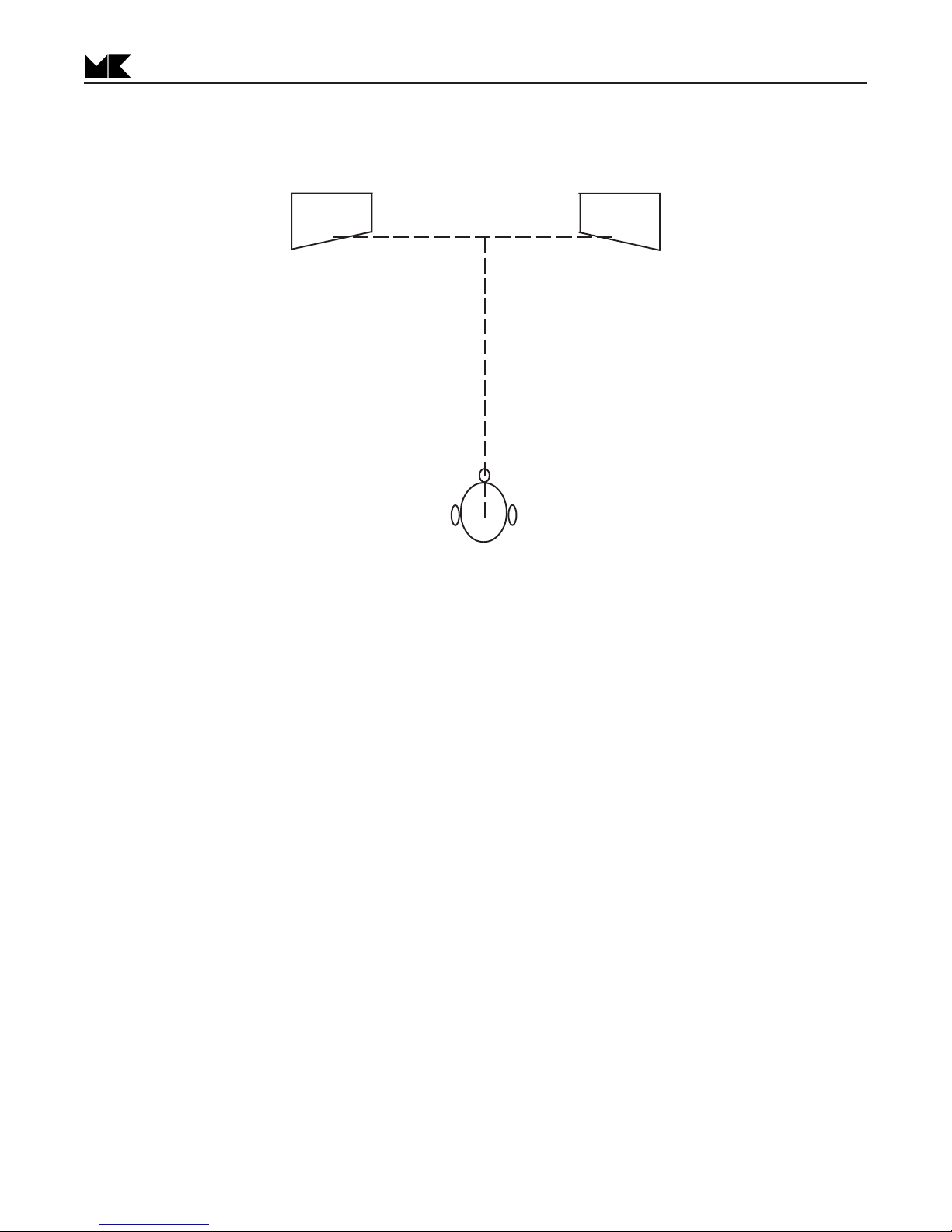
If you mount the surrounds on the side wall behind the listening position, they can be aimed towards each other
orangled towards the back wall orthesidewallsurfacedirectlybehind them. By reflecting sound behind the listening
position, you may increase the sense of envelopment in the sound.
Ifyouwantorneedtomountspeakersonthebackwalloftheroom,thereareseveraloptions. Youcanaimthem
so that they fire towards each other (so they fire along the back wall); you can aim them towards the front wall of the
room; or you can angle them so they fire toward the side walls. Symmetrical arrangements work best.
Thespeakersshouldbeaminimumofa fewfeetawayfromthenearestlistener. Ideally, thesurroundspeakers
should not call attention to themselves as separate sources of sound.
Ifthesurroundsmustbelocatedclosetothelisteners,aimingthemattheroomwallsoreventheceilingcanhelp
to reduce any directional effect. As described above, this can produce a desirable result even in rooms where the
surround speakers are an adequate distance from the listeners' heads.
Ifthesurrounds cannot be placed onawall, try placement on tablesor the floor to the sidesof the main listening
position,firinguptowardstheceiling. Thiscanworkverywellinenvironmentsthatdonotallowpermanentattachment
of speakers to the walls.
Some listeners prefer to use multiple pairs of surround speakers. While this is not necessary, it can provide a
broaderanddeeper surround effect, with bettercoverage in very large rooms. When usingmultiple pairs of surround
speakers,asymmetricalinstallationpatternworksbest. Forexample,ifyouareusingtwopairsofsurroundspeakers,
onepaircouldbemountedonthebackwalloftheroom,mountedequidistantfromthebackcorners,withtheotherpair
mounted on the side walls of the room, equidistant from the same back corners.
The surround channels can be installed in a wide variety of locations, but because they are usually mounted on
the walls of the room, they can be a challenge to successfully install. If you have further questions, please call us at
the M&K factory, and we will be happy to discuss them with you in detail.
SUBWOOFER
SubwooferlocationforHomeTheatresystemsisessentiallythesameasformusicsystems. SeeourSubwoofer
operationmanual for more details. Remembertoleave2- 3 feet ofclearancebetweenanytelevision and subwoofer,
unless the subwoofer is magnetically shielded.
The preferred connection for the subwoofer is a subwoofer output from the amplifier or controller. This insures
that a full bass signal is being fed to the subwoofer. If you do not have such a subwoofer output jack, connect the
subwoofer to the front Left and Right channel amplifier outputs (do not use the Center channel).
VERYIMPORTANT:WhentheSubwooferisconnectedtotheLeftandRightamplifieroutputs,andthecontroller
isinPro-Logicmode,the switchonthe Pro-Logiccontrolunit labelledCenterchannelWIDE/NORMAL must beset to
the NORMAL mode. If the switch is set to the WIDE mode, the bass content of the Center channel will not be fed to
the Subwoofer, and you will lose a significant amount of bass.
9. SATELLITE/SUBWOOFER PHASING TEST
InanysystemusingasubwooferseparatefromMainspeakers,aphasingtestmustbeperformedtoinsuregood
bass blending. This test insures optimum sound in the critical bass frequencies where your Subwoofer and Main
speakers overlap.
Playa familiar CD, DVD, LP, or tapewith steady, consistent bass content through yoursystem. Listen carefully
to the "mid-bass" region of 75 - 125 Hz. This is the part of the spectrum where electric or string basses and drums
predominate. Then reverse the phase of either the subwoofer or BOTH Main speakers.
If your Subwoofer has a PHASE switch on its back panel, move it either from (+) to (—) or vice versa.
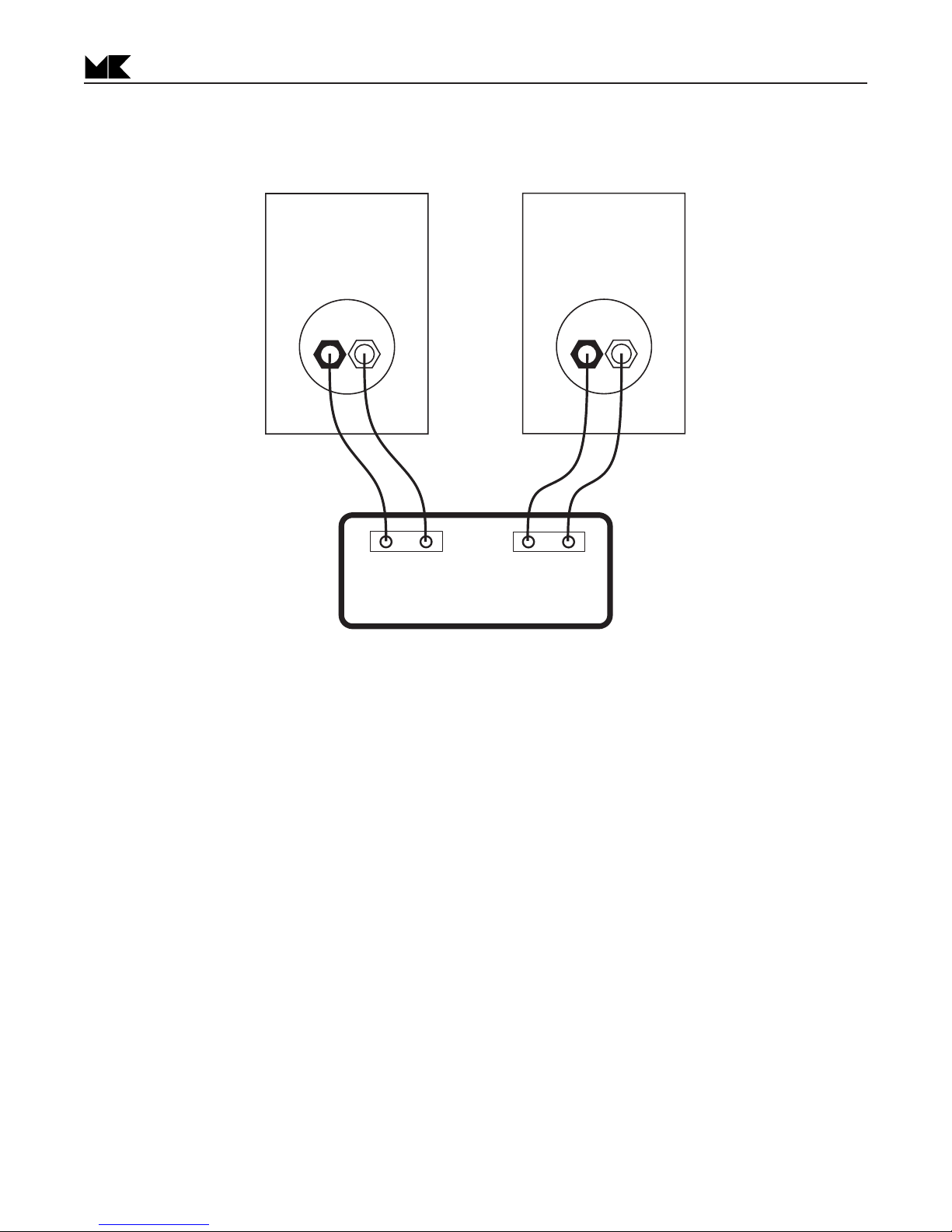
IfyourSubwooferdoesnot have a PHASE switch, it takes a bitmorework. Youwillhaveto change the Positive
and Negative speaker inputs on the back of BOTH Main speakers.
You can do this at the back of both Main speakers, or at the Subwoofer's TO SPEAKERS terminals, but never
atbothlocations. TheleadthatwasonthePositive(+)terminalshouldbeswitchedtotheNegative(—)terminal,and
vice versa. When switching speaker wires, take care to protect your amplifier. Make sure that the wires do not touch
each other when you are making the switch. As a safety measure, we suggest that you turn the amplifier off before
making the switch.
Nowlistentothesamemusicalpassageasyoudidearlier,concentratingonthemid-bassregion. Ifyouhearless
bass, the original connection (or switch position) was correct. If you hear more bass, the new connection (or switch)