
Heatport H2000 Manuel utilisateur
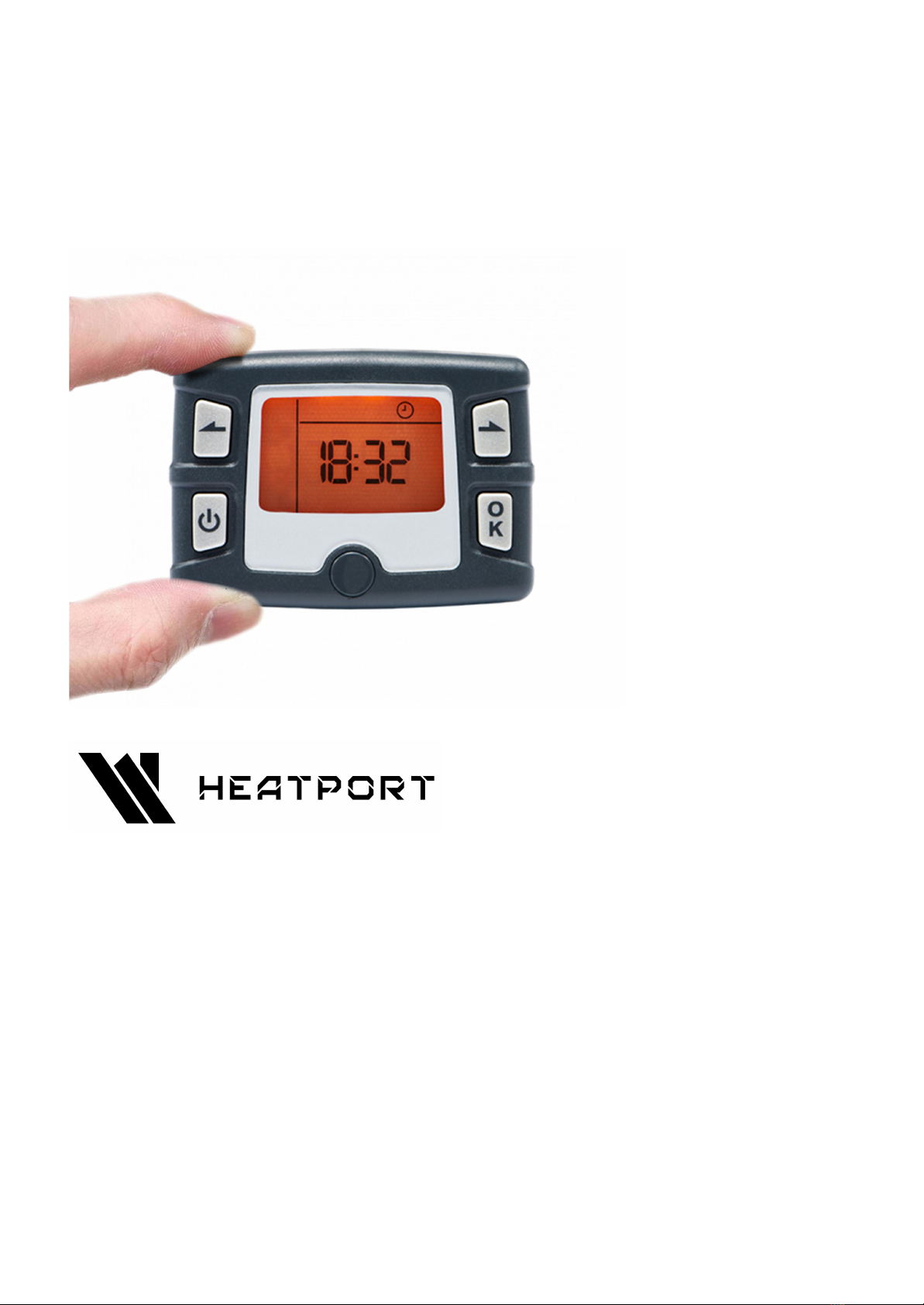
USER MANUAL
HEATPORT H2000 / H55 / W5S / W90
DiGiCon
HEATPORT is the brand name of the New Zealand based family owned company LF Bros NZ Pty Limited with its own design,
development, testing, assembly, quality check, installation and service facility located in Cheviot / North Canterbury.
Our mission is to bring the ultimate premium quality diesel heating system that everyone can afford.
We think about every single detail of the product. These details are mostly hidden from people but we know that the continual
improvement of all of these components with no compromise on the selection of the parts and quality is the only way to offer
the long lasting, easy to use product, best customer experience, and gain our customers trust.
Version 1.2 - 08/2022 Made in New Zealand

1. INTRODUCTION
Thank you for purchasing your HEATPORT diesel heater. For a better understanding of how to
operate your heater efficiently please read this user manual.
Note: Not all the functions may be available for each model of the heating systems.
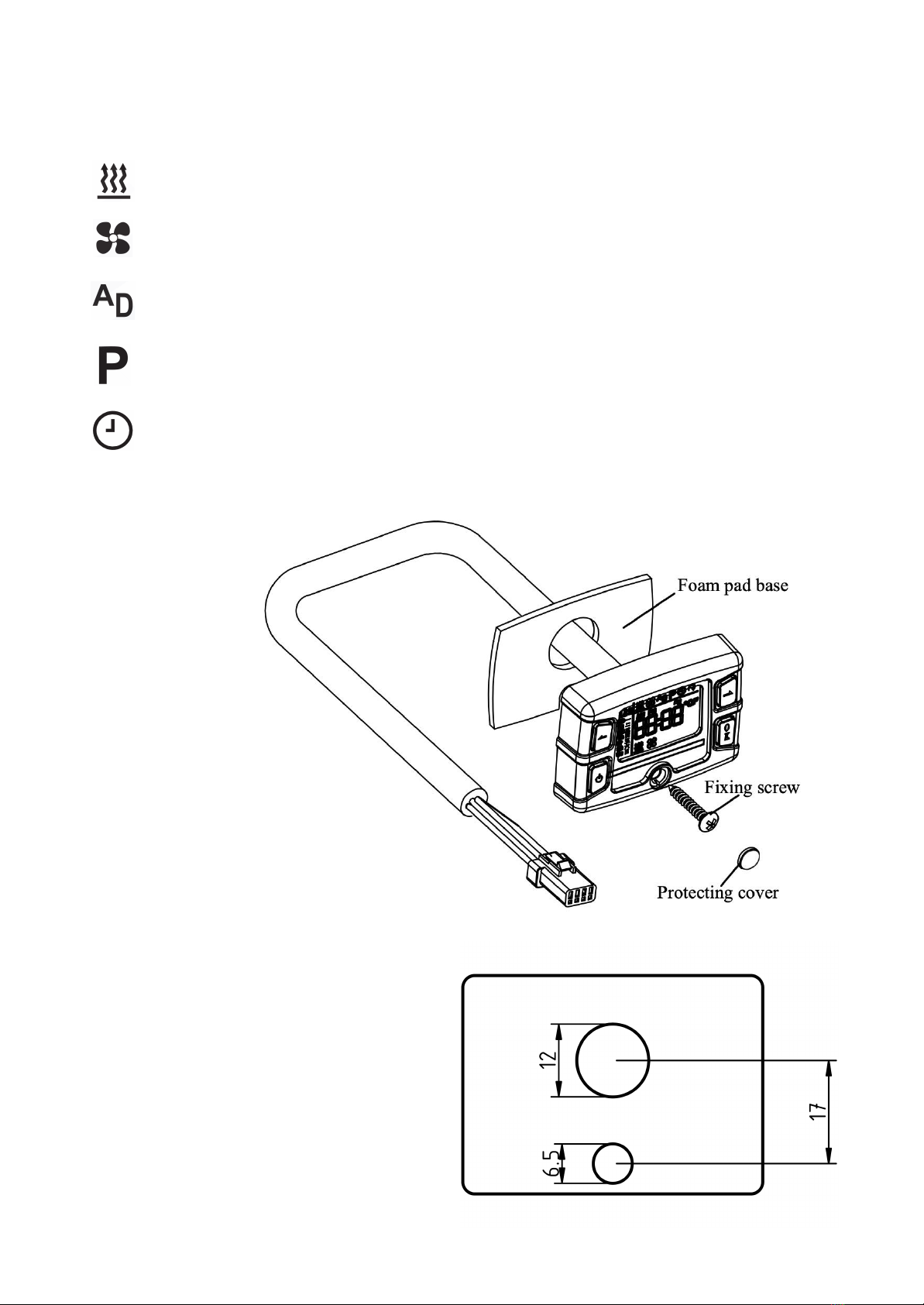
MAIN MENU SYMBOLS
Simple Heating - Heating in 2 optional modes - fixed power / thermostatic
Ventilation mode - only the fan is spinning and blowing cold air
Ambient measurement - shows actual temperature and pressure
7 day programmable timer - set when you want to start your next heating cycle
Time - set date, time and advanced settings
2. INSTALLATION
○ This controller should be
installed in a suitable location which
is convenient for operating the heater
and also connecting to the wiring loom.
○ Drill Ø12 mm hole for connection cable and
Ø6.5 mm hole for fixing screw, holes are 17 mm
apart.
○ Stick the foam sticker to the mounting
surface, push the cable through a Ø12 mm
hole. Remove the other side of the sticker
and stick the controller to it. Expansion
plugs of the controller are now in the Ø6.5
mm hole. Insert the fixing screw and place
the protective cover over it.
3. OPERATION
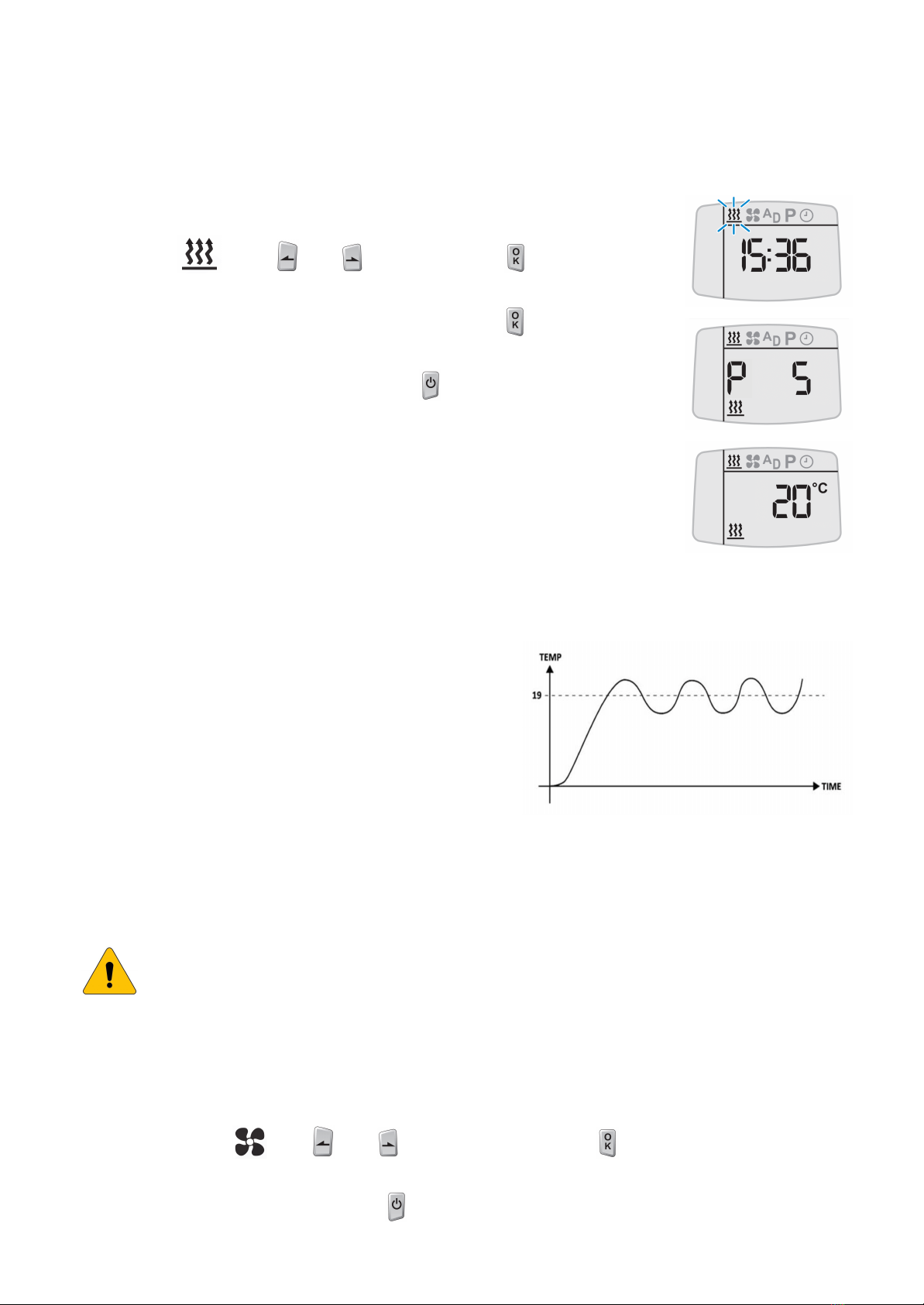
IMMEDIATE HEATING
○This mode is used for manual ON and OFF switching of heating with
preset power or at designated temperature.
○Select using and and confirm with .
○You can adjust heating power between 1 to 7 with arrows.
○To switch into thermostatic mode press and hold for three seconds.
Heater will start automatically after a few seconds.
○To terminate the heating cycle press . The heating unit will initiate
the cooling down process that can run a couple of minutes until the
heat exchanger is fully cooled down.
●Fixed Power Mode:
The display will show values between P1-P7, with P7 as the
highest heating power. The heater will be running on the same
until switched off or changed.
●Thermostatic Mode
The display will show values in degrees
celsius. You may adjust the temperature
from 5°C to 35°C. It automatically adjusts
the heating power within the range of the
minimum and maximum heating power and
also allows full shut down of the heating
process after reaching a few degrees
above the preset temperature. This is to
avoid overheating of the heated space. The unit then waits fully off and initiates the next
heating cycle again once the room temperature drops a few degrees below preset
temperature. The controller allows cycling to maintain a relatively stable room
temperature.
Note: The ambient temperature sensor is located inside the heating unit. It measures the temperature
of air entering the unit. You may experience incorrect functionality of thermostatic mode in case the
air for the unit is sucked from a different area than the one you are heating.
VENTILATION MODE
○This mode is used for regulated flow of cold air through the heating unit without the
heating process.
○Select using and arrows and confirm with .
○You can adjust the speed of the fan between 1 to 7 with arrows.
○To switch off the fan press .
AMBIENT TEMPERATURE AND PRESSURE
○This will show you the temperature of air coming through the heater and air pressure.
○Select using and arrows and confirm with .
○Air temperature will display on the display, for air pressure press or .
○To get back to the main menu press .
Note: For quicker selection and changes in the menu you can just hold the arrow instead of pressing
it multiple times.
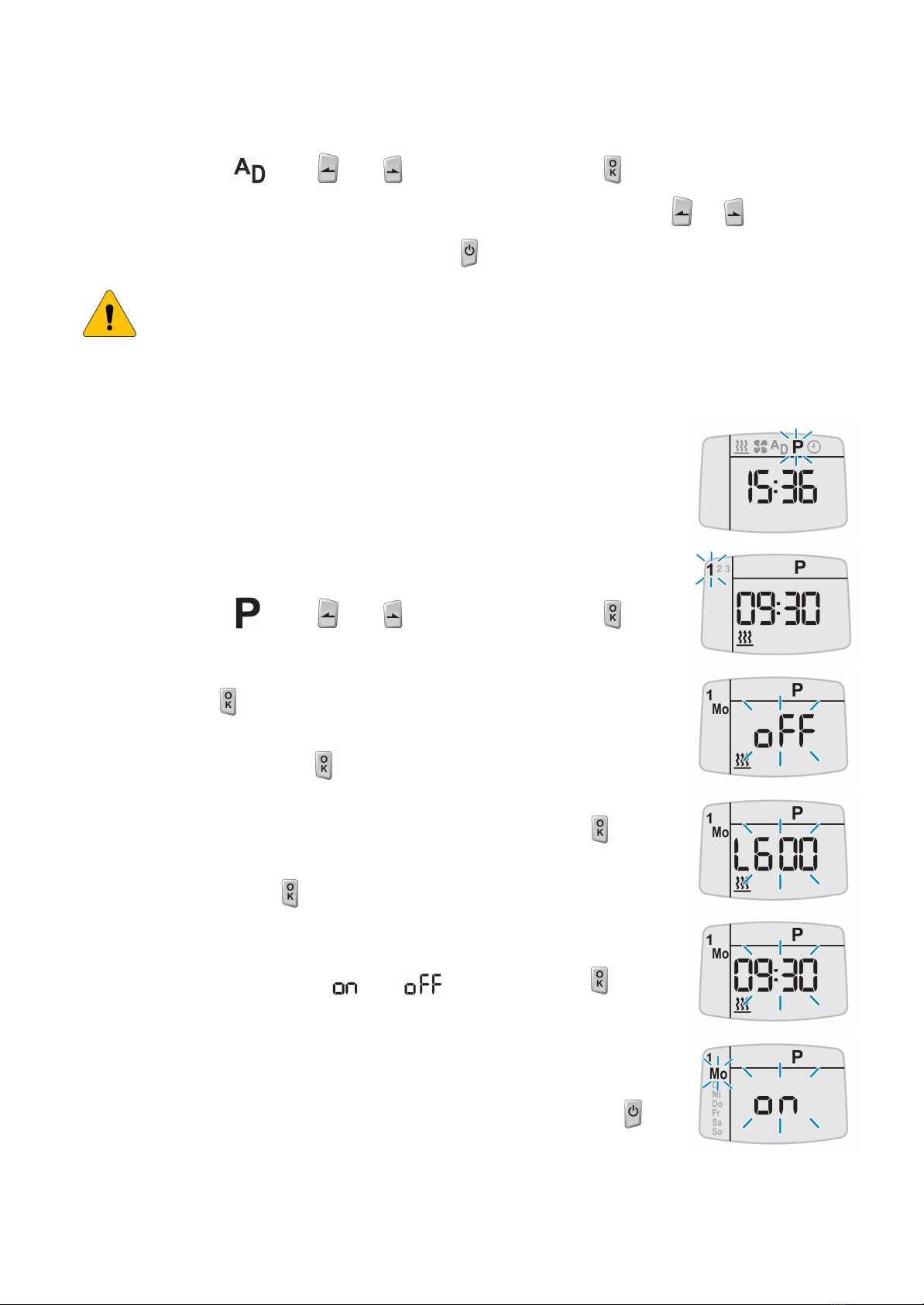
7 DAY PROGRAMMABLE TIMER
○You can preset the heater to be operating on selected days. For
each day of the week you can select the starting time and
duration of the heating cycle. Heating mode and
power/temperature depends on settings set in the
IMMEDIATE HEATING menu. Controller can save 3 different
weekly programs. For the correct operation of a programmable
timer you have to set the correct day and time.
○Select using and arrows and confirm with .
○In the first step you are selecting the program you would like to
set. Select the number of the program with arrows and confirm
with .
○Now you can set this program to be “ON” or “OFF”. Use arrows
and confirm with .
○In the next step you can set the duration of the heating cycle in
minutes from 50 to 990. Use arrows and confirm with .
○In the next step you can set the starting time. Use arrows and
confirm with
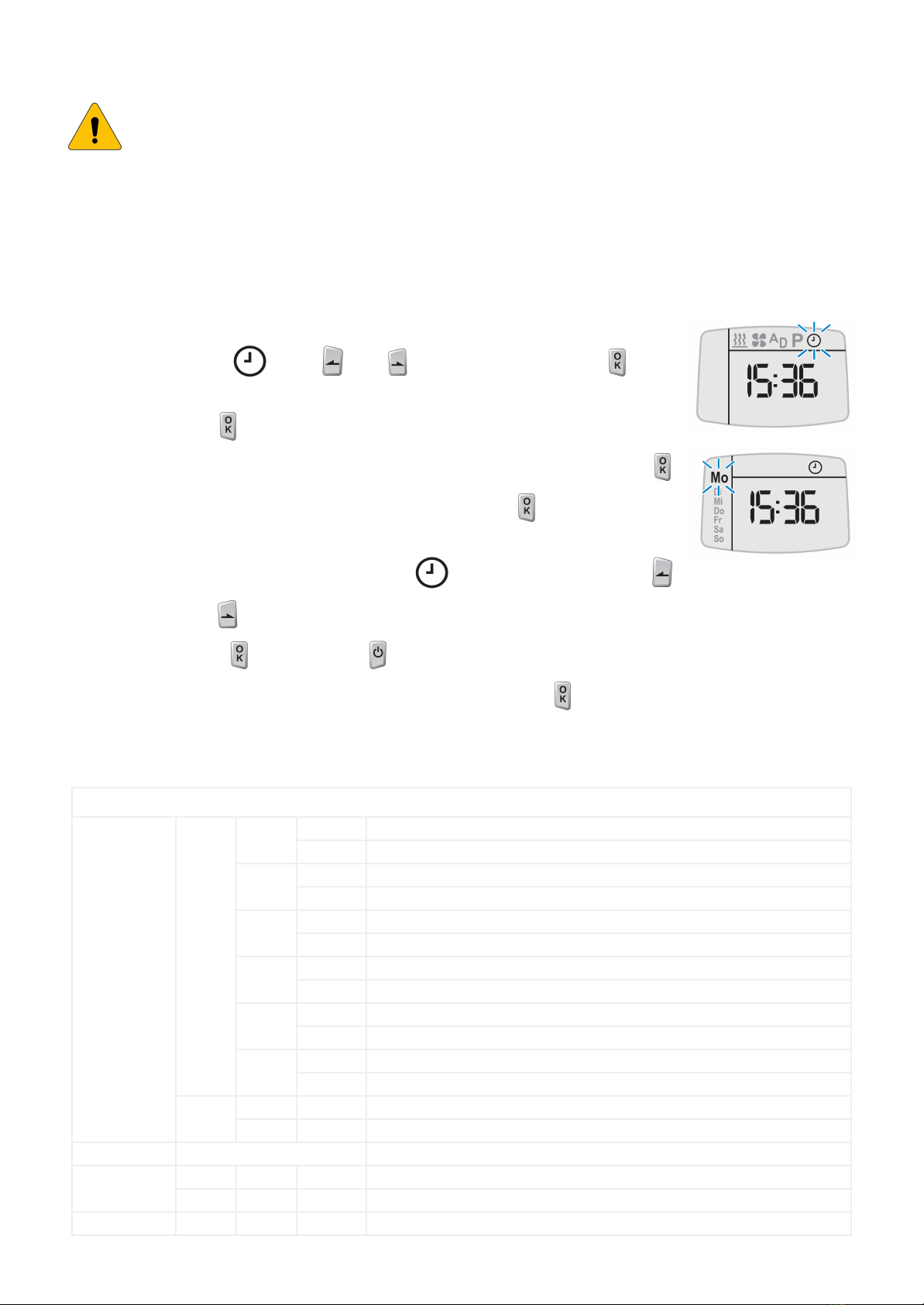
○Now you have to go through each day and set if you want the
heater to be running that day. With the day flashing, use arrows
to choose between and and confirm with .
○Days with a heating cycle ON will appear in the list on the left.
Days with a heating cycle OFF will not appear there.
○Once you confirm the ON or OFF cycle for Sunday, you will be
back on the main screen.
○You can skip back to main menu anytime by pressing . All
changes done will remain saved.
Example: You want the heater to be running every working day between 6am and 1pm and every
Wednesday and Saturday between 5pm and 9 pm. You first set up the program number 1, switch it on.
You set the duration of the heating for 420 minutes (7hours) and the start of the heating will be at 6:00.
You set it ON for Monday-Friday and OFF for Saturday and Sunday. Now you have to set the program number 2
with a duration of 240 minutes (4 hours), with starting time at 5pm and only for Wednesday and Saturday.
You will see the day of the next heating cycle in the Timer display field.
TIME AND ADVANCED SETTINGS
○Here you can set time and day or enter advanced settings.
○Select using and arrows and confirm with .
○First you have to select the current day. Use arrows and confirm
with .
○Now you can adjust the time, set hours first, confirm with
and set minutes. Once you confirm it with , you will be back
on the main screen.
○For Advanced settings select using arrows and press
and together. You will be in the settings menu, you can use arrows to list through,
press to confirm or to retreat. Menu structure is shown in the table, in first layer
you can choose from P1/P2/P3, confirming with will get you to the next layer (C1/C2)
and so on.
ADVANCED SETTINGS OR MODES
P1
C1
00
On
–
Off
RESERVED: Must remain in this settings
01
On
°F
Off
°C
02
On
English
Off
Chinese
03
On
–
Off
RESERVED: Must remain in this settings
04
On
–
Off
RESERVED: Must remain in this settings
05
On
–
Off
RESERVED: Must remain in this settings
C2
00
0-10
Brightness of the display
01
5-15
Time to turn off the display with no activity in seconds
P2
F 90
Priming the fuel line, automatically exits after 90s or after pressing any key
P3
C
UP
–
H
UP
–
Firmware version
(Shows version of the firmware)
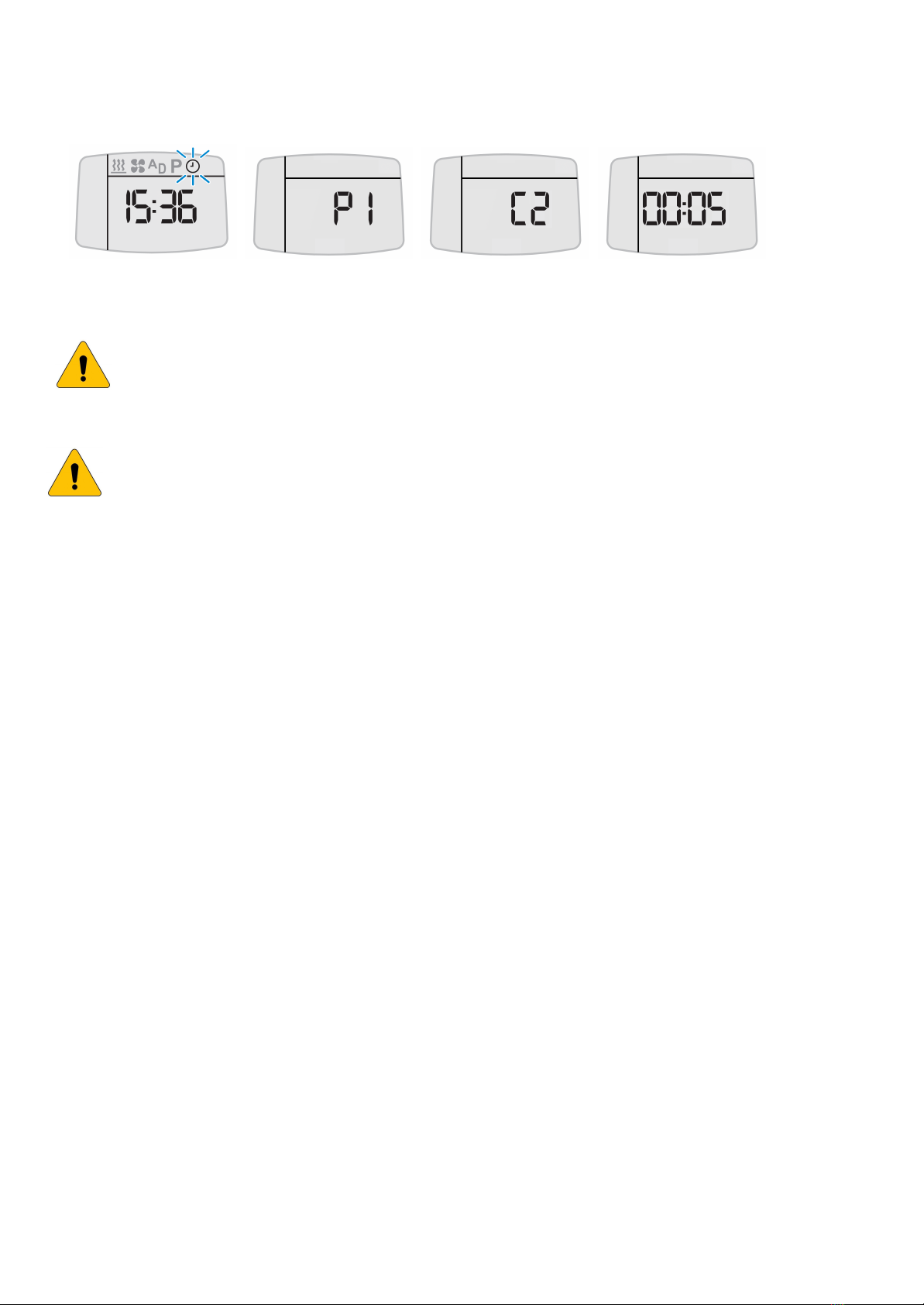
Example: You want to set the brightness of the display to half of maximum power. You select settings, press both
arrows together. Now you are in the P1 menu, confirm with OK, with an arrow select C2 menu, confirm with OK
and select 00 menu to get into the brightness settings. Adjust using arrows, confirm with OK.
Note: Priming the fuel line can only be done while the fuel line is physically disconnected from the
heating unit as otherwise the burner could be filled with fuel and the next startup will be
unsuccessful with a lot of smoke. If the fuel line is connected to the heater unit, never use this
mode. Not following this rule can cause excessive overfilling of the burner that may require
service of the unit that can not be covered by warranty.
Never turn off the unit by disconnecting the power supply while the unit is running or before
finishing the cooling process as it may cause permanent damage to the internal components.
Warranty does not cover such damages.

4. FAULT CODES / TROUBLESHOOTING
Note: This fault code book is designed for an easy identification of any issue. Any repairs/replacements of the internal components of
the heater unit described below must be consulted and pre-approved first with the supplier of the product. The warranty will be
voided if there are any repairs/modifications or unauthorized changes in the hardware or firmware of the product without the approval of
the supplier or any replacement of non-original parts or components that are not supplied by the supplier.
00
NO FAULT
10
IGNITION FAILURE
●Run out of fuel
○This can happen anytime after you run out of fuel in the individual fuel tank or
the fuel level of the main tank has dropped under the tip of the suction pipe.
You must fill the tank and then fill the fuel lines using the Pump Oil Start or
Remote Pump Oil mode or repeat the start-up process again until successful
ignition or until you remove all the bubbles sitting on the fuel line.
●Closed / blocked breathing vent of the tank
○Implosion of the tank prevents pumping the fuel. Open the breathing vent of
the tank.
●The wrong placement of fuel lines/fuel filter/fuel pump
○A problem especially on the intake side of the fuel line before the fuel pump,
which is most vulnerable for creation of an airlock. Review the placement of
the fuel line /filter/ fuel pump exactly as per the provided instructions.
If you are unsure if the problem is due to the placement of the fuel lines (this
can occur if you run longer distance in horizontal level), you may try placing
the fuel pump directly under the heater and suck the fuel straight from the jerry
can to determine if the problem is caused by the fuel line placement.
●Wrong diameter of the fuel lines
○The fuel lines supplied are a special size with very small internal diameter.
Never use any other type of fuel line.
●Blocked or compressed air intake / exhaust pipe
○Check the air intake / exhaust pipe for the blockage, dirt, snow, mud.
●Condensed / rain water staying in the air intake / exhaust pipe
○Reinstall the pipes as per instructions to allow water to escape naturally.
●Blocked fuel line or fuel filter
○Replace the fuel line or fuel filter.
●Bad quality of fuel
○Replace the diesel.
●Carbon deposition inside the burner
○Replace the burner.
●Carbon deposition in heat exchanger / exhaust pipe / exhaust silencer
○Pressure clean with water the heat exchanger/ exhaust pipe / exhaust silencer.
●Dirt on the atomising net of the glow plug
○Replace the atomising glow plug net
●Dirt on the glow plug
○Replace the glow plug
●Faulty blower motor / heat exchanger gasket OR burner / heat exchanger gasket
○Replace the gasket
●Fault of the Fuel Pump
○Replace the Fuel Pump.
●Fault of the ECU * please see above
20
FLAME EXTINCTION
Extinction over time, same as 10
21
FLAME EXTINCTION
Extinction over time, shell and inlet temperature too low, same as 10
30
UNDERVOLTAGE
●Undervoltage
○System minimum voltage is 10.5 volts. Verify battery voltage. Connect the
multimeter to the positive and negative terminals of the wiring harness and set
to volts DC. If the wiring harness has been extended for a longer distance,
check the voltage at the main ECU connector.
○Record the voltage. If the voltage is less than 12.6 (flooded cell) 12.8 (AGM),
connect the battery charger and log off the job until the batteries are fully
charged. Otherwise, turn on the unit while watching the multimeter.
●Wrong connection in connectors
○Check the connector of the main ECU board for any dirt or corrosion on the

positive and negative terminal at the wiring harness.
●Fault of wiring harness
○Inspect wiring for damage or short circuiting with the chassis of the vehicle.
Check continuity from the ECU board to the connector of the Main Controller.
In case of wrong connection, replace a wiring harness.
●Fault of the ECU * please see above
31
OVERVOLTAGE
●Overvoltage
○System maximum allowed voltage is 15 volts for the 12V version and 30 volts
for the 24V version. The possible causes of this code are: 1) Battery charger in
boost mode 2) Alternator overcharging 3) Solar panel controller overcharging
●Fault of the ECU * please see above
41
OVERHEAT
●Excess temperature is measured at the temperature sensor
○Check if the fan is not blocked/damaged and is spinning without any
suspicious noise.
○Check airflow ensuring the ducting is free from obstructions.
●Wrong connection of the temperature sensor
○Remove the temperature sensor, check connections, wiring and reinstall. If the
wiring is damaged or the connection is corroded, replace the temperature
sensor.
●Faulty temperature sensor
○Disconnect the overheating sensor from ECU and check its resistance. The
correct resistance is 50kOhm for the NTC sensor or 1kOhm for the PT sensor
at 25°C.
●Fault of the ECU * please see above
50
TEMPERATURE
SENSOR
●Open circuit of the wiring of temperature sensor
○Replace the temperature sensor.
●Wrong connection of the temperature sensor * please see above
●Faulty temperature sensor * please see above
●Fault of the ECU * please see above
51
TEMPERATURE
SENSOR
●Short circuit of the wiring of temperature sensor
○Replace the temperature sensor.
●Wrong connection of the temperature sensor * please see above
●Faulty temperature sensor * please see above
●Fault of the ECU * please see above
52
TEMPERATURE
SENSOR
●Open circuit of the wiring of temperature sensor
○Replace the temperature sensor.
●Wrong connection of the temperature sensor * please see above
●Faulty temperature sensor * please see above
●Fault of the ECU * please see above
53
TEMPERATURE
SENSOR
●Short circuit of the wiring of temperature sensor
○Replace the temperature sensor.
●Wrong connection of the temperature sensor * please see above
●Faulty temperature sensor * please see above
●Fault of the ECU * please see above
54
TEMPERATURE
SENSOR
●Temperature sensor overheat
○Same as 41
65
TEMPERATURE
SENSOR
●Broken circuit of the inside temperature sensor
○Most likely refers to faulty ECU
66
TEMPERATURE
SENSOR
●Short circuit of the inside temperature sensor
○Most likely refers to faulty ECU
68
TEMPERATURE
SENSOR
●Broken circuit of the outside temperature sensor
○Replace the temperature sensor.
●Wrong connection of the temperature sensor * please see above
69
TEMPERATURE
SENSOR
●Short circuit of the outside temperature sensor
○Replace the temperature sensor.
●Wrong connection of the temperature sensor * please see above
70
FUEL PUMP
●Fuel pump short circuit
●Wrong connection in connectors
○Check the connectors of the fuel pump or main ECU board for any dirt or
corrosion.

●Fault of the wiring harness * please see above
●Fault of the Fuel Pump * please see above
●Fault of the ECU * please see above
71
FUEL PUMP
●Fuel pump broken circuit
●Wrong connection in connectors
○Check the connectors of the fuel pump or main ECU board for any dirt or
corrosion.
●Fault of the wiring harness * please see above
●Fault of the Fuel Pump * please see above
●Fault of the ECU * please see above
80
BLOWER MOTOR
●Blower motor broken circuit
○Check connection of the blower motor.
●Fault of the ECU * please see above
81
BLOWER MOTOR
●Blower motor short circuit
○Connect the multimeter to the positive and negative terminals of the fan and
check the resistance. Check if the wiring to the fan is damaged.
●Fault of the ECU * please see above
82
BLOWER MOTOR
●Blower motor speed too low
○This occurs when motor speed varies from specification by more than 10% for
longer than 30 seconds.
●Blower motor interrupted
○Check heating air intake for obstructions, ensuring the blower turns freely. Run
the unit and listen if there is any suspicious sound or rubbing. Turn the blower
by hand checking for hard spots.
●Damage of the impeller
○Possible causes: 1) Physical obstruction 2) Ducting clamp over-torqued
3) Floor mat or debris under the heater when mounted. Replace the blower
motor.
●Fault of the ECU * please see above
83
BLOWER MOTOR
●Blower motor speed too high
○This occurs when motor speed varies from specification by more than 10% for
longer than 30 seconds.
●Fault of the ECU * please see above
84
BLOWER MOTOR
●Blower motor speed measurement failure
○This occurs when ECU is not able to measure motor speed
●Fault of the ECU * please see above
85
BLOWER MOTOR
●Blower motor disconnected
○Check connection of the blower motor.
●Fault of the ECU * please see above
90
GLOW PLUG
●Broken circuit of the wiring of glow plug
○Check the glow plug connection.
●Fault of glow plug
○Replace the glow plug.
●Fault of the ECU * please see above
91
GLOW PLUG
●Short circuit of the wiring of glow plug
○Replace the glow plug.
●Fault of glow plug
○Replace the glow plug.
●Fault of the ECU * please see above
92
GLOW PLUG
●Glow plug resistance failure
○Replace the glow plug.
●Fault of the ECU * please see above
93
GLOW PLUG
●Glow plug drive open circuit
○Replace the ECU
a2
TEMPERATURE
SENSOR
●Excess temperature is measured at the cold air intake sensor
○The indoor temperature is too high
○Installation space is too narrow or the suction vent of the installation enclosure
is blocked which causes accumulation of residual heat around the heating unit.
Ce manuel convient aux modèles suivants
3
Table des matières
Manuels Chauffage populaires d'autres marques

oventrop
oventrop Regucor Series Manuel utilisateur

Blaze King
Blaze King CLARITY CL2118.IPI.1 Manuel utilisateur

ELMEKO
ELMEKO ML 150 Manuel utilisateur

BN Thermic
BN Thermic 830T Manuel utilisateur

KING
KING K Series Mode d’emploi

Empire Comfort Systems
Empire Comfort Systems RH-50-5 Guide de démarrage rapide


Empire Heating Systems
Empire Heating Systems WCC65 Manuel utilisateur

Wetekom
Wetekom 92 86 43 Manuel utilisateur

Desa
Desa SPC170-F Manuel utilisateur

Watlow
Watlow Watrod Electric Tubular Heaters Manuel utilisateur

Haverland
Haverland ECO-DRY GPS Series Manuel de la liste des pièces

Stelpro
Stelpro ASILVC2060 Series Manuel utilisateur