FENDT Bianco Series Manuel utilisateur

Dear Fendt Customer!
Thank you for purchasing a Fendt camper, which will be your dependable companion for the most
enjoyable days of the year for many years to come.
Thanks to our many years of experience in the construction of leisure vehicles we are able to react
innovatively to current market conditions and demands.
Driving safety and comfortable living are, and have always been, indispensible elements of our product
philosophy.
The name Fendt-Caravan has stood for high quality manufacturing for many decades now.
You will also be able to benet from a dense network of dealer service points throughout Europe. Take
advantage of your authorised dealer‘s experience and technical knowledge - we recommend speaking
to him in detail before taking your rst trip with your Fendt camper.
Please read this manual carefully to ensure that you use your vehicle correctly.
The best proof of our particularly quality-oriented philosophy is the Fendt camper long-term guarantee
against leaks in the camper connections. By having annual inspections carried out by an authorised
Fendt camper dealer this guarantee can be extended to cover a period of up to ve years after you
take delivery of the vehicle.
Fendt‘s employees wish you many enjoyable trips and hope you will always have a safe journey with
your new Fendt camper.
Fendt-Caravan GmbH

Table of Contents
1 Introduction..............................................................................................................01-1
1.1 General information ...........................................................................................01-1
1.2 Markings in these operation instructions...........................................................01-2
2 Safety........................................................................................................................02-1
2.1 General information ...........................................................................................02-1
2.2 Before the drive .................................................................................................02-3
2.3 Loading..............................................................................................................02-5
2.4 Handling Performance.......................................................................................02-7
2.5 After the drive ....................................................................................................02-9
3 Undercarriage and vehicle registration.................................................................03-1
3.1 General information ...........................................................................................03-1
3.2 Safety coupling AKS 3004.................................................................................03-2
3.3 Locking brake facilities ......................................................................................03-7
3.4 Overrunning equipment and wheel brakes........................................................03-8
3.5 Rotating stanchions.........................................................................................03-10
3.6 Vehicle registration...........................................................................................03-11
3.7 General inspection...........................................................................................03-11
3.8 Fit for a Speed of 100 km/h.............................................................................03-12
3.9 Denition of mass ............................................................................................03-13
4 Wheels, tires ............................................................................................................04-1
4.1 Tires ...................................................................................................................04-1
4.2 Tire pressure ......................................................................................................04-1
4.3 Prole depth and age of tires.............................................................................04-2
4.4 Rims...................................................................................................................04-3
4.5 Changing the tire ...............................................................................................04-4
5 Exterior structure ....................................................................................................05-1
5.1 Ventilation and De-aerating ...............................................................................05-1
5.2 External entry.....................................................................................................05-3
5.3 Service ap ........................................................................................................05-5
5.4 Toilet ap............................................................................................................05-5
5.5 Gas-bottle container ap...................................................................................05-6
5.6 Roof and roof rail ...............................................................................................05-7
5.7 Guide rail for outer tent .....................................................................................05-7
5.8 Bicycle carrier ...................................................................................................05-8
5.9 Subsequent installation of an awning................................................................05-9
5.10 Rear ladder, roof and roof rail ..........................................................................05-10
6 Interior structure......................................................................................................06-1
6.1 Opening and closing doors and aps................................................................06-1
6.2 Extendable media oval .....................................................................................06-2
6.3 Converting the seating arrangement into a bed ...............................................06-3
6.4 Bunk beds .........................................................................................................06-7
6.5 Windows ............................................................................................................06-9
6.6 Roof bonnets ...................................................................................................06-10

7 Installation of electrical devices ............................................................................07-1
7.1 Safety tips..........................................................................................................07-1
7.2 Control panels....................................................................................................07-2
7.3 Electrical supply.................................................................................................07-5
7.4 Circuit diagram for lighting in the vehicle 12V 13-pole .....................................07-8
7.5 Lighting in the camper.....................................................................................07-10
7.6 Electric oor heating........................................................................................07-15
7.7 Microwave / Oven ...........................................................................................07-16
7.8 Air-conditioning................................................................................................07-16
7.9 Radio/CD device .............................................................................................07-16
7.10 Prewiring for antenna.......................................................................................07-16
8 Water.........................................................................................................................08-1
8.1 Water supply......................................................................................................08-1
8.2 Warm water supply via Truma-Therme .............................................................08-3
8.3 Cassette toilet ...................................................................................................08-5
9 Gas ...........................................................................................................................09-1
9.1 General safety rules for the use of liquid gas facilities ......................................09-1
9.2 Gas supply.........................................................................................................09-3
9.3 Hot-air heating...................................................................................................09-5
9.4 Refrigerator......................................................................................................09-10
9.5 Gas cooker ......................................................................................................09-12
9.6 Oven ................................................................................................................09-13
10 Accessories..............................................................................................................10-1
11 Maintenance and upkeep .......................................................................................11-1
11.1 Maintenance ......................................................................................................11-1
11.2 Ventilation ..........................................................................................................11-2
11.3 Upkeep ..............................................................................................................11-2
11.4 Winter operation ................................................................................................11-7
12 Waste disposal and environmental protection .....................................................12-1
12.1 The environment and mobile travel ...................................................................12-1
13 Technical data..........................................................................................................13-1
13.1 Tire pressure values...........................................................................................13-1
13.2 Technical data ...................................................................................................13-2
13.3 Basic equipment................................................................................................13-5
13.4 Lighting..............................................................................................................13-6
Index ............................................................................................................................Ix-1

1. Introduction
1.1 General information
In accordance with guarantee condi-
tions, Fendt-Caravan also gives you
a 5-year guarantee against leaks in
the camper connections. When you
receive your vehicle, your dealer will
give you our Customer Service History
booklet, „FENDT 5-YEAR GUARAN-
TEE FOR BODY CONNECTIONS
AGAINST LEAKS“.
01-1
Our campers are continuously being further de-
veloped. Please understand that we reserve the
right to make changes to their equipment, shape
and technology. Therefore, Fendt shall not be
liable for any claims arising from the contents of
this handbook. The equipment used at the time
of printing is described in this handbook and
should be transferred accordingly to the layouts
of all the different camper variations. Please
understand that we cannot describe all of the
individual variations. Your dealer will be pleased
to answer any special questions regarding the
equipment and technology of your camper.
Your Fendt camper has been built in accordance
with the latest technology and recognised safety
regulations. Despite all of these safety measures,
it is possible that people may be hurt or the
camper damaged if the safety instructions in this
handbook and the warnings posted on adhesive
labels in the camper are not followed.
Before the rst trip
You should certainly familiarize yourself tho-
roughly with the contents of this handbook; it is
much more than a reference book.
Fill out the guarantee cards for the built-in ap-
pliances in the separate instructions, and send
the guarantee cards to the respective manuf-
acturers. In doing so, you secure your right to a
guarantee for all devices.
Annual leak checks are not free of
charge. Warning: If no leak inspection
is performed, your right to the 5-year
guarantee loses its validity.
01-2
1.2 Markings in these operation instructions
Markings in these operation
instructions
The handbook explains the camper as follows:
Texts and illustrations
The texts which accompany illustrations are
found directly to the right of the illustrations. De-
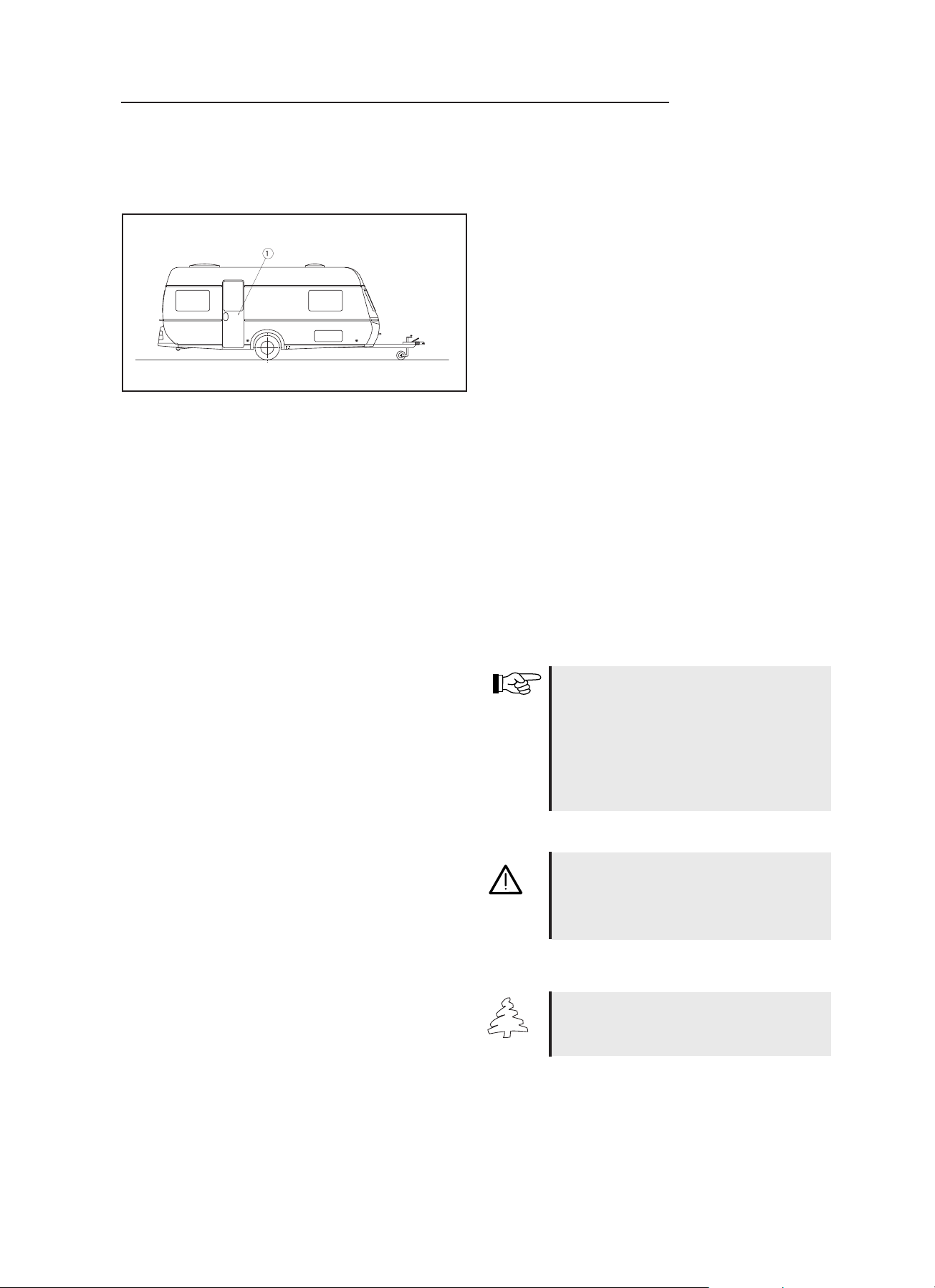
tails in illustrations (here: entry door) are marked
with position numbers
j
.
Lists
- Lists are based on key points and are pre-
ceded by a dash.
Procedural guidelines
•Procedural guidelines are also based on key
points and begin with a bullet point.
Guidelines
Guidelines point out important details
which ensure the trouble-free function
of the camper and its equipment.
Please bear in mind that various
models have different equipment;
therefore, varying descriptions are
possible.
Warnings
Warnings point out dangers which, if
they are not followed, could cause
damage to equipment and/or injury
to persons.
Environmental tips
Environmental tips show possible
ways to reduce strain on the environ-
ment.


02-1
2. Safety
2.1 General information
100 m
Warnings and information labels are
attached both inside and outside the
vehicle. These are meant for your
safety and may not be removed.
The following keys are provided with the camper:
- Two keys which t into the following locks:
- entry door,
- service aps,
- toilet ap.
- gas-bottle container lid
- fresh-water tank lid
Keys
Emergency equipment
To be prepared for an emergency, you need at
least three basic items of rescue equipment (rst
aid kit, warning triangle and re extinguisher)
which you should carry at all times and know
how to use.
- rst aid kit
- warning triangle
- high-visibility vest
Fire prevention measures
• Never leave children unattended in the
vehicle.
• Keep ammable materials away from all heat-
ing and cooking appliances.
• Changes to the electrical system, gas system
or built-in devices may only be carried out by
professional, authorised workshops.
• Place a re extinguisher at the main entry
door.
• Ensure that everyone is familiar with the gui-
delines on the re extinguisher.
• Place a re cover near the gas cooker.
• Keep all escape routes clear.
• Ensure that everyone is familiar with the re
prevention measures on site.

02-2
Please observe the manufacture‘s
operating instructions.
The base for the smoke detector has already
been installed in a suitable place on the ceiling.
To operate it, put the battery in (making sure that
plus and minus are in the right direction) and
fasten the smoke detector to the base by turning
it. The system has been tted with a safety fea-
ture. If there is no battery or the battery has not
been put in correctly, the smoke detector will not
t into the holding clamp. Test the device regu-
larly (we recommend once a week) or whenever
you rst use the camper after it has been unused
for a longer period of time, following the proce-
dure described under ‚Test‘.
Test
Press the test button for at least 4 seconds until
the alarm goes off. This will activate a self-test
program. The alarm goes off when the electronic
system (horn and battery) is working.
Exchanging the battery
Energy for the smoke detector system is provi-
ded by a 9-volt battery. The system will not work
without a battery. Insert a new battery, ensuring
it is the correct type, when you hear the battery‘s
warning signal (a „peeping“ sound, easily heard,
that is repeated every 30-40 seconds for approx.
7 days).
Evacuation plan
Hold a meeting with your family to discuss the
possibilities for evacuating the camper. Everyone
who uses the camper should know what to do in
case re breaks out.
Smoke detector
Fighting a re
• Evacuate all passengers immediately.
• Close the main shut-off valve on the gas
bottle as well as the shut-off valves on gas-
powered appliances.
•Shut off the electrical supply
• Sound alarm and call the re department.
• Only ght the re yourself if this is possible
without risk.

02-3
2.2 Before the drive
What to do when the alarm goes off?
Leave the camper immediately, either through
the door or a window, depending on where the
re has broken out, following the evacuation plan
you have discussed. Every second counts! Do
not waste any time getting dressed or packing
your valuables, etc.As soon as you are outside
the camper, keep moving until you are a safe
distance away from it. Notify the re department
immediately from a neighbour‘s telephone or
use your cell phone. Do not, under any circum-
stances, go back inside the burning camper.
Shout loudly to warn any neighbouring campers
parked within the safety zone. Do not enter the
camper until the re department has given you
permission to do so.
A smoke detector will not prevent
res or put them out. If it is working
properly, it will merely provide you
with those possibly decisive seconds
to save yourself and notify emergency
services.
Exterior
Go around the carriage and prepare for the drive
as follows:
Preparation of the vehicle
•The camper must be hitched properly (see
guidelines for the safety hitch AKS3004).
•Release the handbrake of the camper and
attach the contact-breaking cable to the
coupling ball of the base vehicle.
• Tighten the tire bolts after driving the rst
50 km.
• Plug the 13-channel plug in the socket of the
base vehicle.
•Inspect the vehicle lighting.
•Turn the winding stanchions up.
As the owner and driver, you are responsible for
the condition of your vehicle. Therefore, you must
note the following points:

02-4
Post a list with all signicant weights
and measurements of the carriage in
a highly visible place in the base
vehicle.
• Turn the front landing wheel up into its correct
position (see picture), then lock and secure it.
• Close gas bottles (heating is forbidden while
driving).
• Empty the waste water tank.
• Close gas bottle compartment.
•Adjust outer mirrors on base vehicle.
• Check camper's tire pressure (see tire
pressure table).
• Close all windows.
• Close the service aps.
• Close and rmly lock roof bonnet.
•Shut off the light on the outer tent.
• Close and secure entry door.
•If necessary, pull the electrical cord to the
230 V mains supply out of the exterior socket.
•If necessary, pull the television antenna in-
ward as far as possible or fold over the satel-
lite dish.
•If necessary, secure all bicycles and lash them
to prevent slippage, ensuring that they do not
cover any lighting equipment.
• In winter, the roof must be free of snow and
ice before you begin to drive.
Interior
You must also prepare the interior of the vehicle.
Preparing the interior:
•Sort all loose objects and store them in their
respective compartments.
•Heavy and/or voluminous objects (e.g. TV/
radio) should be stored safely and secured
against slipping.
•If necessary, redirect refrigerator to 12-volt
operation.
•Shut off all interior lighting.
•
Ensure that all uids, including those in refrig-
erator, are secured to prevent leakage.
• Close main valve on gas container and quick-
close valves on all gas-powered appliances.
Ce manuel convient aux modèles suivants
55
Table des matières
Autres manuels FENDT Caravane