E-CDN2000-06-25-E-Manual 5/54
1 Description
The impulse testers MIG0603IN, MIG0603-OS, MIG1203-CWG, TRA1000, etc. can be extended with a
manual operated three-phase coupling network CDN2000. With regard to its price and dimensions, the
three-phase coupling network is a genuine alternative to mains coupling filters available on the market
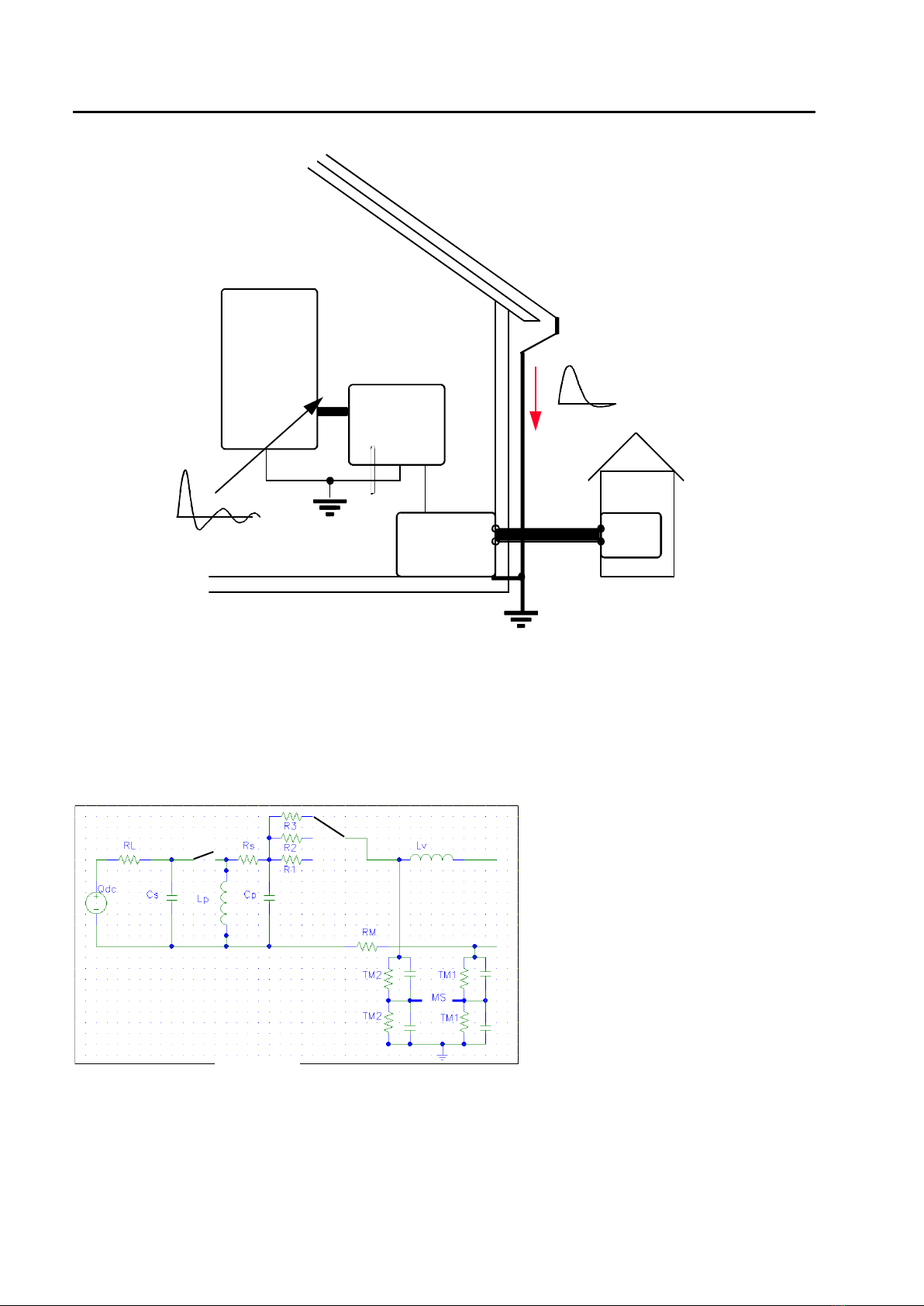
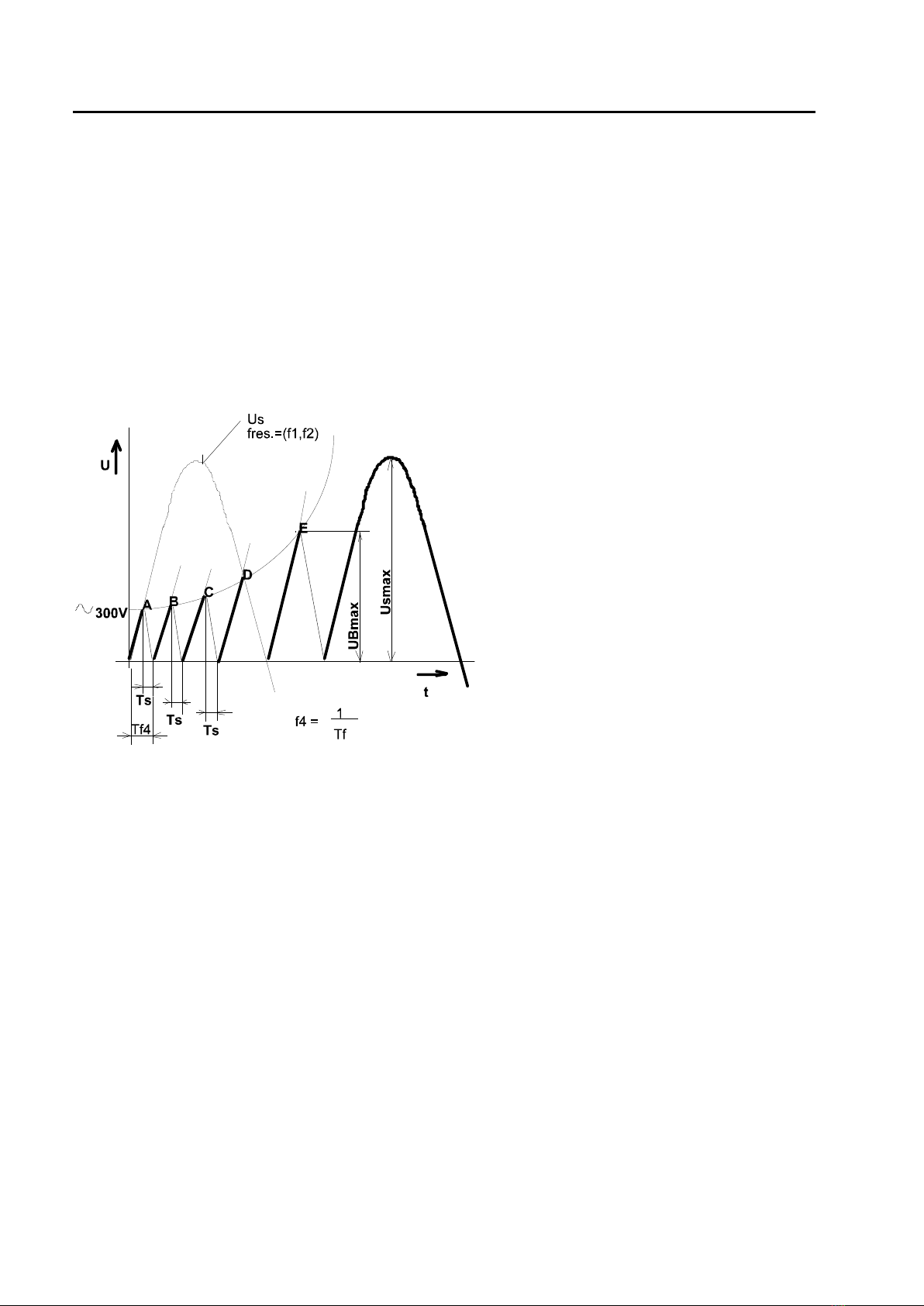
today. The CDN2000 can be used for SURGE, Ring Wave, EFT, Damped oscillation superimposing. The
desired coupling path must be plugged on the front panel by hand. The coupling network fulfils the
requirements laid down in the IEC61000-4-4, IEC 61000-4-5, IEC 61000-4-12, IEC 61000-4-18 standards.
The most important characteristics of the three-phase coupling network are
Simple, clear selection of coupling path for SURGE for common and differential mode coupling
Simple, clear selection of coupling path for EFT and Damped Oscillatory Waves
Handy coupling network for up to 25 A per phase.
The units can be placed below MIG or TRANSIENT testers.
Contact-protected construction.
All plug connections to power supply and EUT are arranged on the front plate.
1.1 The different application of the CDN2000-06-25
1.1.1 "CWG Combination Wave Generator"
The combination wave generator has been defined first for Electro Magnetic Compatibility EMC tests up to 4
kV in the document IEC 61000-4-5 or IEEE 587. EMC test must be carried out on powered equipment.
There are several reasons for performing powered test:
From a standpoint of a good practice, it is best to perform laboratory tests in a manner that most closely
simulates the actual service environment.
It is the applied ac that furnishes the energy following the surge, that can establish sustained arcing
faults, tracking on insulation, destruction of printed wiring, and so on
The application of normal ac power generally rises the EUT to an initial level of stress. Without power
current following a surge-induced flashover, the resulting defect might not be detected.
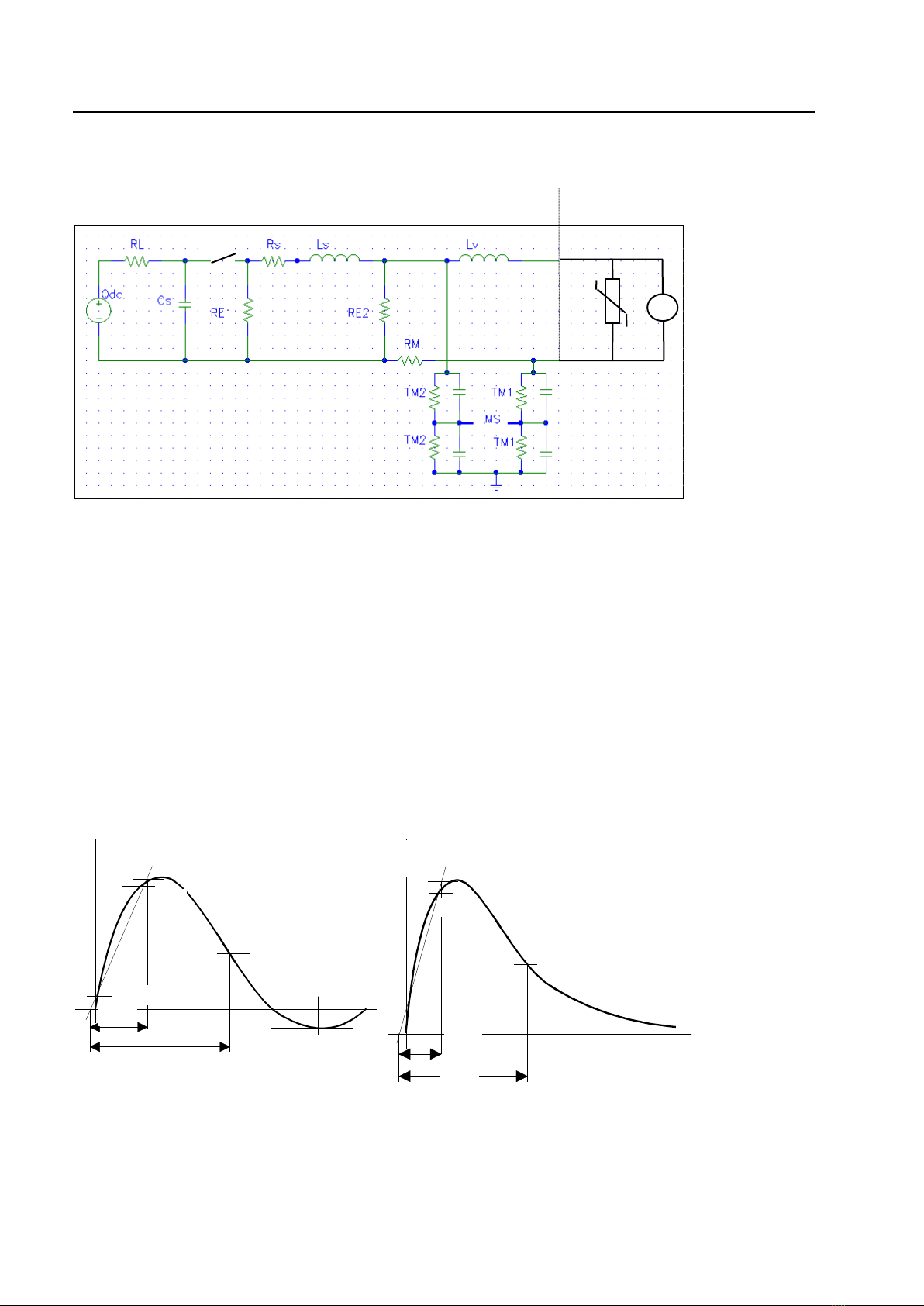
The CWG tester generate a waveform 1,2/50 µs or a current waveform of 8/20 µs at clamping status of the
protection circuit. Traditionally, the 1,2/50 µs voltage waveform was used for testing the basic impulse level
of insulation, which is approximately an open circuit until the insulation fails. The 8/20 µs current waveform
was used to inject large currents into surge protective devices. Since both the open circuit voltage and short
circuit current are different aspects of the same phenomenon, such as an overstress caused by lightning, it
was necessary to combine them to a single waveform when the load is not known in advance.