© 2022, Delta-T Devices Ltd Page 7
Surface installation and spot measurements
Consistent technique is critical for repeatable results. Varying how hard the sensor is
inserted can alter the bulk density of the soil/substrate and cause readings to diverge.
1. Clear away any stones. Pre-form holes in very hard soils before insertion.
2. Push the WET150 into the soil, fully inserting the rods.
3. If you feel strong resistance when inserting the WET150, you have probably
hit a stone. Stop, and re-insert at a new location.
Note: Partial or full burial of the WET150 will improve temperature accuracy, and
reduce effects of air temperature and radiant heat.
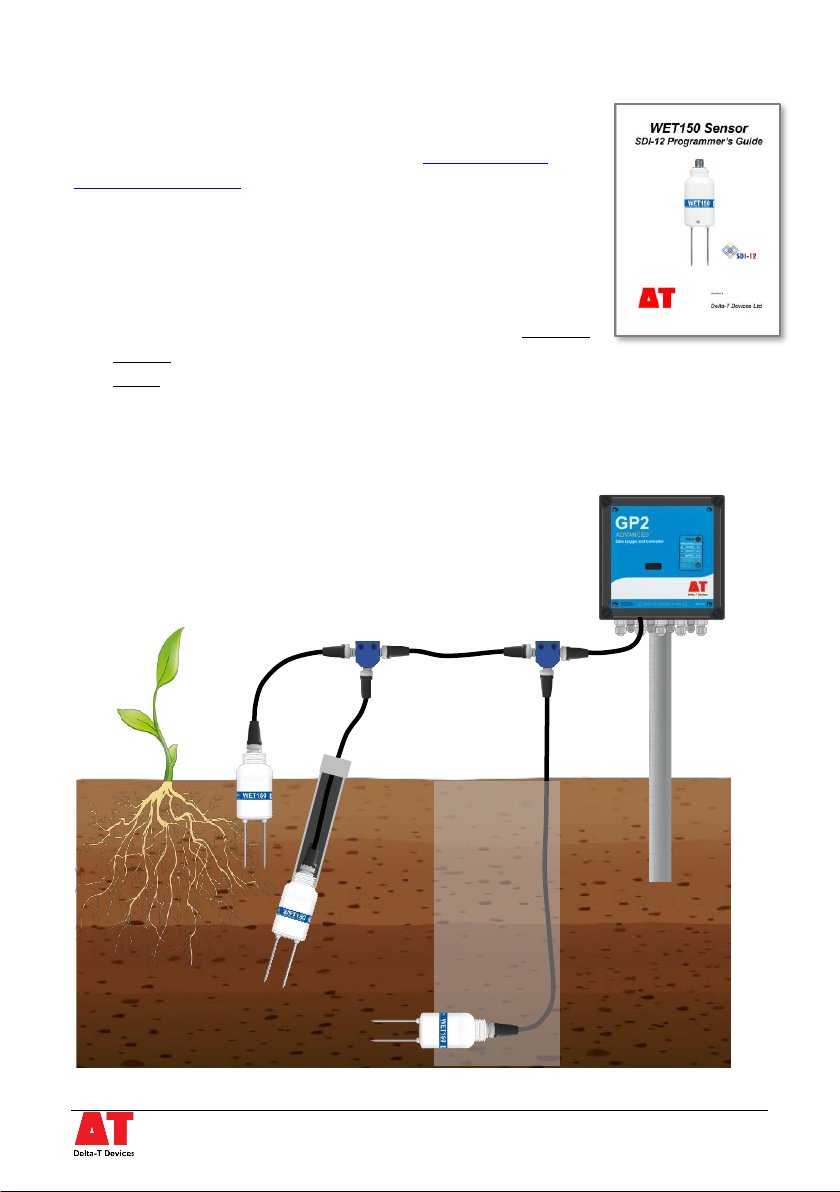
Installing at depth
1. Auger a 45mm diameter hole, using the SM-AUG-100 (see “System Parts”
section). ~10° to vertical is recommended.
2. Fit an extension tube to the WET150 –remember to fit the connector and
pass the cable through the extension tube first.
3. Push the WET150 into the soil, fully inserting the rods.
Alternatively
•Dig a trench and install horizontally into the wall of the trench.
•Backfill carefully to avoid disturbing the sensor
Pore Water EC (ECp) accuracy
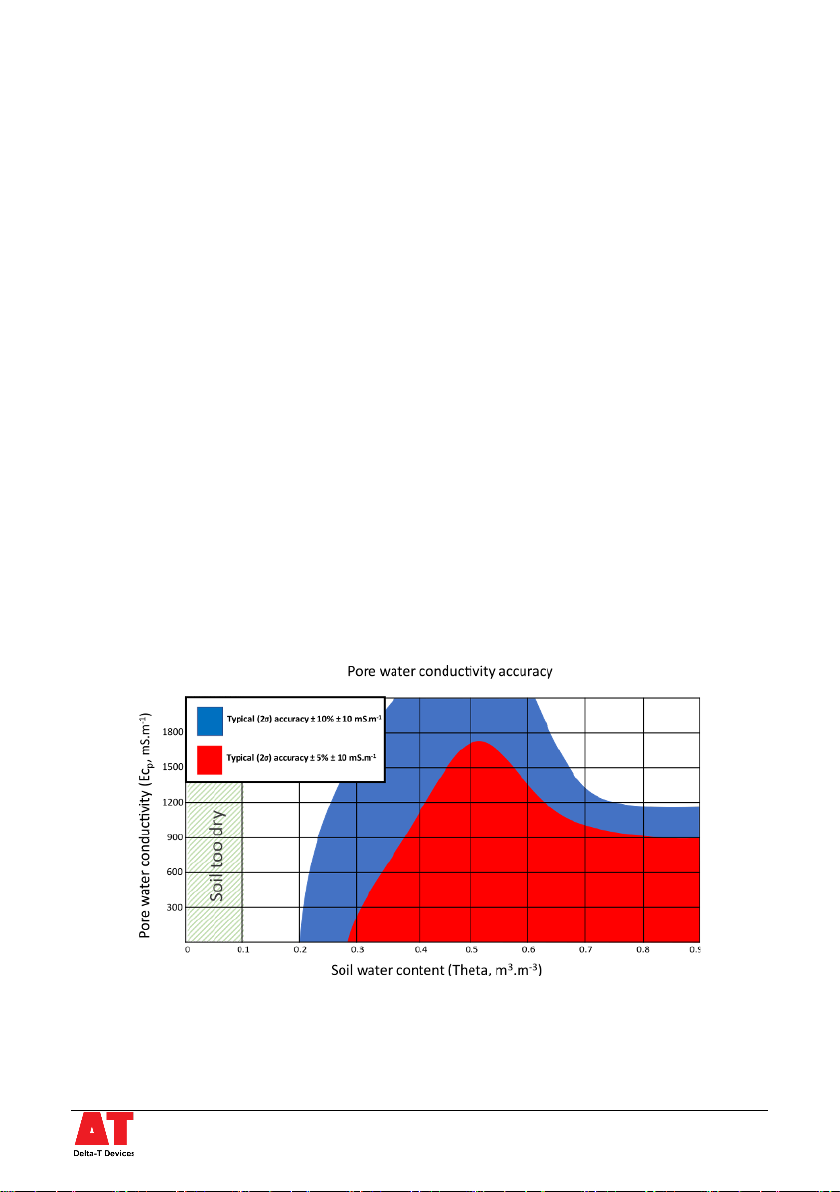
The following graph indicates the range of pore water conductivity (ECp) that can be
most accurately measured by the WET150 at different soil moisture levels:
Notes:
[1] The WET150 has been carefully optimised to provide accurate readings in soils and substrates - readings taken in water or air may not
meet the full specification.
[2] The ECp contour map is based on measurements from 30 sensors at 20°C in NPL* traceable media. Calculated ECp readings are derived
from the Hilhorst equation, using the generalised “mineral” soil calibration and the default soil parameter = 4.1
* NPL is the UK's National Metrology Institute, developing and maintaining the national primary measurement standards.