
C-me NIKI T34 Manuel utilisateur
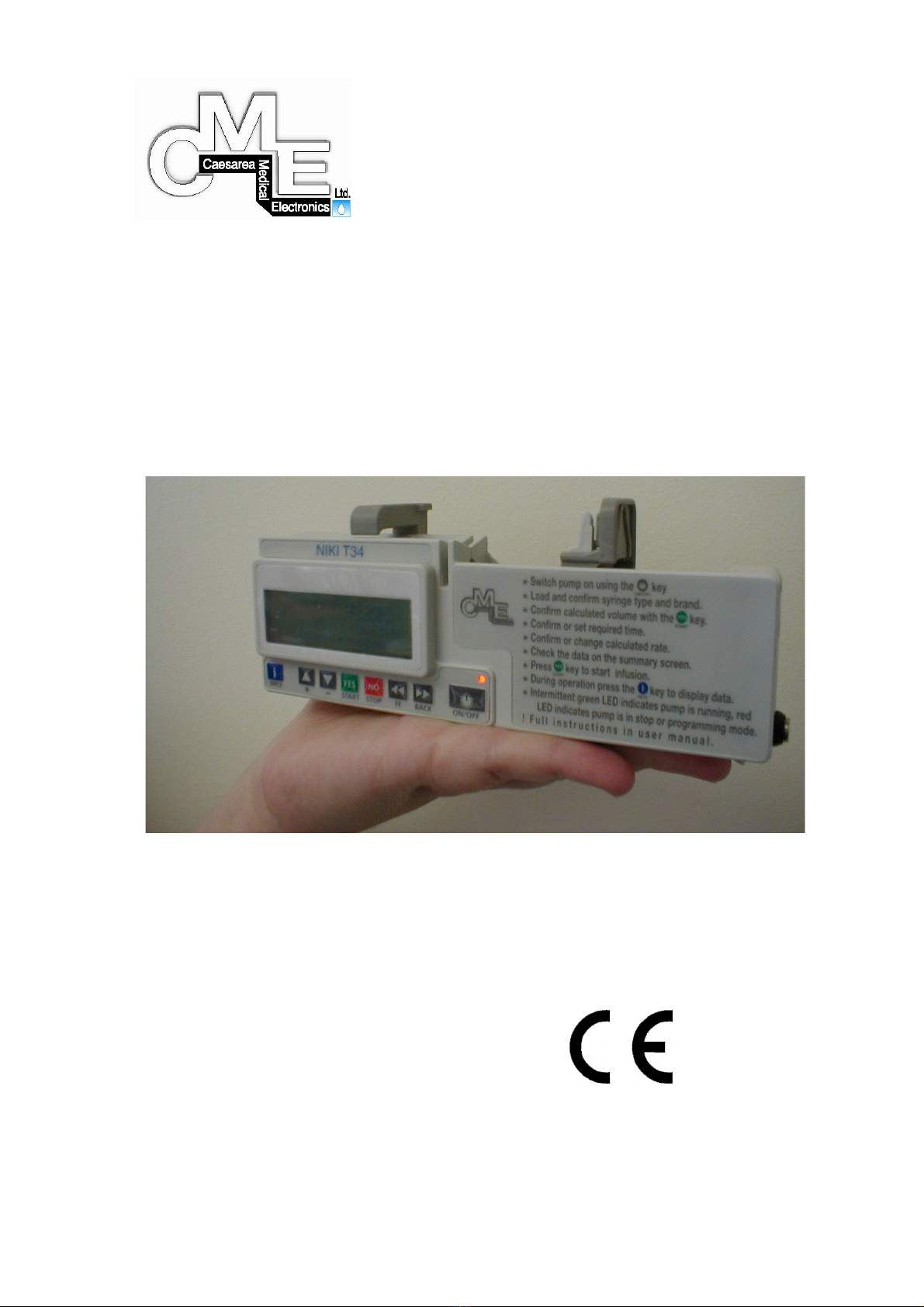
NIKI T34
SYRINGE PUMP
Instruction Manual
Ref.: 100-090SS Edition June 2008
0473

2
CONTENTS
A - Introduction 3
B - G n ral Warnings 5
C – Pr cautions 6
D – F atur R cognition 7
E – Symbols on pump, consumabl s & acc ssori s 8
F - Installation and Insp ction 8
G - Administration S ts 9
H – Batt ri s 10
I – Acc ss Cod s & K ypad Lock 11
J – Infusion s t up & programming 12
K – Using Acc ssori s with T34 Syring Pump 16
L – R comm nd d Ch cks during infusion 17
M – Advanc d Functions of th T34 18
N - Chang S t Up 19
O– Alarm Conditions 20
P – Troubl shooting 21
Q – Sp cifications 22
R – Pati nt Training – Using th T34 23
S – S rvic , Calibration and Maint nanc 24
T - LIMITED WARRANTY 25
U - APPENDIX 26

3
A - Introduction
Do not operate the T3 Syringe Pump until you have read and understood the contents of this
manual paying close attention to Warnings, Cautions & Notes as described below. If you are
unsure about any aspect contact the distributor or manufacturer.
This manual will ensure the Healthcare Provider will be able to: -
1. Identify the features of the T3 and understand their use
2. Correctly load a syringe into the T3
3. Program the T3 to deliver the contents of the syringe
. Access and interpret patient history and event log data
5. Troubleshoot and resolve alarm conditions
6. Train patients and/or patient’s caregiver in the use of the T3 .
What is th T34 Syring Pump?
The T3 is a small, lightweight, robust, battery powered, ambulatory syringe Pump designed to
deliver the contents of a 2 to 50ml syringe over a specified duration or at a given rate in
milliliters per hour (ml/hr). The Pump actuator drives the syringe plunger forward at a controlled
rate. This rate is adjustable from 0.1 to 1000 ml/h in increments of 0.1 ml/h up to 100 ml and 1
ml up to 1000 ml/h.
The size and weight of the T3 makes it ideal for ambulatory use in a hospital or alternate site /
homecare setting. It is equally suitable for adults or for pediatric use.
The T3 syringe pump can be easily concealed beneath clothing in a shoulder holster and
combination belt. A compact lockbox is provided to protect the Pump from damage and/or
tampering with either the pump or the syringe.
T3 offers 3 point syringe detection enabling the pump to identify all commonly used (or
programmed) syringe brands. This feature ensures the pump can make calculations for the
healthcare provider therefore minimizing the risk of programming errors. The sensors also
activate an alarm if the syringe is removed or partially displaced during infusion.
The T3 syringe pump may be used to deliver indicated medications via any common infusion
routes including central, peripheral venous, epidural, intra-arterial or subcutaneous.
Indications for Us
The T3 SYRINGE DRIVER is designed for infusion of medications or fluids requiring
continuous or intermittent delivery at precisely controlled infusion rates through all clinically
acceptable routes of administration including intravenous, subcutaneous, percutaneous, intra-
arterial, epidural, enteral, in close proximity to nerves, and into an intraoperative site (soft
tissue/body cavity/surgical wound site). The system is intended for patients who require
maintenance medications, analgesics, PCA therapy, parenteral and enteral nutrition fluids,
chemotherapeutic agents and general fluids therapy in hospital and homecare environments.

4
Contraindications
• Infusion of blood and blood products.
• Infusion of insulin.
• Infusion of critical medications whose stoppage or interruption could cause serious injury
or death.
• Use in ambulatory regimens by patients who do not possess the mental, physical or
emotional capability to self-administer their therapy; or who are not under the care of a
responsible individual.
Pump Lockout Prot ction F atur s
The T3 has several lockout features that ensure that unintended programming and key
presses do not occur.
The T3 syringe is contained within a locked box. Only the healthcare provider is able to
open the box.
After the healthcare provider programs the T3 for infusion, they will lock the program
with a special code. The T3 infusion program cannot be changed unless the healthcare
provider re-enters the code and changes the program.
The keypad has a locking feature that prevents unintentional power off of the unit. This
lock is available to the patient.
Service screens and troubleshooting are protected with a technician’s code. These codes are only
available to personnel trained in servicing the T3 .

5
B - General Warnings
To reduce potential risks to patients and healthcare providers.
The T3 is a medical device designed for the safe, accurate delivery of appropriate infusion
regimes and should only be operated by, or under the supervision of, a medical/healthcare
professional.
For pumps used in a home setting, once the prescription has been programmed into the
pump, lock the system to ensure that the program cannot be changed by the patient.
The equipment is not suitable for use in the presence of flammable anesthetic gas
/oxygen/nitrous oxide mixture. Do not use the system in environments where these agents
are present.
Do not use the T3 pump in the presence of high-intensity magnetic fields (e.g., MRI
scanners). Exposure to strong magnetic fields may impair the operation of the pump
and/or the accuracy of the infusion.
Never take a syringe that is not empty off the pump if it is still connected to the patient.
Before removing the syringe, the infusion line must be disconnected or clamped to
prevent free flow. Depending on the medication and route of administration, free flow
into the patient may cause serious injury or death.
Before connecting to the patient, purge all air from the syringe and the administration set.
Depending on the route of administration and the volume of air, air emboli infused into
the patient may cause serious injury or death.
Patients using the T3 Syringe Pump on their own, or individuals responsible for helping
a patient using the pump, must be instructed in its proper use.
Adjustments, maintenance, or repair made by un-certified service personnel may impair
the operation of the T3 System and/or the accuracy of the infusion. Make sure any
adjustments, maintenance, or repair of the device is carried out by authorized skilled
technicians trained by the T3 distributor.
Dropping the Syringe Pump could cause damage to components. If the pump is dropped,
return the pump for inspection by qualified service personnel.
Use good aseptic technique when filling the syringe and priming the infusion set. Patient
infection may result from the use of non-sterile components. Maintain sterility of all
disposable components and do not re-use single use IV sets.
Immersing the T3 Syringe pump in liquid could cause damage to components. Do not
immerse the pump into any type of liquid.
Caution: Federal [USA] Law restricts this device to sale by, or on the order of, a
physician.

6
C – Precautions
Information to ensure safe and effective use.
Before use, the user must become thoroughly familiar with the operating instructions contained
in the T3 user manual.
The provider is responsible for ensuring that the T3 pump and medications are used according
to the physician’s infusion therapy prescription.
The provider is responsible for educating the patient in proper use of the pump.
Do not allow water or other fluids to get inside the pump or the lockbox. Fluids getting into the
pump may damage it. If the pump gets wet, stop the pump and initiate service of the pump.
A security code must be keyed in to access the lock-level 2 programming functions. This code
is designed to allow access to the provider only. To prevent a patient from tampering with
programmed settings, this security code should not be given to the patient.
As with any infusion, the disposables used with the T3 pump must be compatible with the
medication being delivered. Check with the manufacturer of the disposables before use.
Consult the drug manufacturer’s insert for precautions, guidelines, and instructions for
preparing and using the medication.
Do not drop the pump, strike it against hard objects or otherwise subject it to extreme physical
stress. This could damage the pump, which may impair the operation of the pump and/or the
accuracy of the infusion. If the pump is dropped, return the pump for inspection by qualified
service personnel.
Unsafe operation may result from using improper accessories. Use only accessories and
options designed for this system and supplied by the T3 distributor.
A kinked/occluded infusion line may impair the operation and accuracy of the pump. Before
operation, verify that the infusion line is not kinked or occluded.
Make sure any adjustments, maintenance or repair of the device are carried out by authorized
service technicians certified by the T3 distributor. Adjustments, maintenance or repair made
by un-qualified service personnel may impair the operation of the pump and/or the accuracy of
the infusion.
Battery damage could occur at ambient temperatures >55°C (131°F).
To prevent damage to the pump, do not store the pump for extended periods with the battery in
the pump.
The pump housing is not hermetically sealed – immersing the pump in liquid could cause
damage internal components. Do not immerse the pump into any type of liquid.
If fluid is spilled on the pump, clean and dry it immediately. A damp cloth should be used for
cleaning and a mild detergent may be used if needed. Xylene, acetone or similar solvents could
damage the pump – do not clean the pump with harsh chemicals.
7
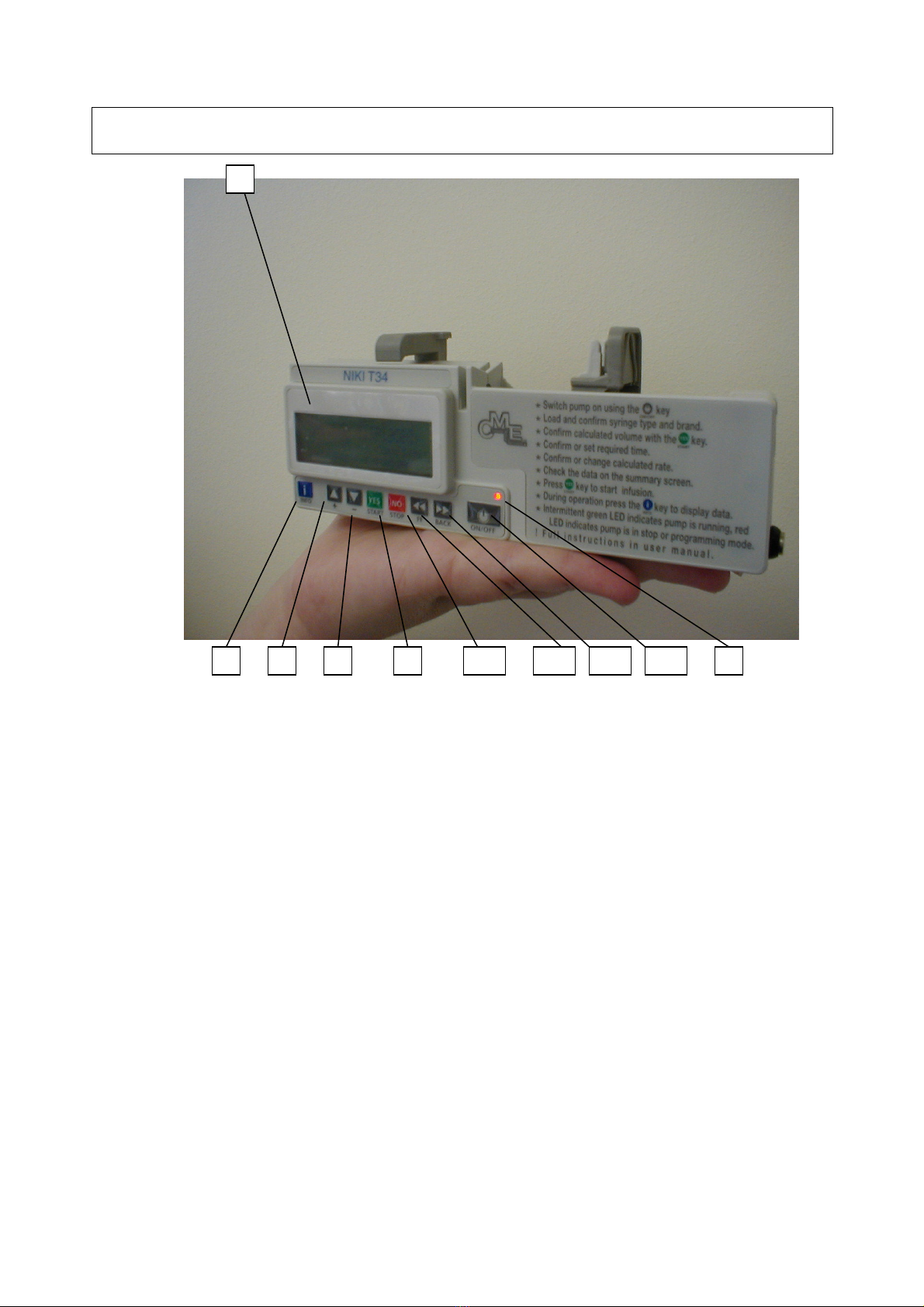
D – Feature Recognition
1 Pump display - Backlight can be enabled when any key pressed
2 Operation LED -
a. Green shows infusing
b.Red when Stop or alarm
3 ON/OFF key - Switches the pump on and off.
NO/STOP key –
a. Takes user back a step
b. stops pump
5 YES/START key – Confirms choices
6 Down arrow key - scrolls between options
7 Up arrow key – Scrolls between options
8 Info key -
a. shows technical data and Battery status
b. Long press will Lock/Unlock Keypad
9 Forward key.
10 Backward key.
8
7
5
1
6
2
3
9
10
8
E – Symbols on pump, consumables & accessories
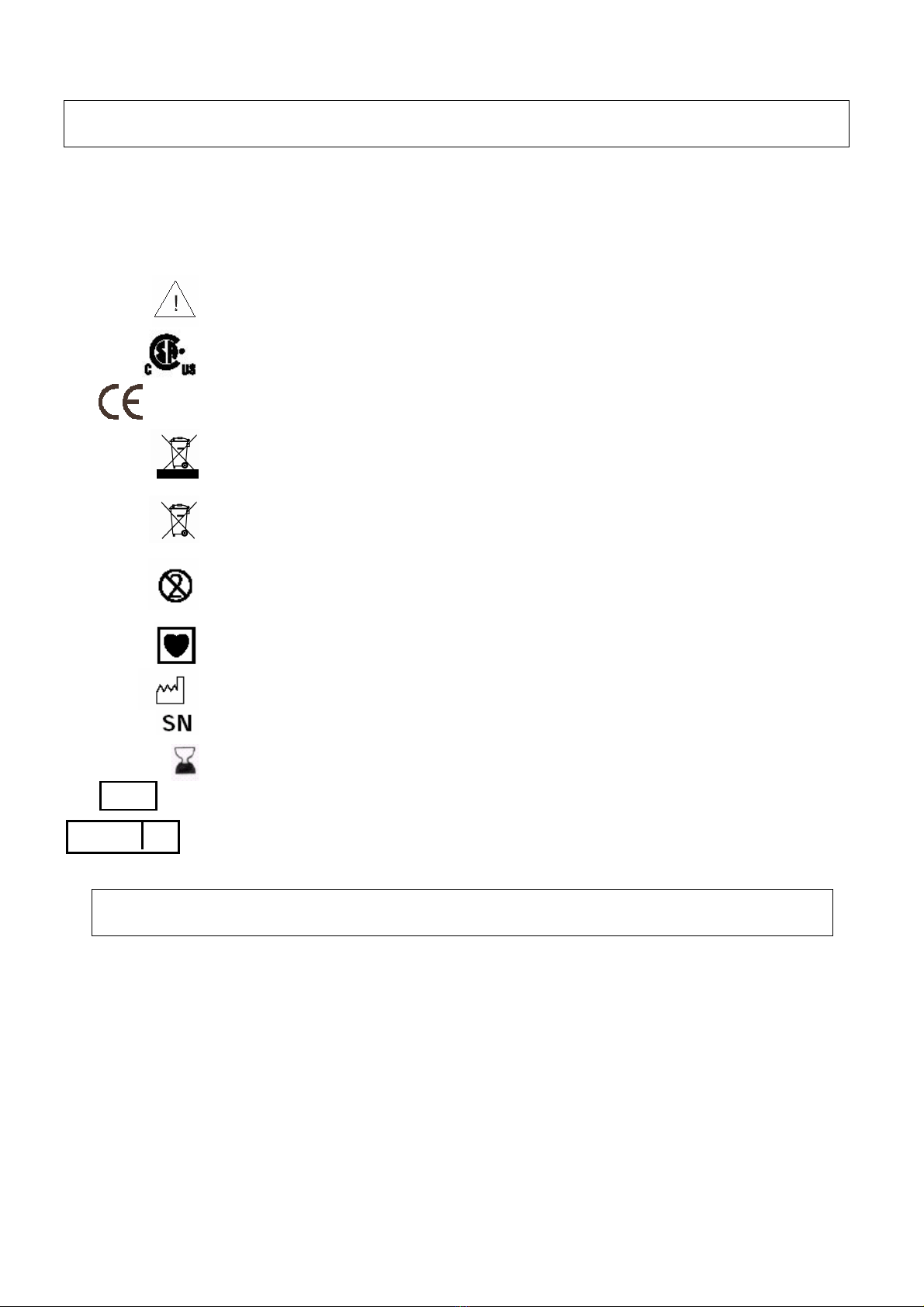
Syst m Symbols
The following symbols are used on the Caesarea Medical Electronics Ltd. T3 Syringe Pump
and components. Labels on the pump or statements in this manual preceded by any of the
following words and/or symbols are of special significance and/or are intended to help you to
operate the pump in a safe and successful manner.
Attention, consult accompanying Instructions.
CSA mark
0473
CE mark indicates conformance to Medical Device Directive 93/ 2/EEC.
Do not dispose of in municipal waste. Symbol indicates separate collection
for electronic equipment. (WEEE Directive 2002/96/EEC). NOTE: Does
not apply to the battery.
Do not dispose of battery in municipal waste. Symbol indicates separate
collection for battery is required.
The use of single-use disposable components on more than one patient is a
biological hazard. Do not reuse single-use disposable components.
Type CF applied part.
Date of Manufacture
Serial Number
Expiry Date (consumables)
Lot Number (consumables)
Sterilized with Ethylene Oxide
F - Installation and Inspection
Unpacking
1. Remove the T3 Syringe Pump & accessories from the box and inspect for damage
during shipment or storage.
Do not use T3 if there are any obvious signs of damage. Return for inspection by
authorized service personnel.
2. Make sure you have the following items:
• T3 Syringe Pump
• Patient Guide
• Alkaline 9V batteries
• Carry Pouch
• Lockbox
If any items are missing or damaged, contact your supplies department to order
replacement.
LOT
STERILE EO
9
G - Administration Sets
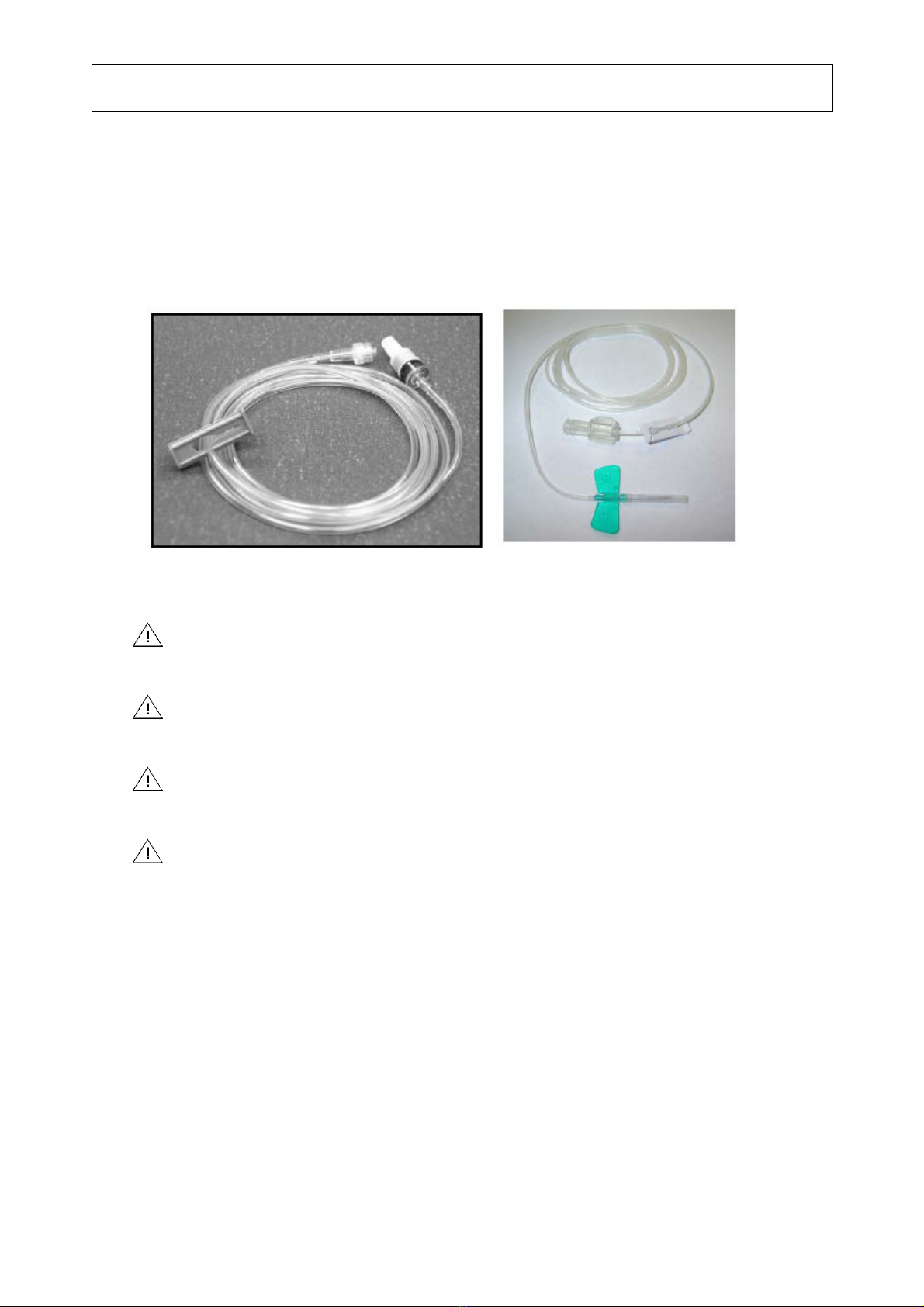
The T3 Syringe Pump can be operated with any extension set with a luer connection however it
is recommended, to optimize system accuracy & performance, that the proprietary sets listed
below are used.
Proprietary sets available from The T3 distributor are as follows: -
150cm IV infusion set with check valve 100cm Sub-cut set with needle
Warnings and Pr cautions – Administration S ts
Administration sets must be compatible with the medicine delivered. Please check with
the manufacturer of the infusion set before use.
Visually inspect packaging and contents before each use. Do not use administration sets
if the packaging is in any way damaged as sterility may have been compromised.
Do not connect a patient to the T3 Syringe Pump until all trapped air has been cleared
from the fluid path & syringe. Carefully read the instruction for loading.
Replace the administration set at a frequency defined by the healthcare provider.
10
H – Batteries
R comm nd d batt ri s
Always use a 9 volt alkaline battery. These batteries can easily be identified by the international
marking code 6LR61 (a recommended battery of this type is the Duracell Plus MN160 ).
Suitable 9V Lithium batteries which extend operating time are available from your T3
distributor.
Fitting th Batt ry
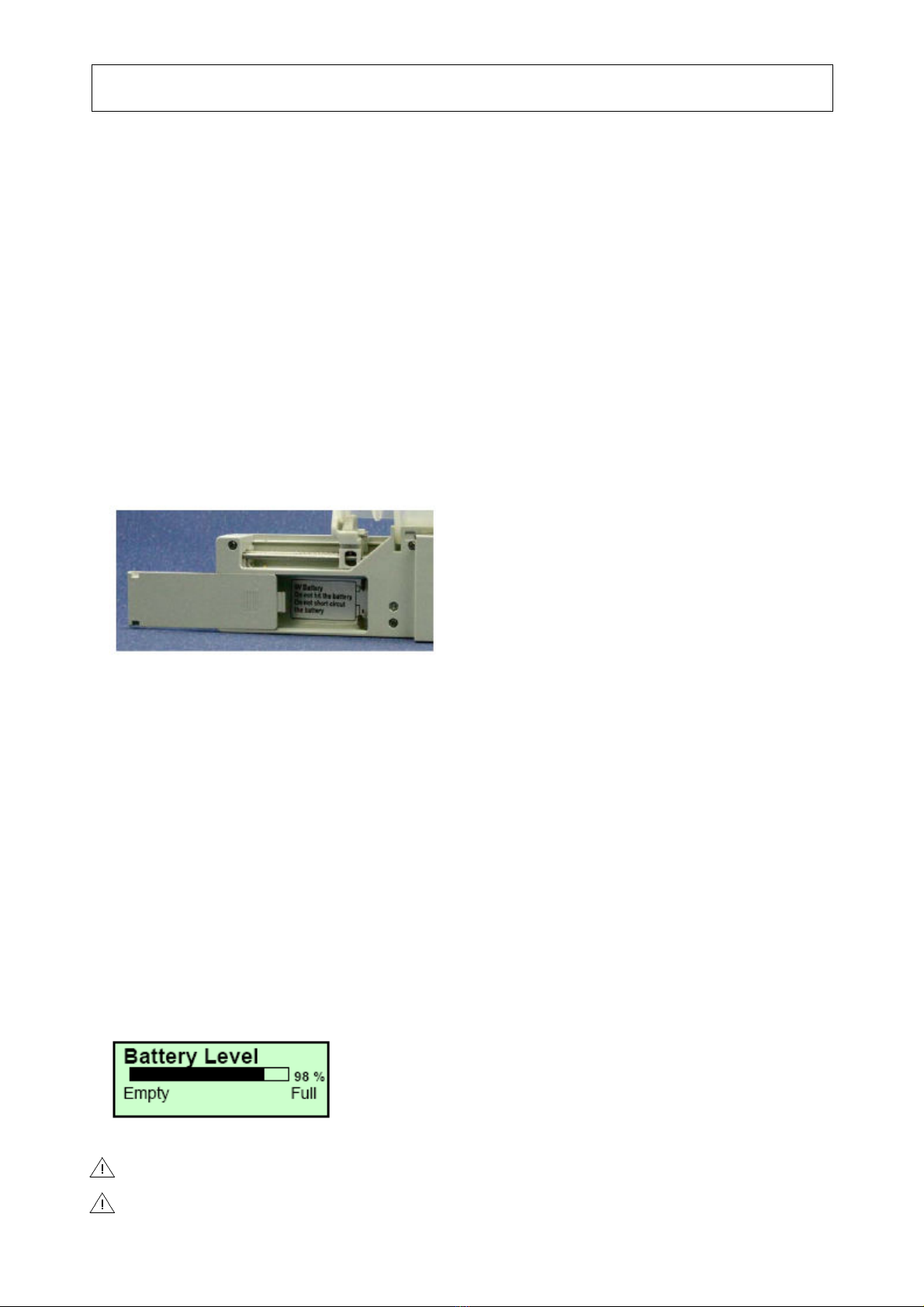
To fit or change the battery slide the compartment cover at the back of the pump. Push the
battery into the compartment taking care to ensure that the + / - contacts are aligned as shown on
the label inside the compartment. Slide the cover back on.
Zinc-carbon batteries (marked 6F22 or 6R61 (for example a PP3) are not recommended for use
with the T3 . These batteries perform poorly and need to be replaced more often. Do not us
non-alkalin or r charg abl batt ri s.
There is some variation in size between different brands of batteries. Never try to force a battery
into the battery compartment as this may damage the battery contacts.
Incorrectly aligning the battery contacts will not cause any harm to the battery or the pump.
Remove the battery and re-align the contacts.
Batt ry T st
When setting up the pump always check that there is enough charge in the battery to cover the
infusion being set up. To do so follow this procedure: -
1. Switch the pump ON.
2. Press INFO key
3. Select BATTERY LIFE from the menu and press YES to confirm
. Verify sufficient battery charge is available to complete the current program. If not, change
the battery.
WARNING: Battery damage could occur at ambient temperatures >50C (122°F).
WARNING: Do not store the pump for extended periods with the battery in the pump.
Table des matières
Autres manuels C-me Pompe à eau


Manuels Pompe à eau populaires d'autres marques


Sykes AmeriPumps
Sykes AmeriPumps GP100M Guide de dépannage

DUROMAX
DUROMAX XP WX Series Manuel utilisateur

BRINKMANN PUMPS
BRINKMANN PUMPS SBF550 Manuel utilisateur

Franklin Electric
Franklin Electric IPS Manuel utilisateur

Xylem
Xylem e-1532 Series Manuel utilisateur

Milton Roy
Milton Roy PRIMEROYAL Manuel utilisateur