2QUICK START GUIDE
EN
B. Precautions for use
» Do not use Blue Connect for anything other than water analysis.
» Blue Connect is not a toy. Avoid shocks as they may damage it.
» Keep Blue Connect out of reach of children when handling it
(e.g. calibration and standby) due to the use of chemicals. Store
calibration products out of reach of children.
» Do not open the top part of the device (except when replacing
the battery). Follow carefully the battery replacement
instructions. Damage caused by liquids is not covered by the
warranty.
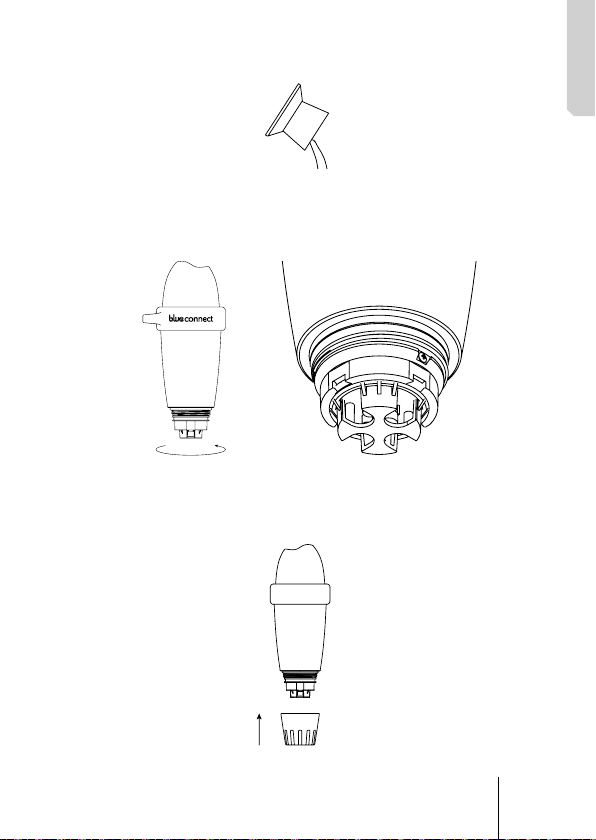
» Do not open the bottom part of the device containing the probe
(except when replacing the probe). Follow carefully the probe
replacement instructions. Damage caused by liquids is not
covered by the warranty.
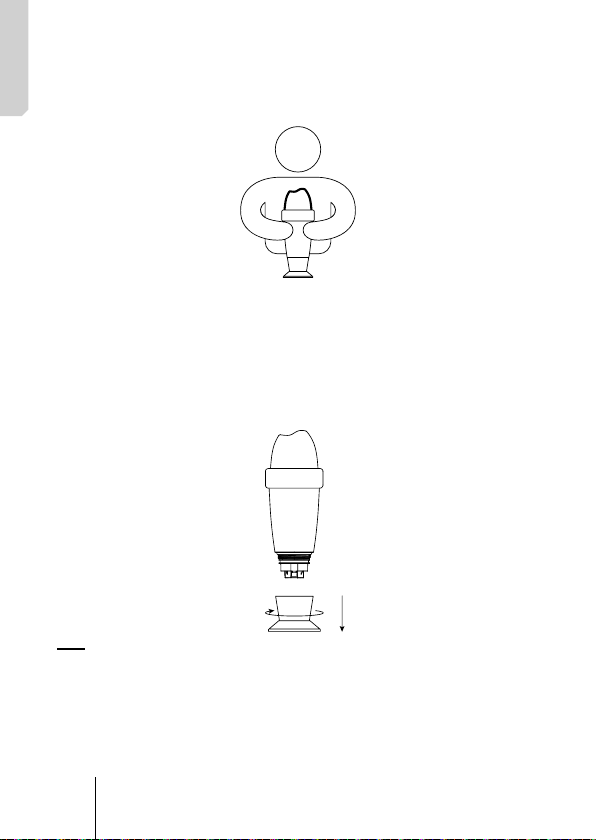
» Make sure not to leave the probe out of the water. If you need
to take the device out of the pool, screw it on storage cap with
KCl (saturated potassium chloride), or pH4, or as a last resort,
running water with a good amount of cooking salt as the probe
should not be left dry.
» Do not use demineralized water in the storage cap.
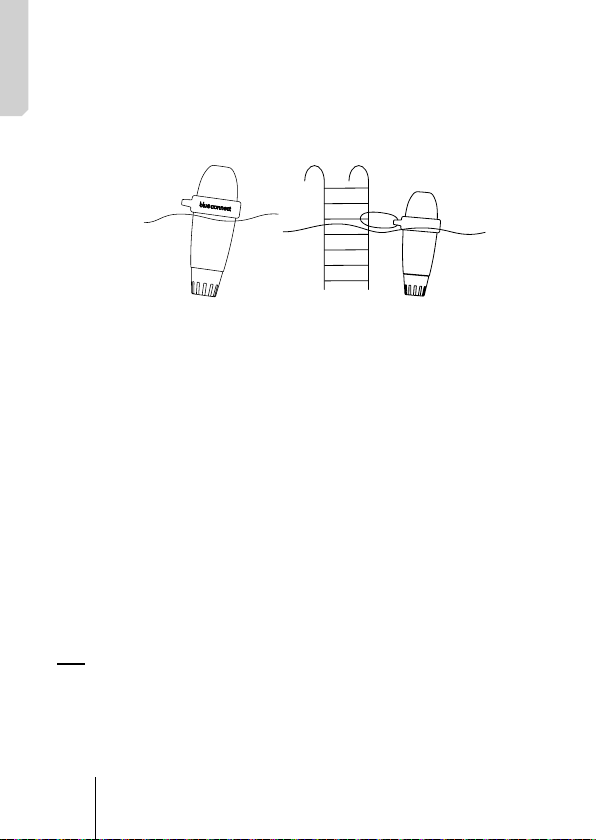
» Make sure the top part of the unit is out of the water to allow the
communication system to work.
» Do not leave Blue Connect in water with a temperature below
5°C or above 50°C.
» Keep the Blue Connect serial number and key2.
» Transport and store Blue Connect vertically and sheltered from
frost.
1[…] dissolved species in the pool, based on the assumption that the main
species is sodium chloride (NaCl or cooking salt). Sodium chloride increases
the conductivity of your pool waterdepending on its concentration. An estimate
of the sodium chloride level based on the conductivity will deviate even more
if other unknown salts are present in the water. This deviation can be checked
using colorimetric detection strips specic for sodium chloride.
2On the back of the quick start guide and on Blue Connect’s storage cap.