PO8C User Guide 5
Warnings
General
Only personnel with good experience and knowledge of
pressure equipment and pressurized gases are allowed to
work with the module. Read carefully all these instructions
and local safety instructions before starting to use PO8C.
High pressure gas is dangerous because it can break the
container and the flying splinters may cause injury. Also
small leaks of gas may be dangerous because the high
velocity of the leaking gas jet enables penetration through
skin. If a gas bubble gets into the blood circulation, it can
cause death. The leak jet is particularly penetrative, if some
liquid is coming with the gas.
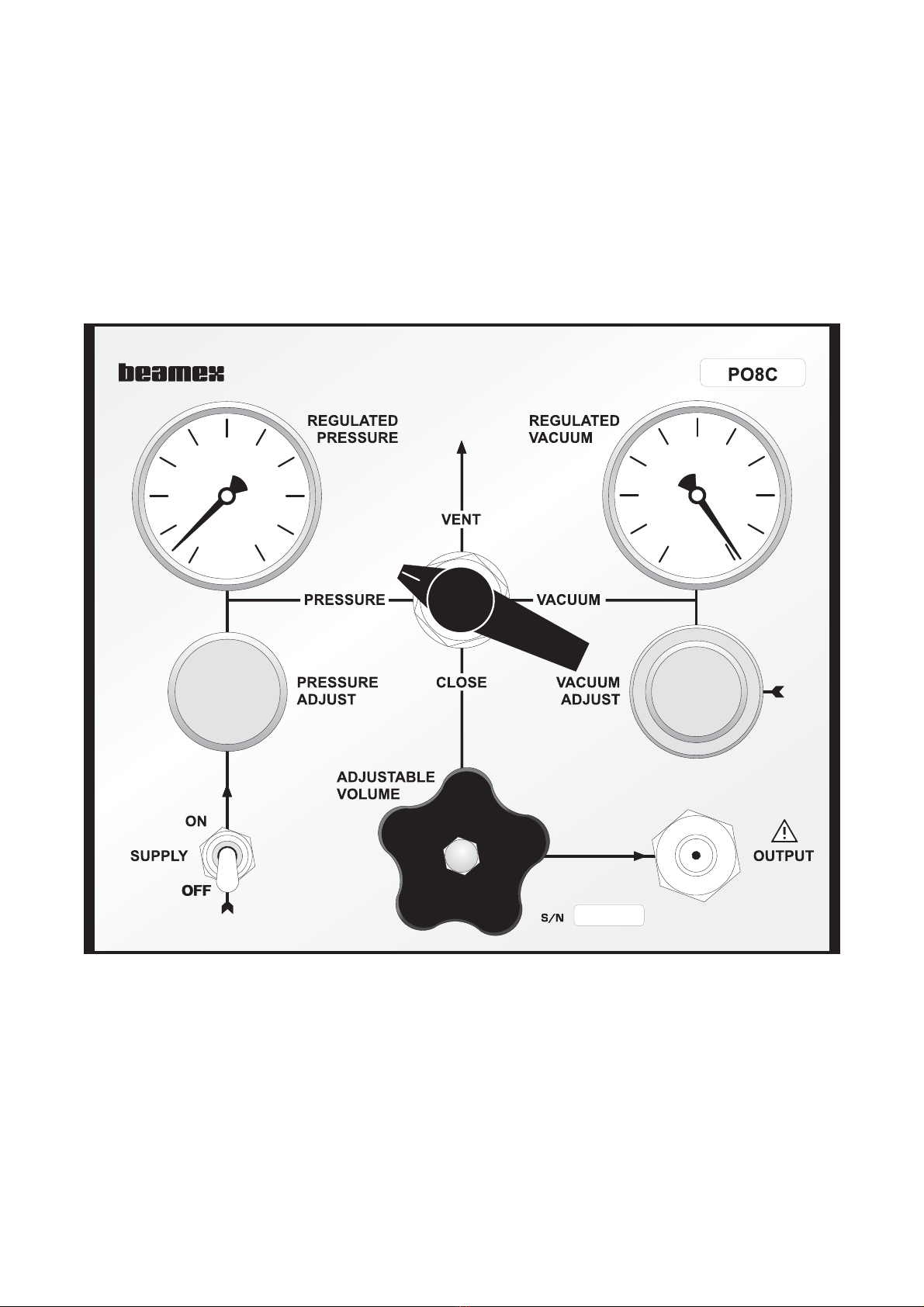
Do not connect an external pressure source to PO8C's
Output connector.
The total volume of measurement hoses and instrument
measurement chambers connected to the PO8C's Output
connector should not exceed 100ml (6.1 in3).
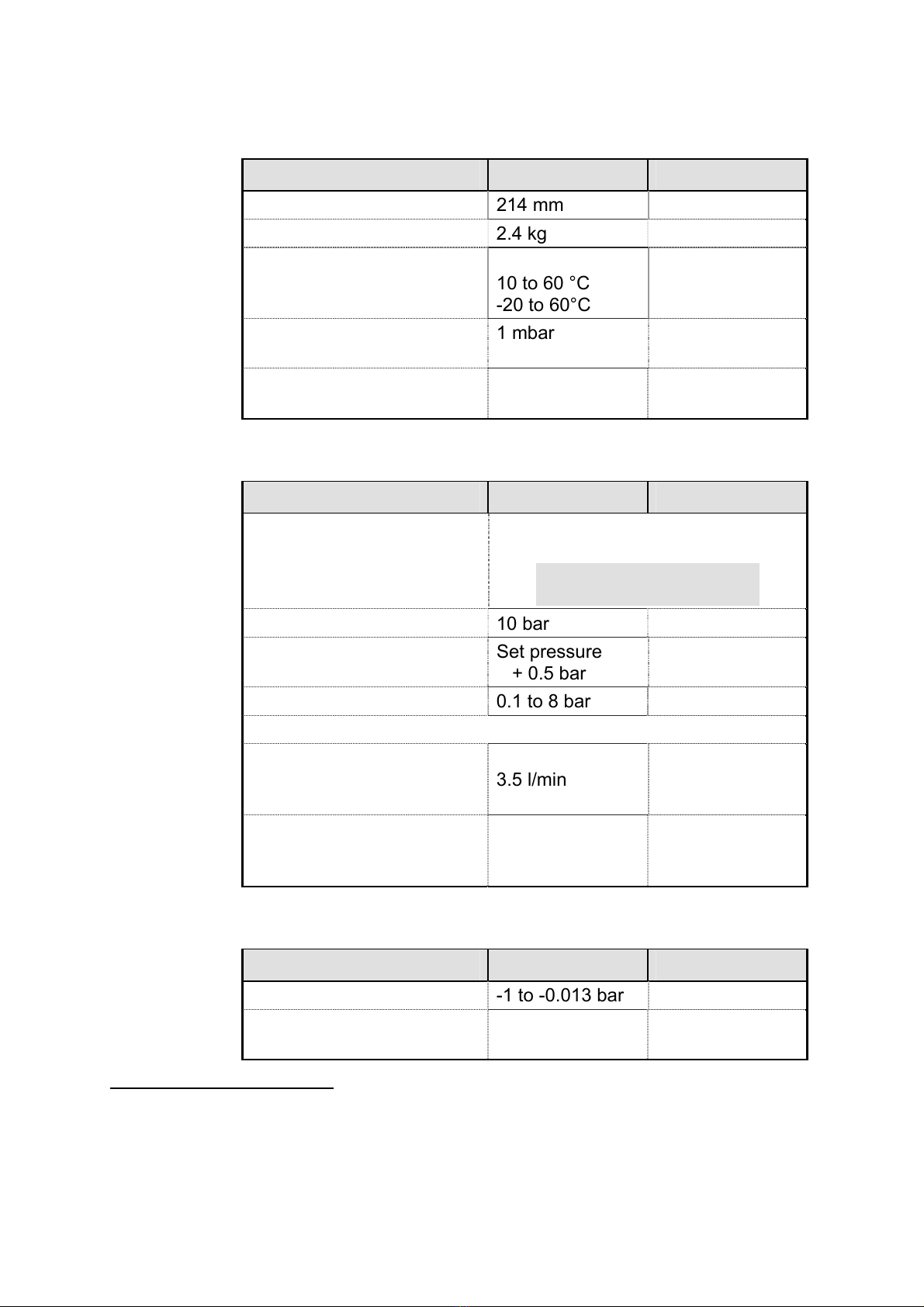
Do not use PO8C if conditions or specifications are beyond
the given specifications. See Specifications on page 3.
Connections
When connecting an instrument to PO8C's OUTPUT con-
nector, make sure that PO8C's output pressure is not too
high/low to damage the instrument or any other equip-
ment/hose being part of the pneumatic system .
If you open the supply valve when an instrument is con-
nected to the pressure output connector, make sure that the
pressure regulator is adjusted to a pressure that can not
damage the connected instrument.
Do not use the same tubing with different liquids and gases.
Use hand tightening with the pressure tubing connections.
When checking a process device, take care that it does not
contain process fluid or particles. For vacuum instruments:
The suction may transport the particles into PO8C. For
positive gauge pressure instruments: When you VENT
PO8C, the fluid or particles might flow into PO8C. In both
cases, the result may be a damaged PO8C. If you are not
sure that the tubing and the instrument measurement
chamber are empty, use a proper collection chamber and/or
filter between the instrument and the module.
Always depressurize the system before opening or con-
necting any pressure fittings or connectors. Use proper
valves for venting the system.