Astria.us.com 125160-01_D8
PRE-INSTALLATION PREPARATION
WARNING: Do not pack required air spaces with
insulation or other materials.
Minimum/Maximum Chimney Height for Residential Installation
Minimum height of chimney, measured from base of fireplace to
flue gas outlet of termination, is 14 feet for straight flue or 17 feet
for a flue with one elbow set. Maximum distance between elbows
is 6 feet. For systems with two elbow sets, minimum height is 22
feet. Maximum height of any system is 40 feet. This measurement
includes fireplace, chimney sections and height of termination as-
sembly at level of the flue gas outlet (see Figure 20, page 16).
FRAMING
1. Frame opening for fireplace using dimensions shown in
Figures 6 and 7, page 9.
2. If fireplace is to be installed directly on carpeting, tile (other
than ceramic) or any combustible material other than wood
flooring, fireplace must be installed upon a metal extending
full width and depth of fireplace.
3. Set fireplace directly in front of this opening and slide unit
back until nailing flanges touch side framing.
4. Check level of the fireplace and shim with sheet metal if
necessary.
5. Before securing fireplace to prepared framing, ember
protector (provided) must be placed between hearth
extension (not supplied) and under bottom front edge of
fireplace to protect against glowing embers falling through.
If fireplace is to be installed on a raised platform, a Z-type
ember protector (not supplied) must be fabricated to fit your
required platform height. Ember protector should extend
under fireplace a minimum of 1-½". Ember protector should
be made of galvanized sheet metal (26 gauge minimum to
prevent corrosion.
6. Using screws or nails, secure fireplace to framing through
flanges located on sides of fireplace.
SELECTING LOCATION
To determine the safest and most efficient location for the fireplace,
you must take into consideration the following guidelines:
1. The location must allow for proper clearances (see Figures 6
and 7, page 9).
2. Consider a location where fireplace will not be affected by
drafts, air conditioning ducts, windows or doors.
3. A location that avoids cutting of joists or roof rafters will make
installation easier.
4. An outside air kit is available with this fireplace (see Optional
Outside Air Kit on page 13).
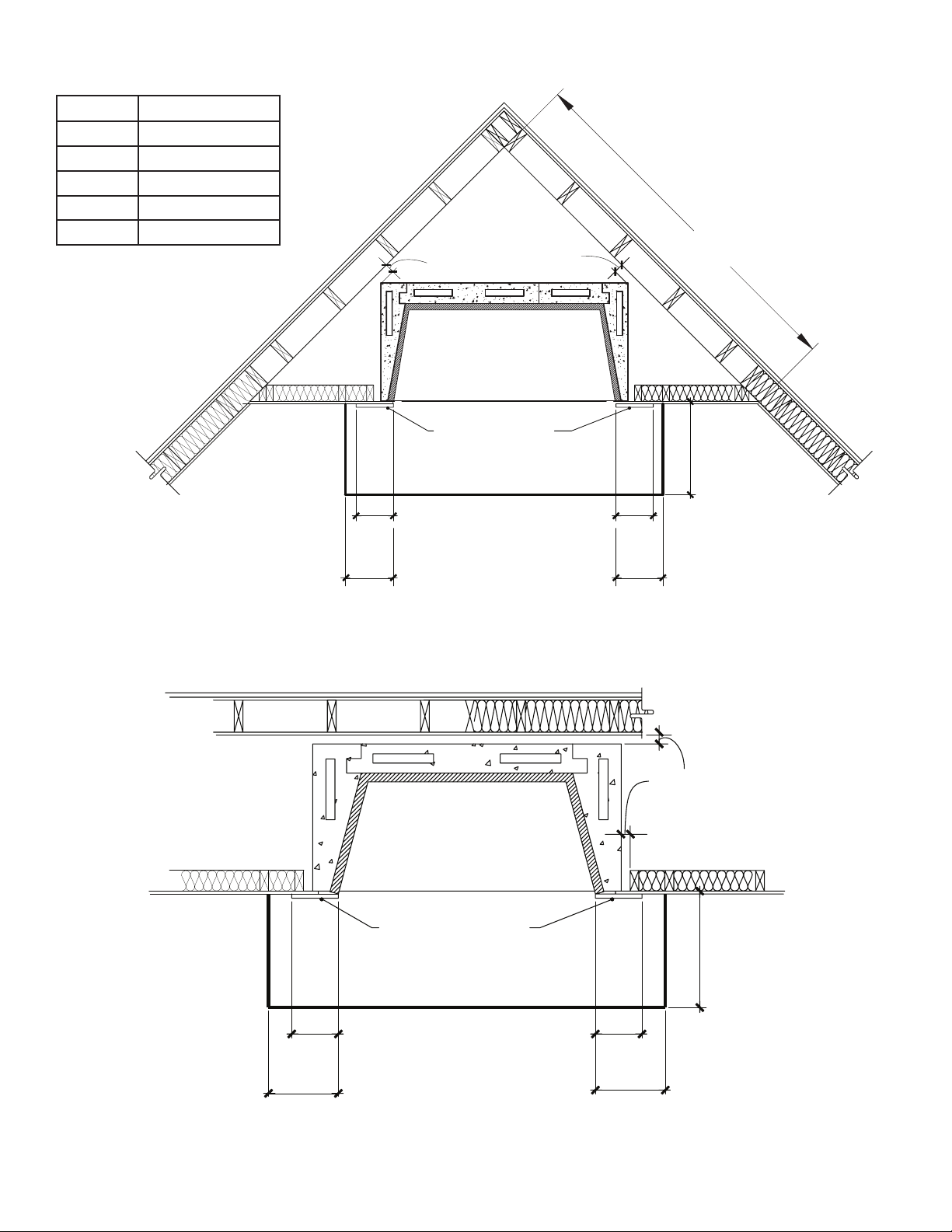
MINIMUM CLEARANCE TO COMBUSTIBLES
The distance to be maintained from the surfaces of the fireplace to
combustibles must be observed. Below is a list of the most common
combustible materials to name a few:
Drywall Wood Flooring Plywood
Sub-Flooring Wood Framing Mill Board
Particle Board Plywood Paneling
Maintain the following clearances:
Unit sides, rear, Dome sides, rear & top 2" (51 mm) min.
Combustible Floors (MM33,39,44,49) 6" (153 mm) min.
Combustible Floors (MM63 only) 8" (204 mm) min.
Combustible Sheathing above opening top 18" (548 mm) min.
Sheathing or trim to opening sides 8" (204 mm) min.
Mantel above Opening see Figure 5
Opening to sidewall 24" (610 mm)
Hearth extension beyond front 20" (508 mm)
Hearth extension beyond sides 12" (305 mm)
Insulation from firebox 2" (51 mm)
Figure 5: Mantel Clearances to Combustible Material
22"
(559 mm)
20"
(508 mm)
16"
(407 mm)
18"
(458 mm)
10"
(254 mm)
1- 1/2"
(39 mm)
NON-COMBUSTIBLE
ONLY ZONE
SAFE ZONE FOR
PROJECTION OF
COMBUSTIBLE
MATERIAL
TOP OF FIREPLACE OPENING
MANTEL
LINTEL
FRONT
8" (204 mm)
10" (254 mm)
6" (153 mm)
3" (77 mm)