Introduction
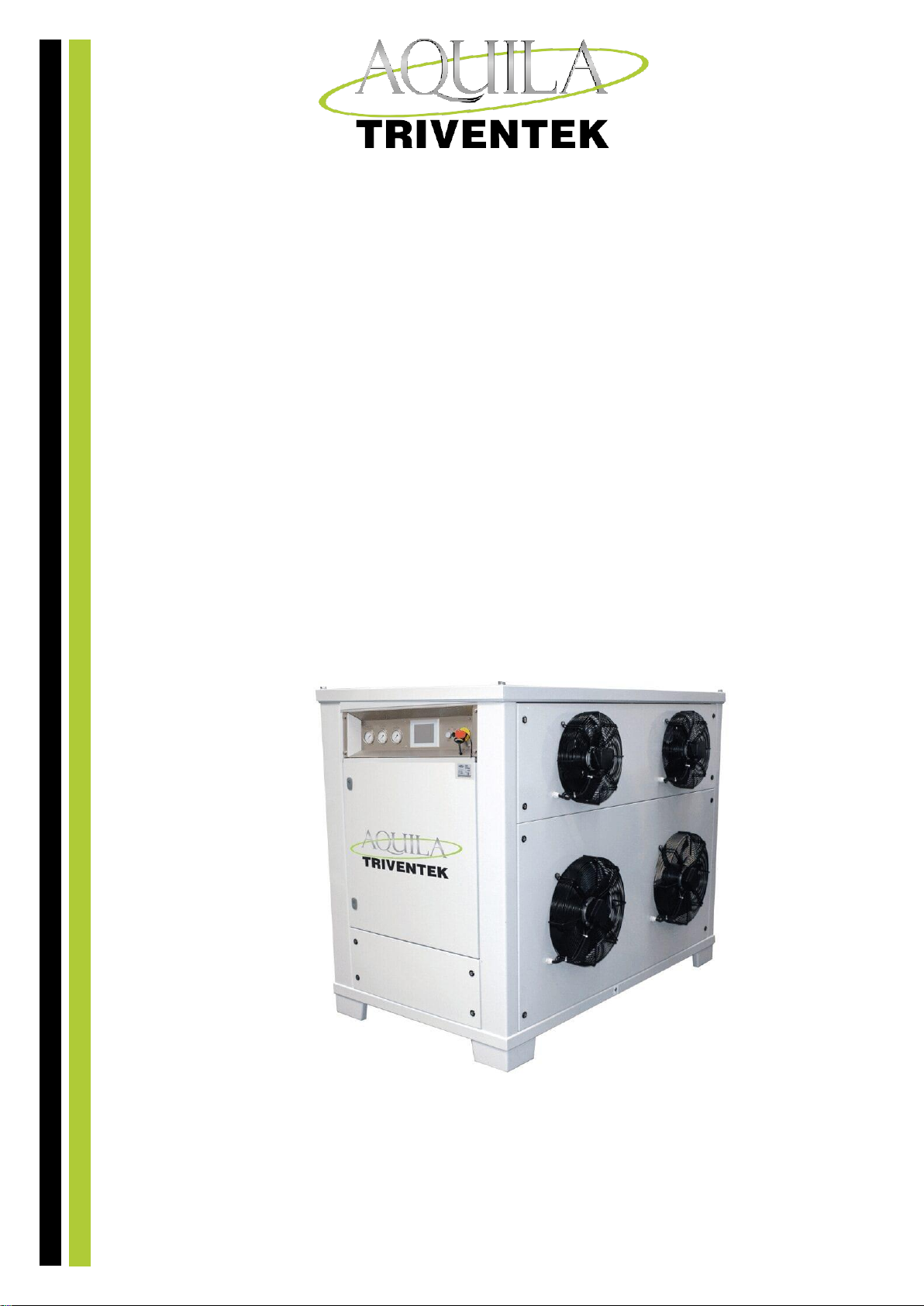
We are pleased that you have chosen the Recovery Unit RE160 UNI by Aquila Triventek A/S for your company. The re-
covery RE160 UNI is especially designed to be connected to multiple types/brands of pelletizers, and not only the Aquila
Triventek PE80 Pelletizer.
This
technology
is
the
subject
of
a
Patent
application
No.
0408224.4.
To obtain long and trouble-free operation of the equipment we recommend reading this manual carefully. All new
operators of the equipment should also familiarize themselves with the content of this document.
1.1
What is Dry Ice?
Carbon dioxide is a chemical compound formed by combining one atom of carbon with two atoms of oxygen and is
expressed by the chemical symbol CO
2
. It can exist in three states: as gas, as liquid or as a solid.
Dry ice is frozen carbon dioxide (CO
2
). The unique property of carbon dioxide is that at normal, atmospheric pressure
and temperature, it changes state directly from solid to gas without going through a liquid phase.
This
process,
called
sublimation,
makes
the
ice
‘dry’
and
is
exploited
both
for
blast
cleaning
and
for
cooling.
Dry
ice
is stable at (minus) -79 ºC, at atmospheric pressure. It expands up to 800 times by volume when it
sublimes, and this
property is exploited in the blast cleaning application.
1.2
Recovery
Unit
Normal dry ice production uses liquid CO
2
which when brought to normal atmospheric pressure, in e.g. a pelletizer
converts to one half snow and one half gas, called ‘revert’ gas. The snow is then compressed into dry-ice pellets.
But, by using the RE160 UNI Recovery Unit, the revert gas, which is usually lost into atmosphere, is collected and
recycled to make more pellets. This becomes a continuous process and will, as a result, reduce production costs by up
to 50%.
Safety
2.1
Safety
data
for
carbon
dioxide
(CO2)
Hazards
identification
Liquid carbon dioxide is stored in pressure vessels and must be handled according to the vessel manufacturers´ and the
carbon dioxide suppliers´ instructions.
1.
Precautions must also be taken when mounting and dismounting the hose for liquid carbon dioxide. The liquid
may be under pressure and could spray into the surrounding area, forming dry ice and causing frostbite and eye
damage.
2.
Be careful if a liquid CO
2
hose is blocked by dry ice. The pressure behind the dry ice blockage will rise due to evapo-
ration of liquid CO
2
. A powerful blast will occur when the blockage breaks. DO NOT dismount a hose if it is blocked,
or if it is suspected to be blocked by dry ice. Loosen the connection slightly so that gas can escape. Leave the hose
until the blockage is evaporated.